Japanese Prints
778 historic pictures in the Japanese Prints collection, part of Vintage Art & Photography. Each one can be ordered as a print or licensed, and the collection is a starting point for telling stories about the past.
Open the interactive boardA Japanese woodblock print was a team effort. An artist drew the design, a carver cut it into blocks of cherry wood, a printer inked and pressed each color by hand, and a publisher paid for it all and sold the result. The name on the print is the artist's, but the beauty of it belongs to all 4.
These prints are called ukiyo-e, often translated as pictures of the floating world. The phrase described the pleasure districts of Edo, now Tokyo, with their theaters, teahouses and fashionable women. Early prints showed kabuki actors and celebrated beauties, and they were sold cheaply, much like posters or magazine covers.
In the 1800s landscape became a major subject. Katsushika Hokusai's series Thirty-Six Views of Mount Fuji, made around 1830, includes The Great Wave, now one of the most recognized images in the world. Utagawa Hiroshige followed with The Fifty-Three Stations of the Tokaido, showing travelers along the great road between Edo and Kyoto in rain, snow and moonlight.
After Japan opened to Western trade in the 1850s, a new kind of print appeared. Artists in the port of Yokohama drew the foreigners who were arriving, with their strange clothes, ships and customs. At the same time Japanese prints reached Europe and caused a sensation. Artists such as Monet, Degas and Van Gogh collected them and borrowed their flat color, bold outlines and unusual viewpoints.
Look at how the pictures are built. Ukiyo-e artists often cut off a figure at the edge of the frame or put a large object right in the foreground, things Western painters of the time rarely did. Look at the color, too. Each color needed its own carved block lined up exactly with the others, and on a fine print you can see how precisely the printer matched them.
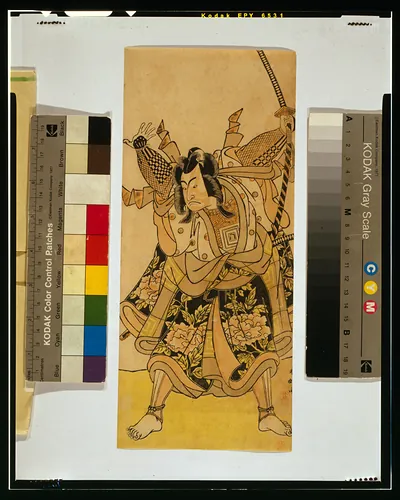 Ichikawa monnosuke ([between 1772 and 17)
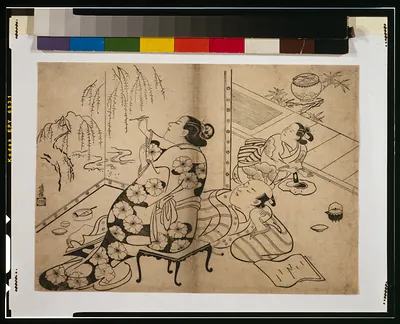 Byōbu ni e o eg(k?)aku yūjo (Yokohama, Japan : Ta)
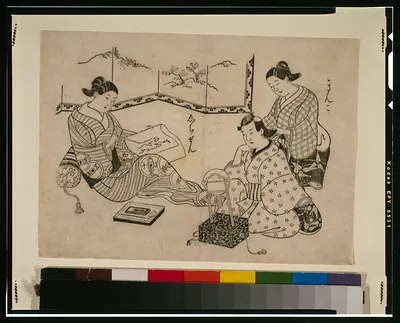 Kinko echizen ([between 1700 and 17)
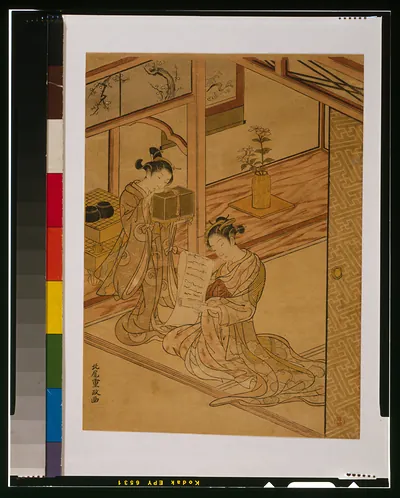 Zashiki no yūjo to kamuro ([between 1764 and 17)
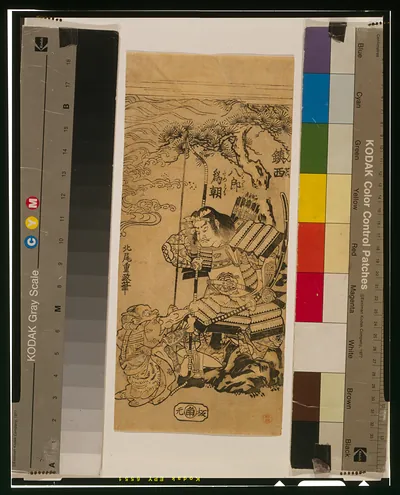 Chinzei hachiro tametomo ([between 1764 and 17)
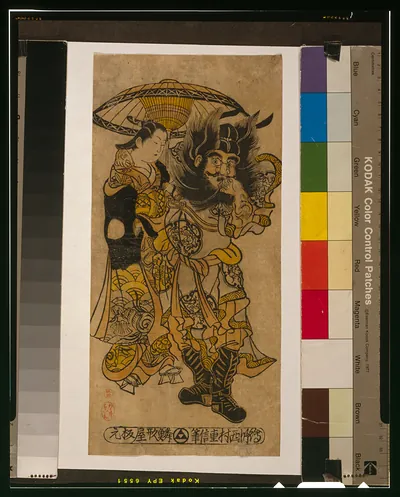 Shōki to yūjo no aiaigasa (Japan : Urogataya, [)
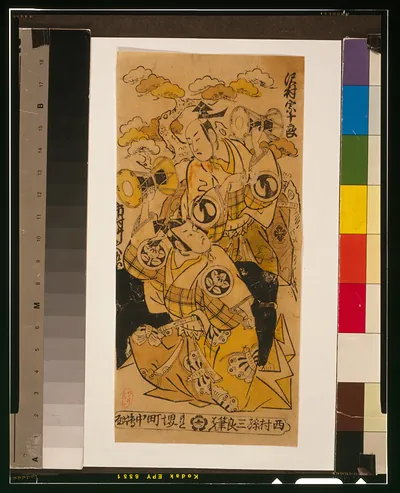 Sawamura sōjūrō no soga no jūrō to ichimura takenojō no soga no gorō (Japan : Nakajimaya o)
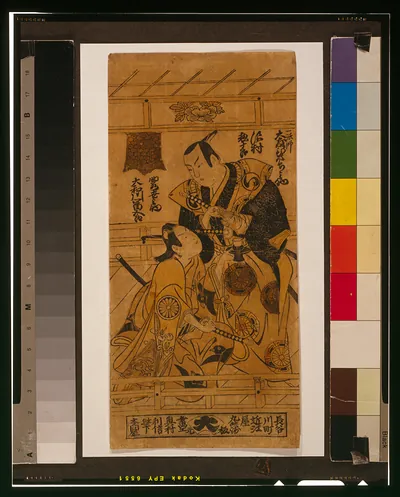 Sawamura Sōjūrō no Ichihōshi Ōtomo Hitatinosuke Yamatogawa Tomigorō no Sukewaka Yono (Japan : Omiya Ky-bei)
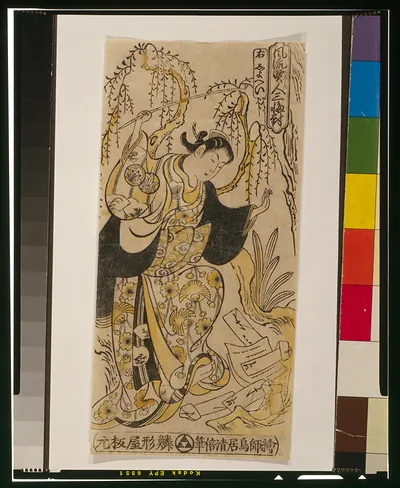 Shohei ([between 1726 and 17)
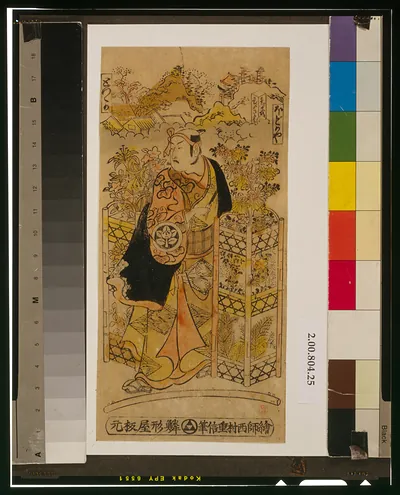 Yondaime ichimura takenojō no hanauri ([between 1726 and 17)
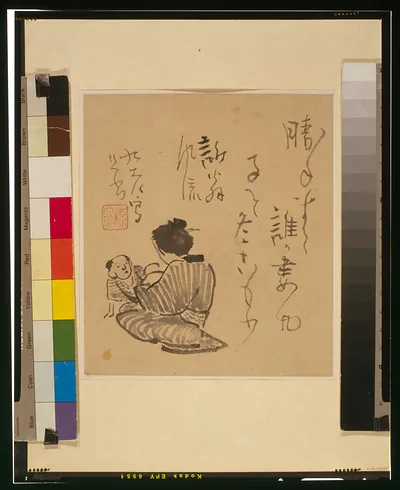 Woman with child and infant ([between 1750 and 18)
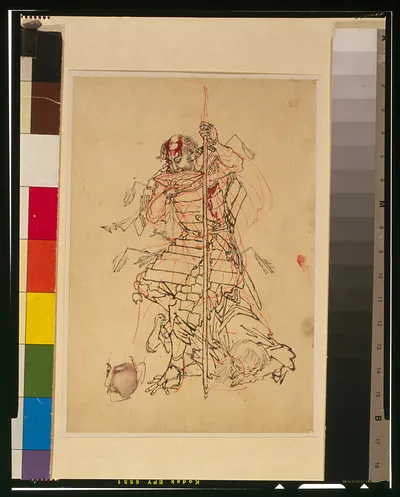 Sake o nomu samurai ([between 1870 and 18)
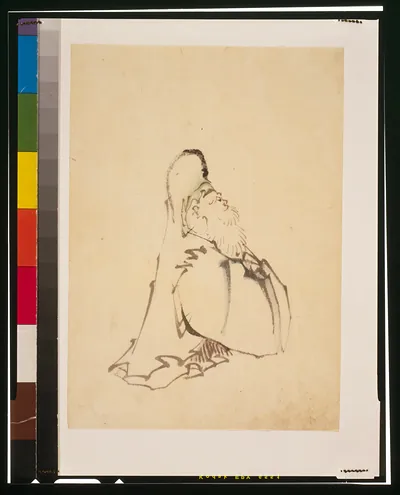 [Fukurokuju, the god of wisdom, wealth, long life, and happiness, one of the seven lucky g ([between 1830 and 18)
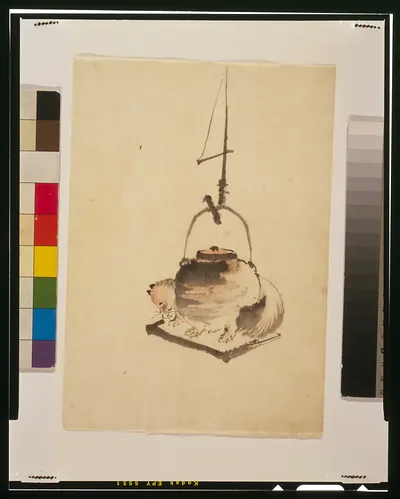 Bunbuku chagama ([between 1830 and 18)
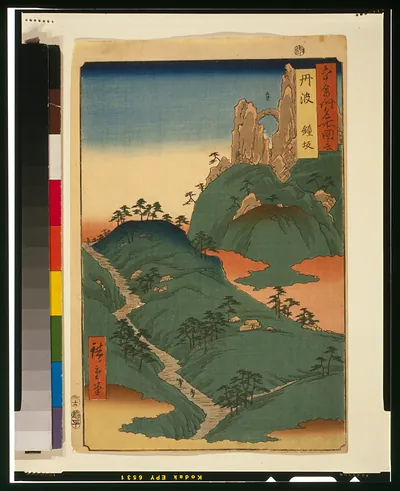 Tanba kanesaka ([Tokyo : Koshi-Hei, )
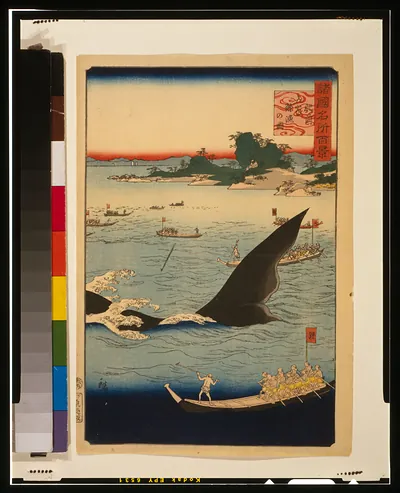 Hizen gotō kujiraryō no zu (1859)
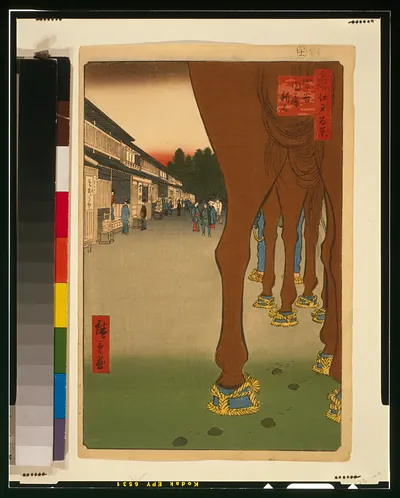 Yotsuya naitō shinjuku (1857)
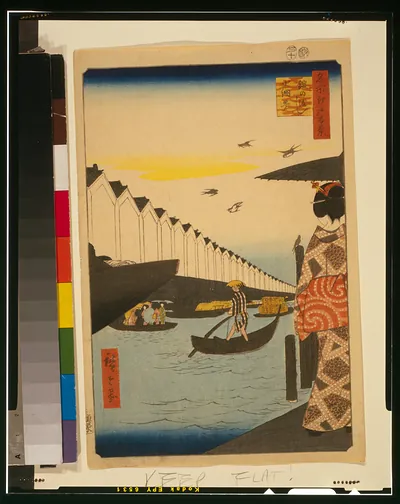 Japanese woodblock print of boats along a canal
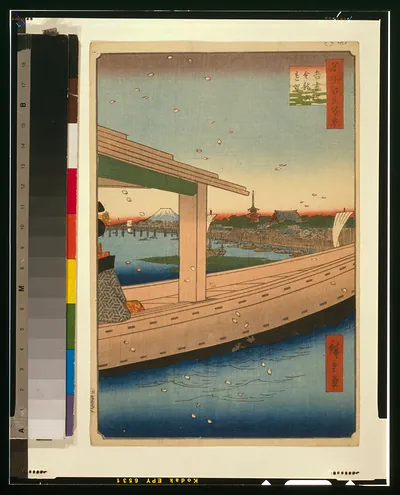 Azumabashi kinryūzan enbō (1857)
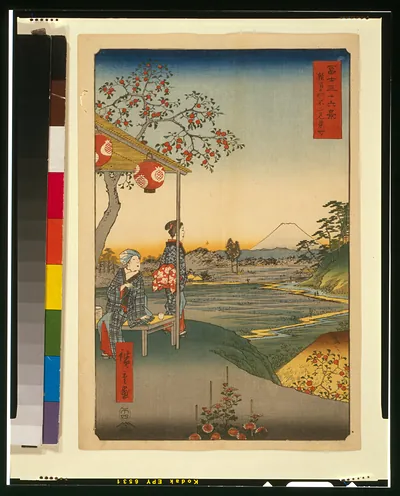 Zoushigaya fujimi chaya (Japan : Tsutaya Kich)
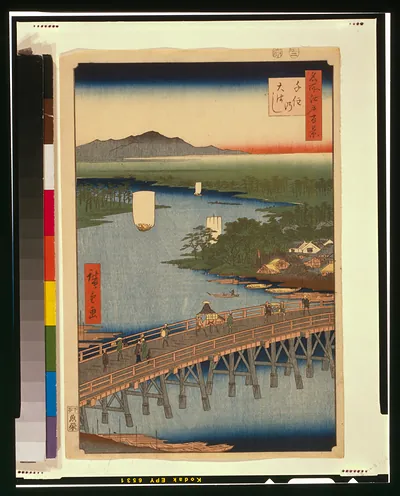 Senju no oubashi (1856)
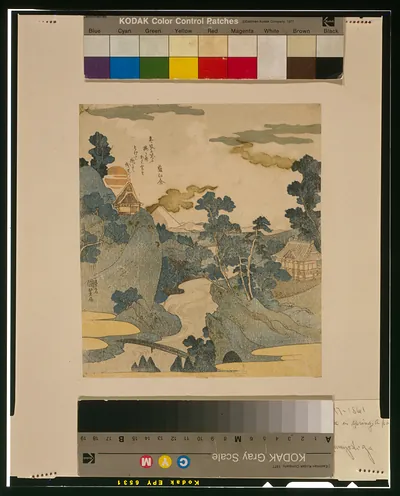 Fuji no yūkei ([1829 or 1830])
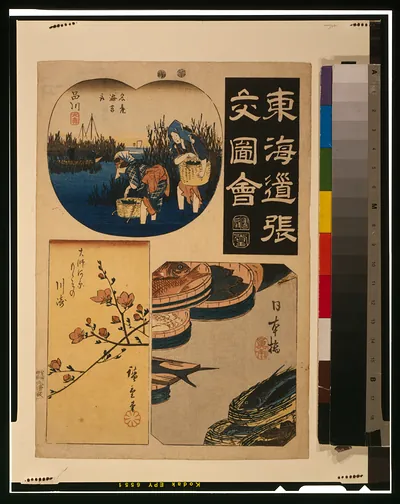 Nihonbashi sinagawa kawasaki ([between 1848 and 18)
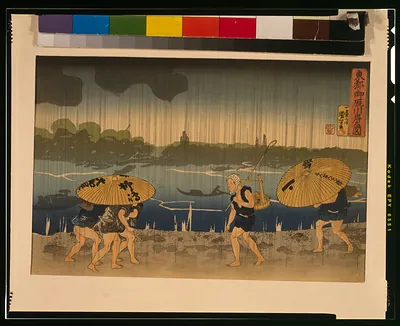 [People walking beneath umbrellas along the seashore during a rainstorm] ([between 1890 and 19)
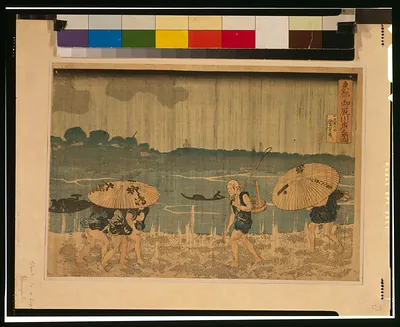 Oumayagashi no zu ([ca. 1834])
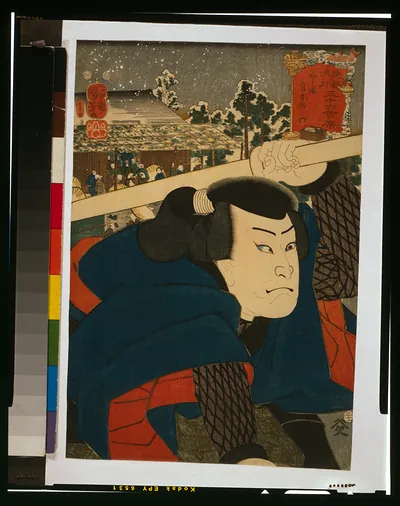 Mukōjima miyamoto musashi (1852)
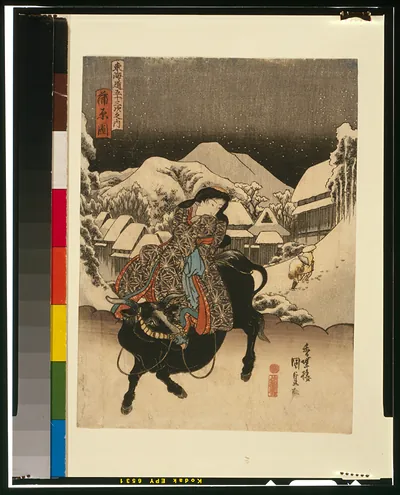 Kanbara ([between 1836 and 18)
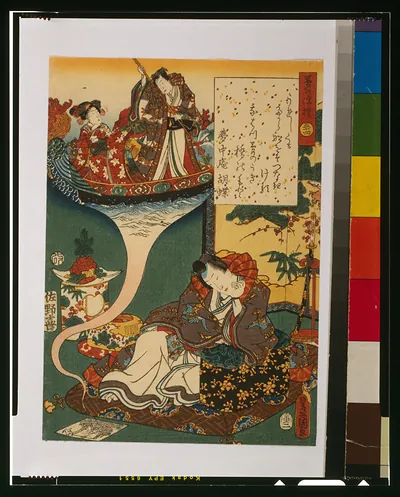 Yume no ukihashi (1854)
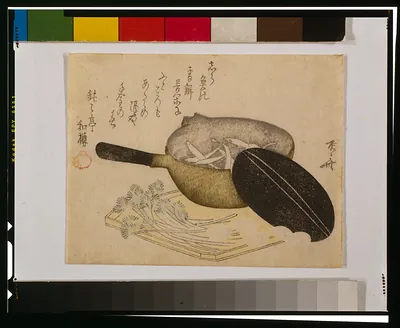 Shirauo ([between 1804 and 18)
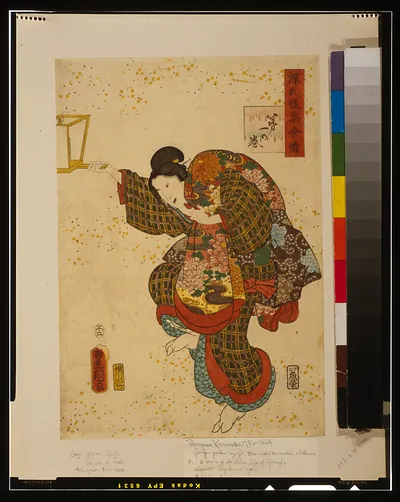 Daiichi no maki (1858)
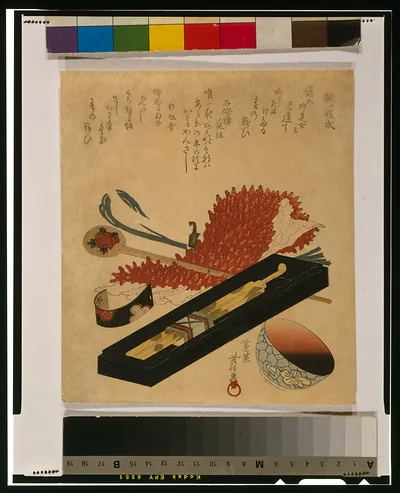 Shibori kanzashi benichoku ([between 1818 and 18)
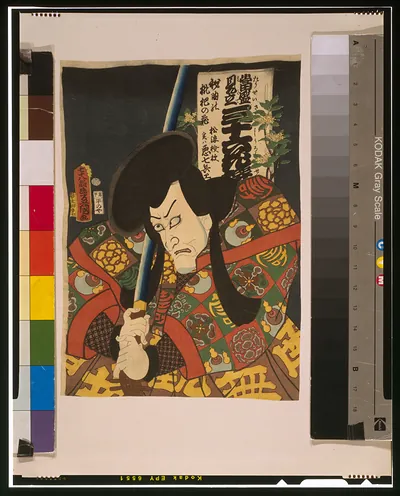 Hikyoku no biwa no hana matsunami kengyō jitsuwa akushichibyōe (1863)
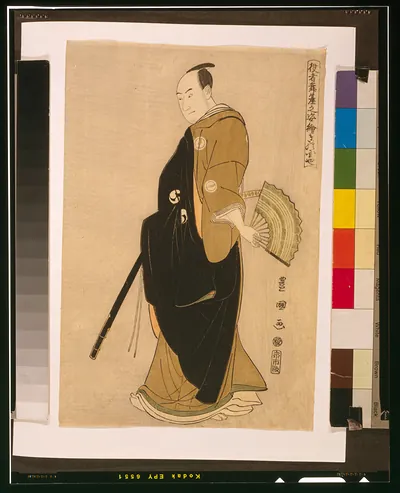 Kinokuniya (1794)
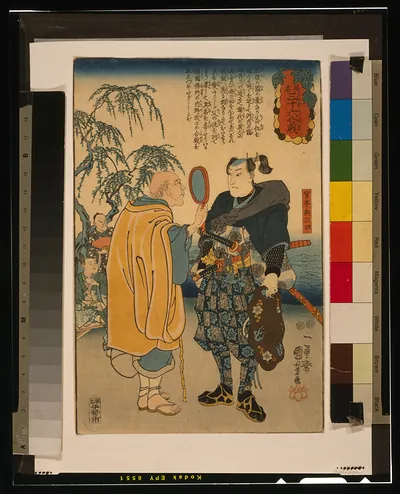 Miyamoto musashi ([between 1847 and 18)
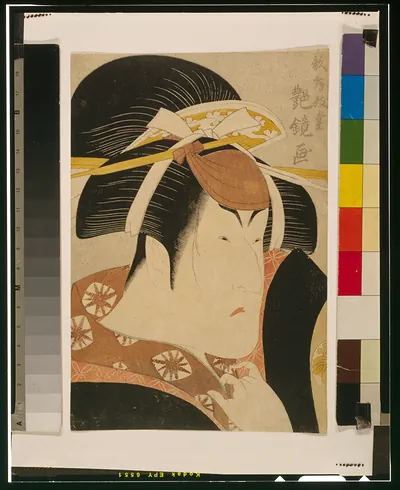 Nakayama tomisaburō (1796)
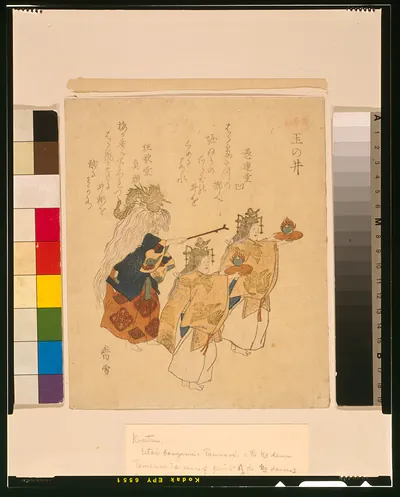 Tamanoi (1820)
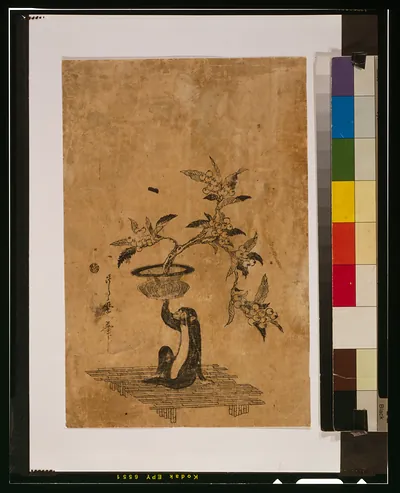 Saru no hanaike ni biwa ([between 1807 and 18)
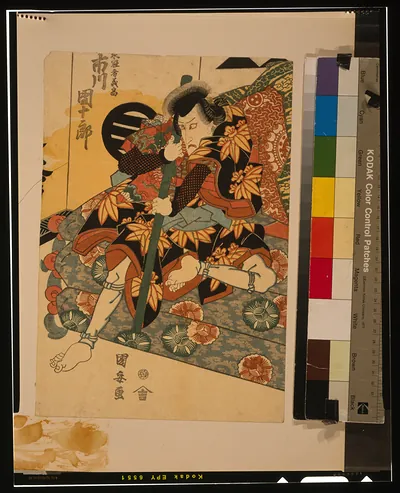 Kabuki actor Ichikawa Danjūrō, Japanese woodblock print
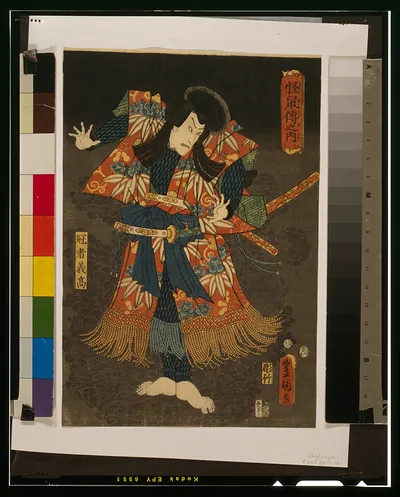 Hachidaime ichikawa danjūrō kaja yoshitaka (1854)
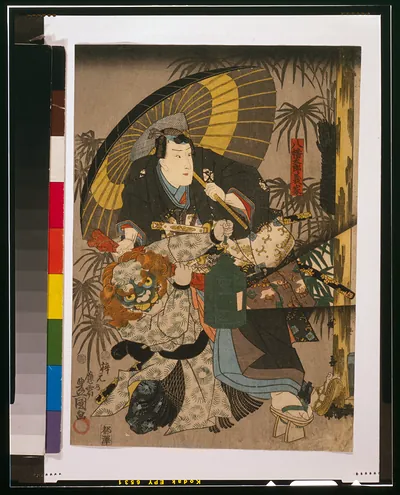 Hachimantarō Yoshiie Abe Sadatō : Sadatō Tsuma Sodehagi. ([1847 or 1848])
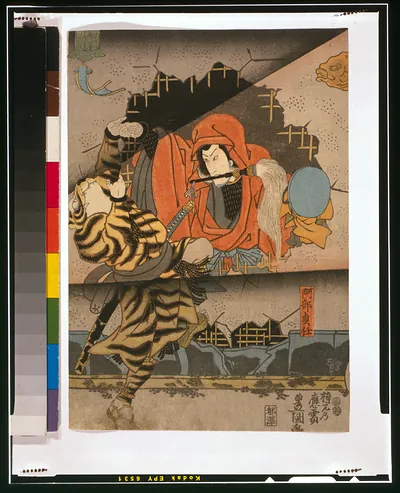 Hachimantarō Yoshiie Abe Sadatō : Sadatō Tsuma Sodehagi. ([1847 or 1848])
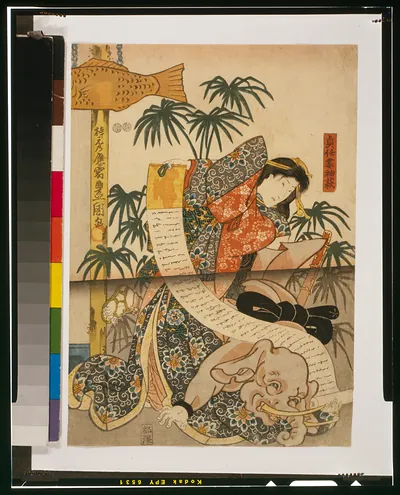 Hachimantarō Yoshiie Abe Sadatō : Sadatō Tsuma Sodehagi. ([1847 or 1848])
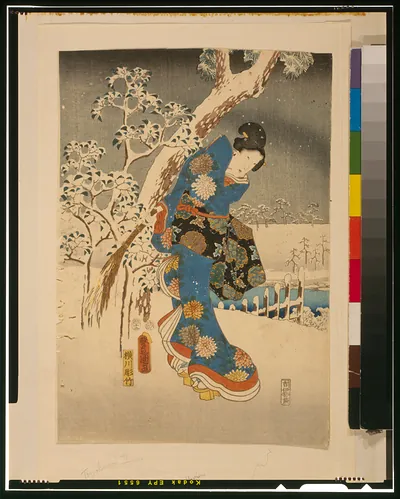 Fūryū genji yuki no nagame (1853)
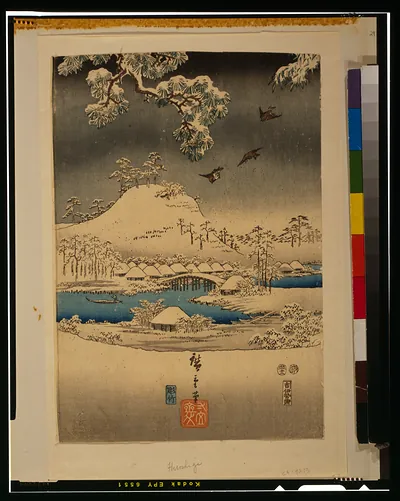 Fūryū genji yuki no nagame (1853)
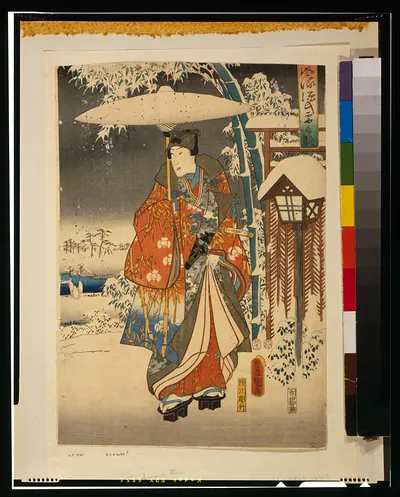 Fūryū genji yuki no nagame (1853)
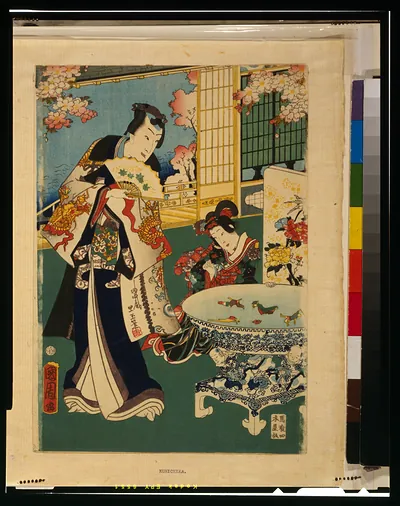 Hanami no en ([1862])
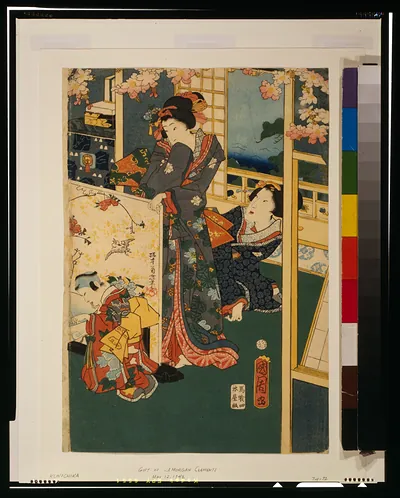 Hanami no en ([1862])
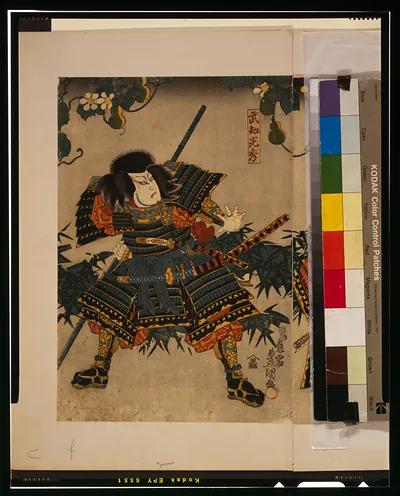 Samurai warrior in armor with bamboo, woodblock print
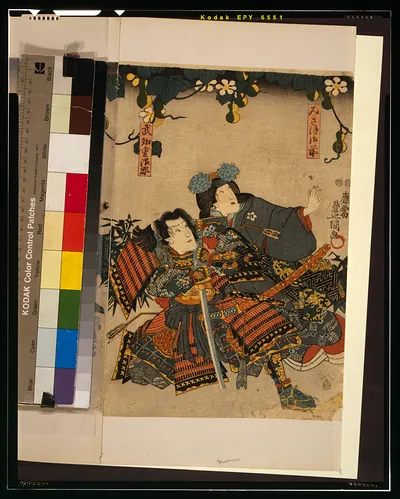 Two armored warriors beneath gourd vines, Japanese woodblock print
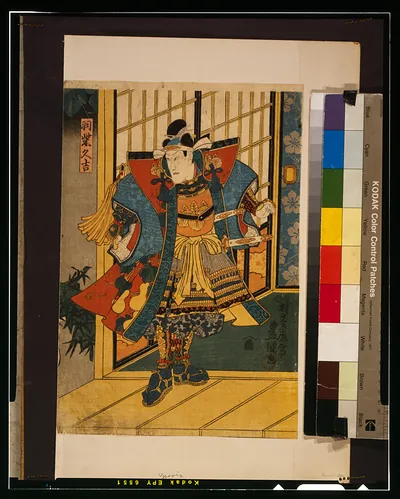 Kabuki actor in armour, Japanese woodblock print
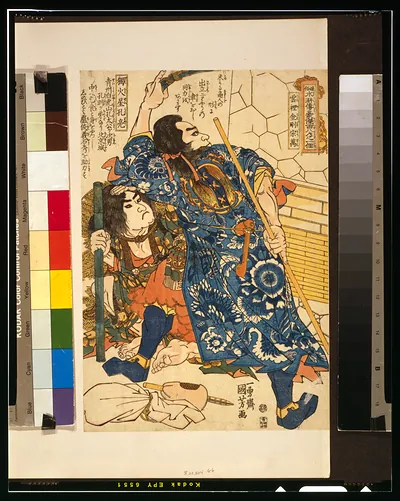 Mōtōsei kōmei unri kōngō sōman dokkasei kōryō ([between 1826 and 18)
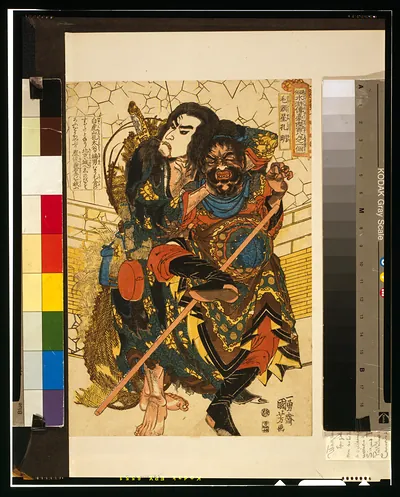 Mōtōsei kōmei unri kōngō sōman dokkasei kōryō ([between 1826 and 18)
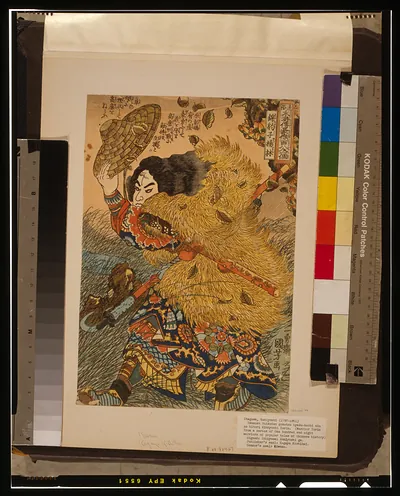 Kinhyōshi yōrin, hero of the Suikoden ([between 1826 and 18)
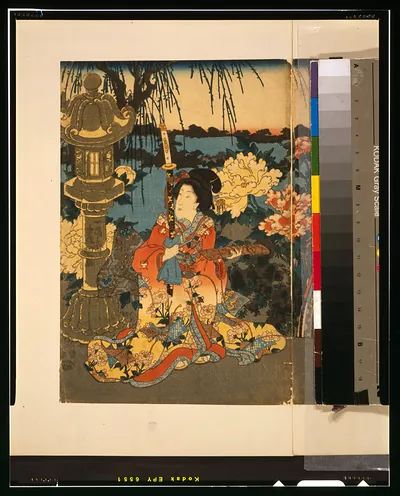 Fūki kusa sono no yūran ([between 1849 and 18)
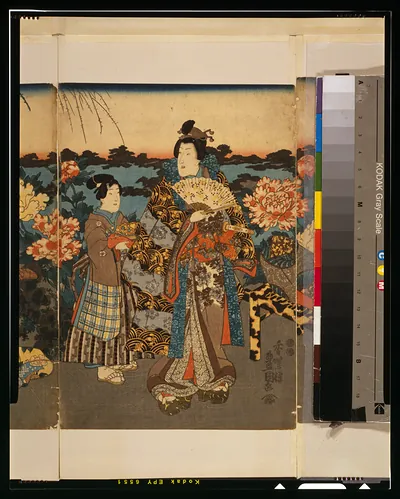 Fūki kusa sono no yūran ([between 1849 and 18)
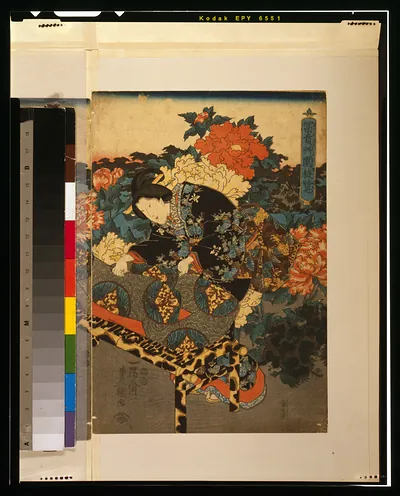 Fūki kusa sono no yūran ([between 1849 and 18)
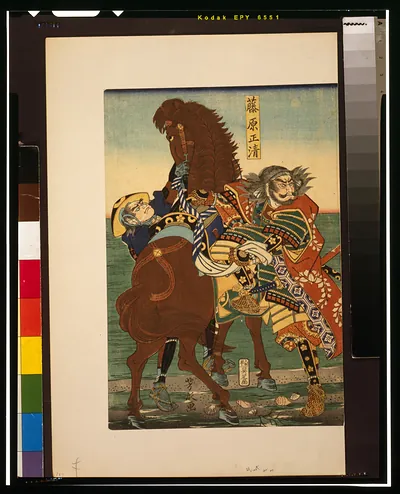 Japanese woodblock print of a samurai on horseback
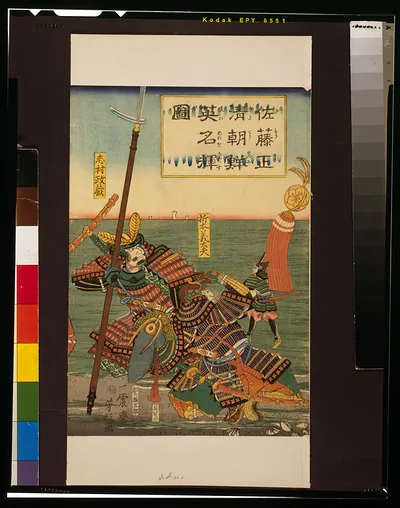 Samurai in armour battling, Japanese woodblock print with title cartouche
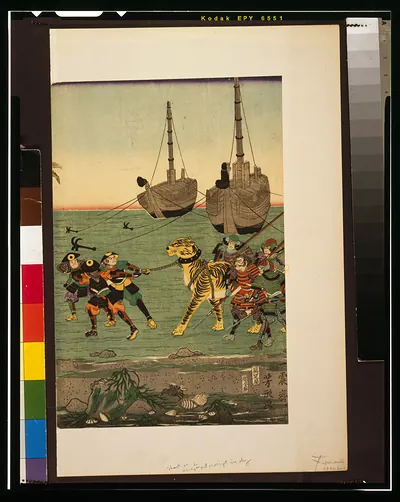 Samurai leading a tiger on a shore by ships, woodblock print
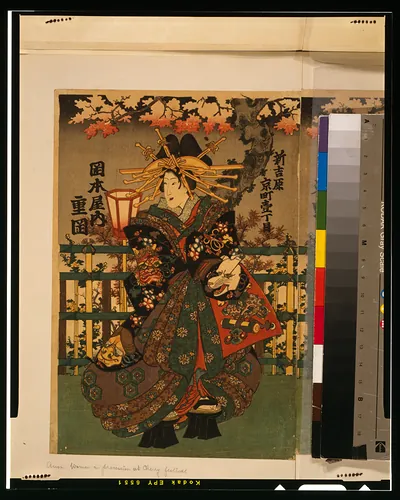 Okamotoya uchi Shigeoka Sugataebiya uchi Sugatano : Tamaya uchi Hanamurasaki. ([between 1848 and 18)
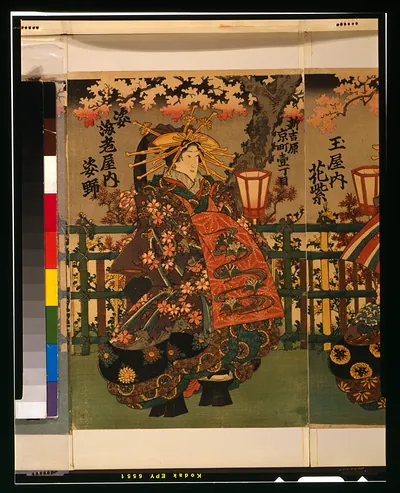 Okamotoya uchi Shigeoka Sugataebiya uchi Sugatano : Tamaya uchi Hanamurasaki. ([between 1848 and 18)
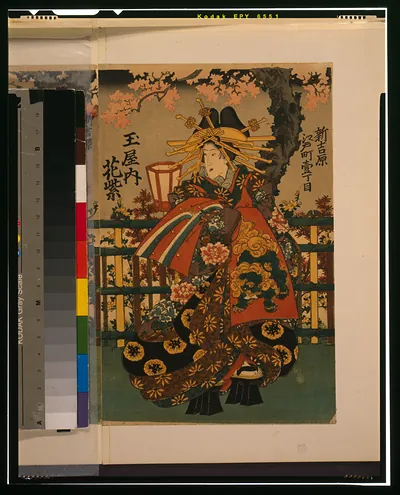 Okamotoya uchi Shigeoka Sugataebiya uchi Sugatano : Tamaya uchi Hanamurasaki. ([between 1848 and 18)
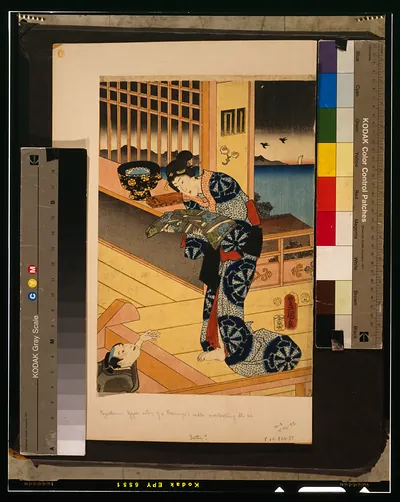 Namiwa no bessō akebono no zu (1855)
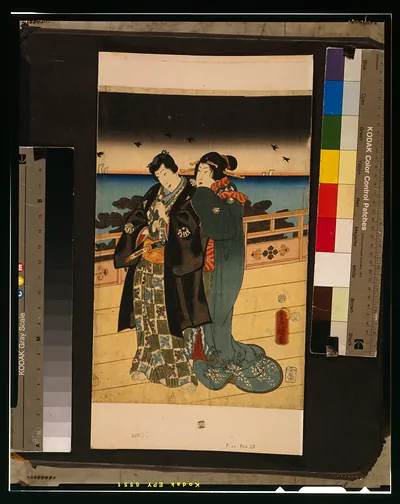 Namiwa no bessō akebono no zu (1855)
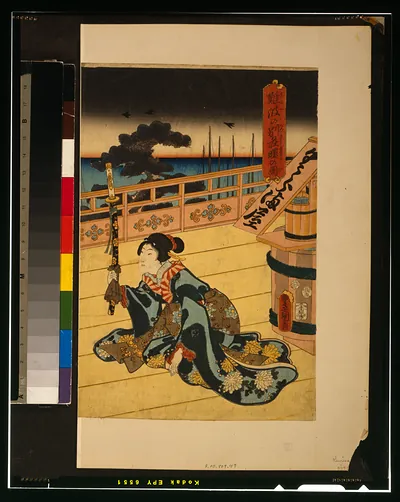 Namiwa no bessō akebono no zu (1855)
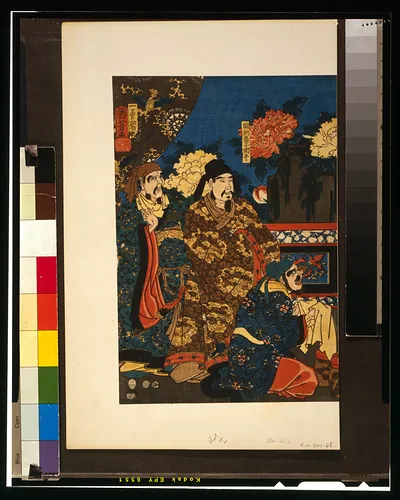 Kada hone o kezurite kan'u yakizu o ryōji suru zu (1853)
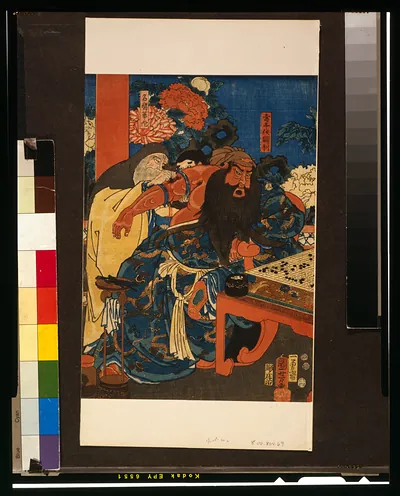 Kada hone o kezurite kan'u yakizu o ryōji suru zu (1853)
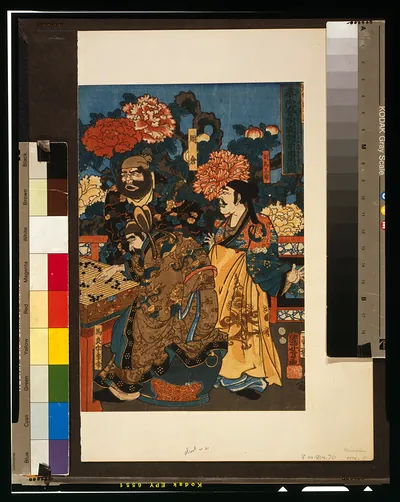 Kada hone o kezurite kan'u yakizu o ryōji suru zu (1853)
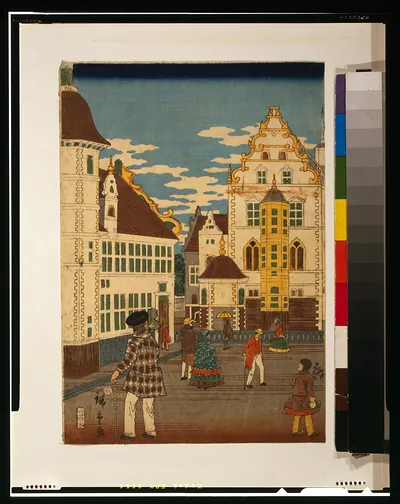 Amerika nigiwai no zu (Japan : Yamajin (Yam)
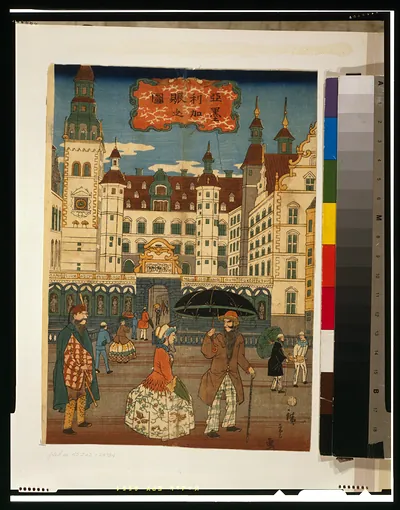 Amerika nigiwai no zu (Japan : Yamajin (Yam)
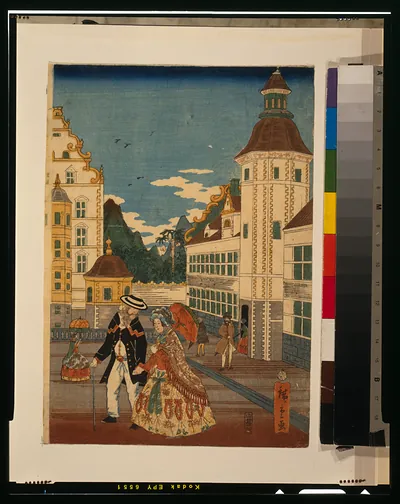 Amerika nigiwai no zu (Japan : Yamajin (Yam)
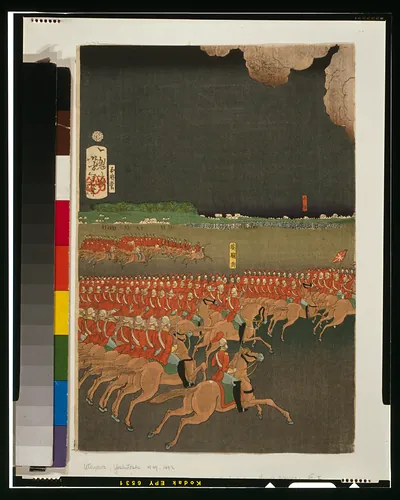 Furansu Igirisu sanpei daichōsen no zu (Japan : Ōmeidō, [1)
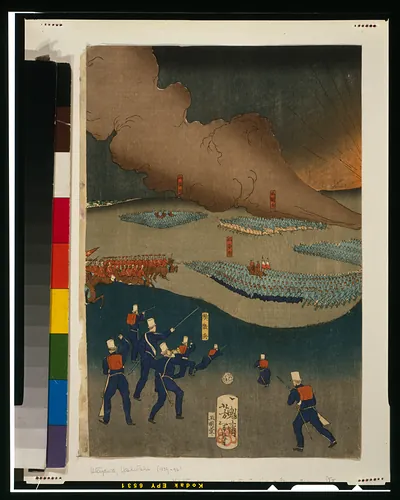 Furansu Igirisu sanpei daichōsen no zu (Japan : Ōmeidō, [1)
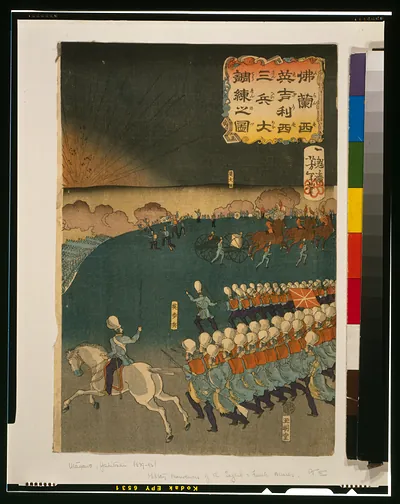 Furansu Igirisu sanpei daichōsen no zu (Japan : Ōmeidō, [1)
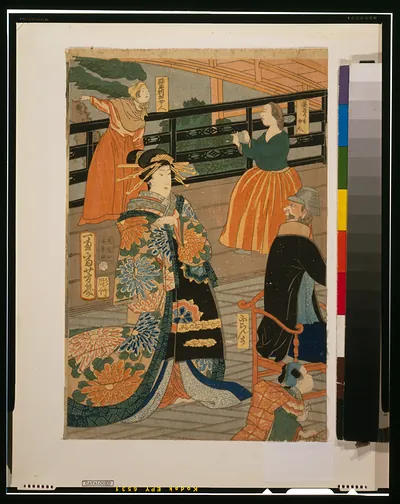 Gokakoku ... gankirō ni oite sakamori no zu (Japan : Kiya, 1860.)
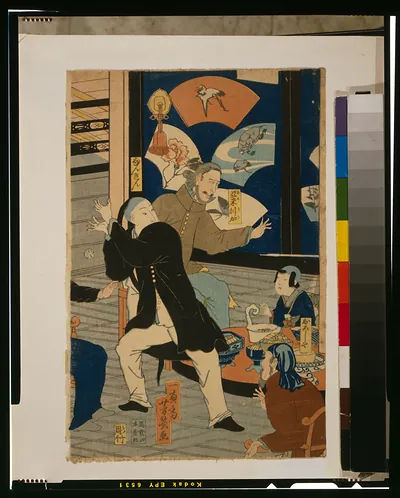 Gokakoku ... gankirō ni oite sakamori no zu (Japan : Kiya, 1860.)
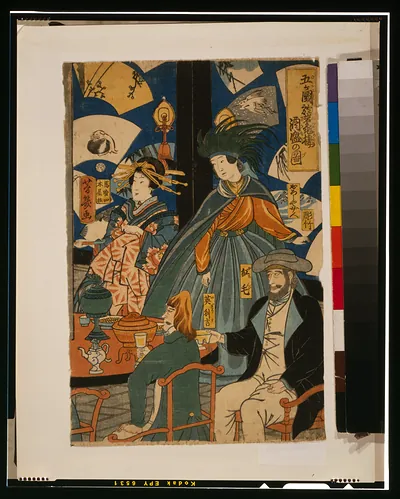 Gokakoku ... gankirō ni oite sakamori no zu (Japan : Kiya, 1860.)
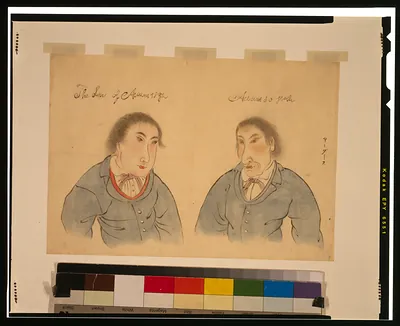 The son of A[...] 18 yrs -- A[...] 50 years ([between 1850 and 19)
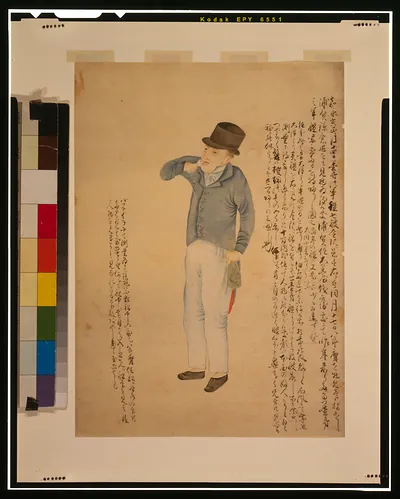 [American sailor drinking] ([ca. 1854])
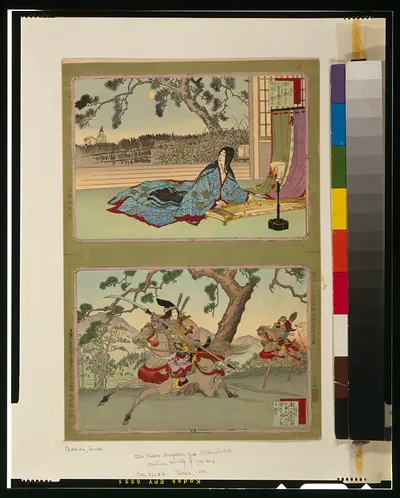 Dai Nihon Shiryaku Zue, Illustrated Outline History of Japan
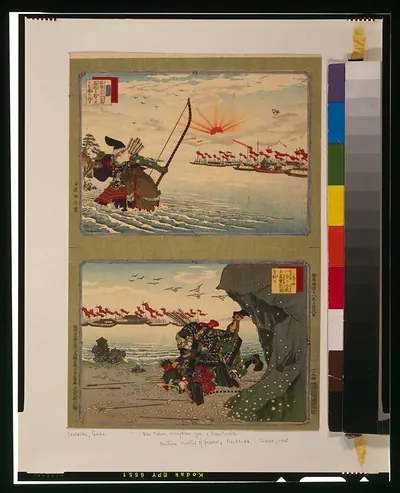 Nasu no yoichi naozane to atsumori (1885)
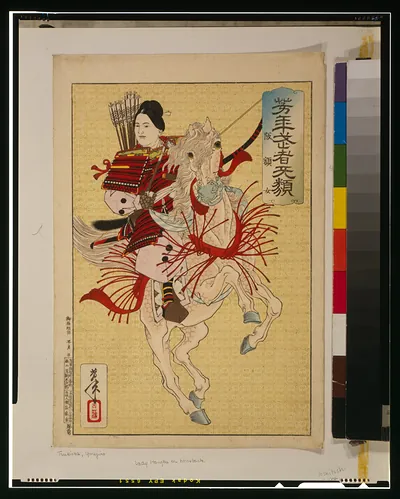 Hangakujo (Japan : Tsunajima Ka)
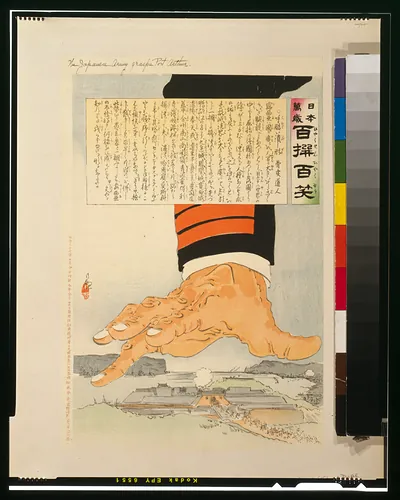 Tehidoi tsubushigata ([ca. 1904])
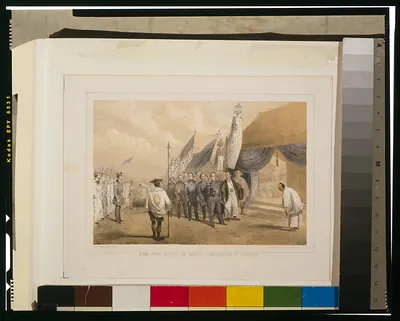 Commodore Perry Meeting the Imperial Commissioners at Yokohama
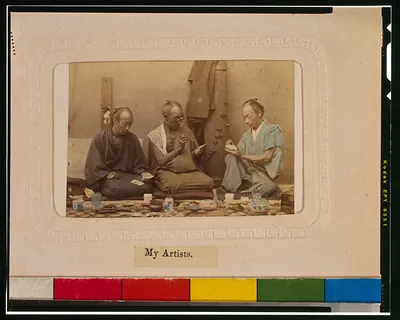 Three Japanese men with painting materials, labelled "My Artists
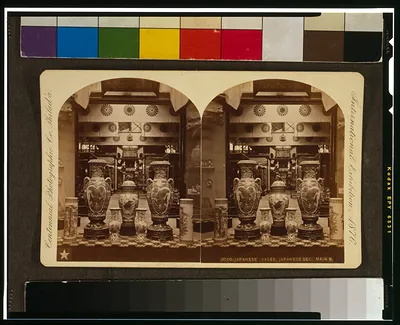 Japanese vases in exhibition hall, stereograph view
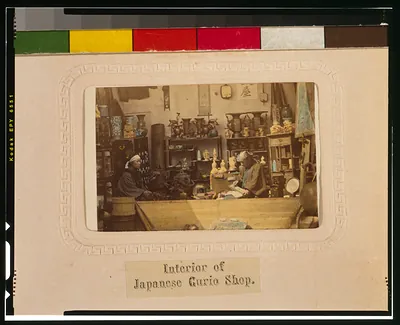 Interior of Japanese curio shop with two men
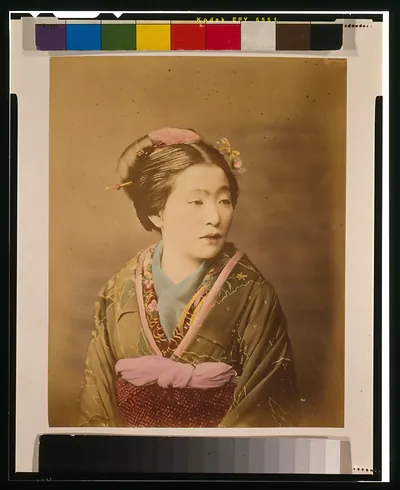 Hand-colored photograph of a Japanese woman in kimono
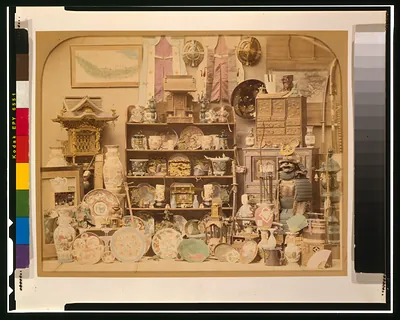 Hand-colored photograph of Japanese ceramics, armour and lacquerware display
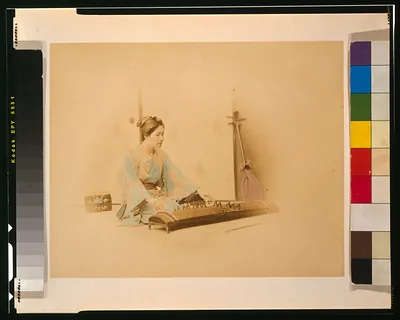 Hand-colored photograph of a woman playing koto
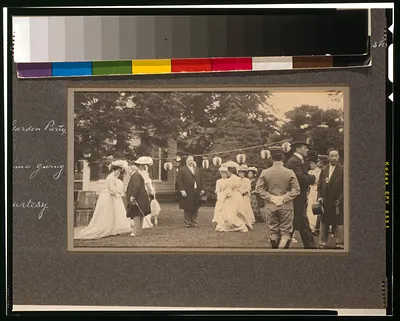 Garden party with guests in formal dress, photographed outdoors
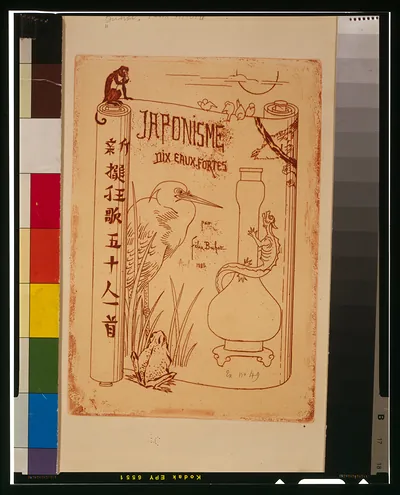 Japonisme: Dix eaux-fortes, title page
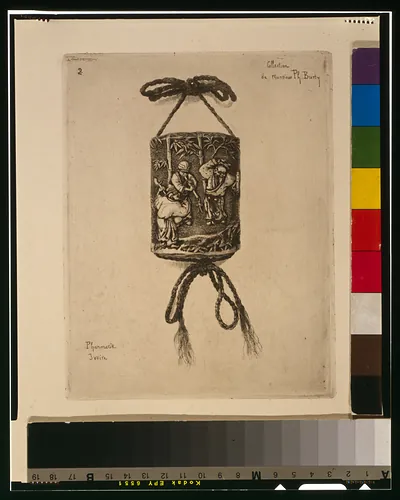 Etching of a carved ivory box with cord tassels
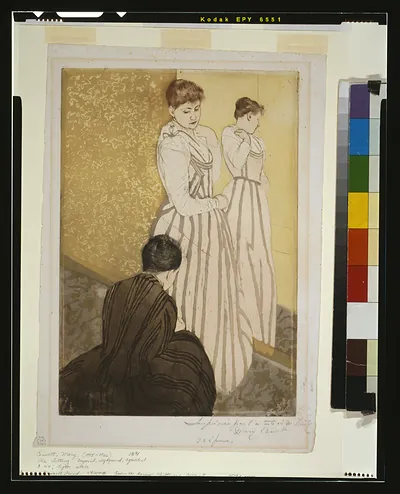 [The fitting] ([1891])
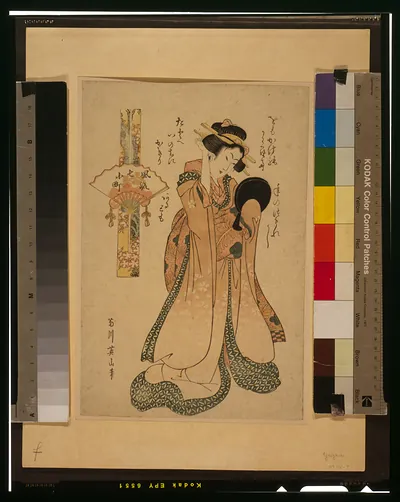 Kiyomizu komachi ([between 1804 and 18)
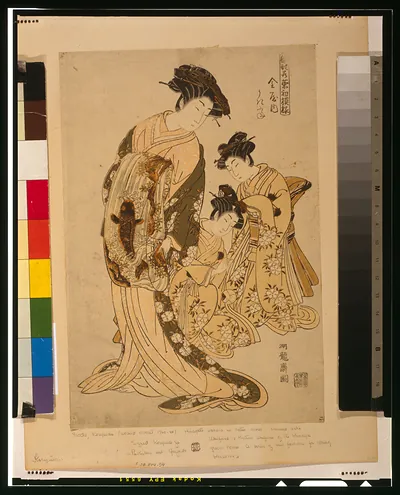 Kanaya uchi ukifune ([between 1772 and 17)
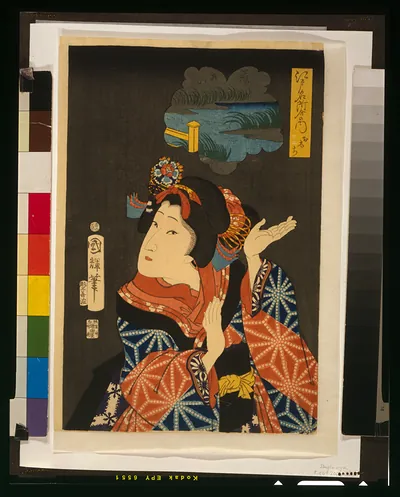 Oshichi (Japan : Masuda Shop )
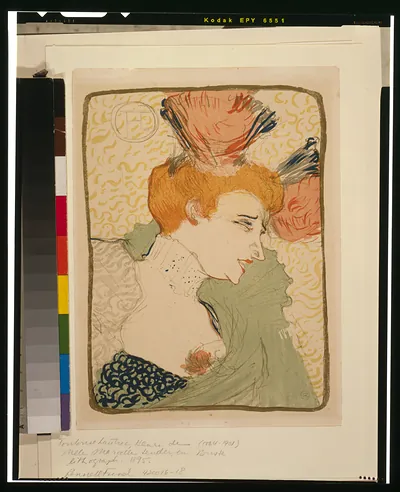 Mlle. Marcelle Lender, en buste ([1895])
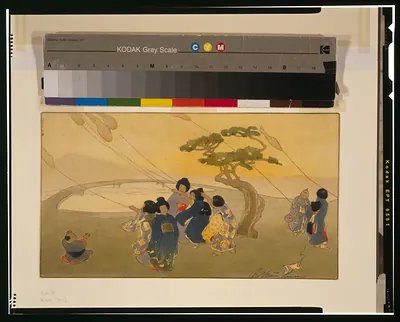 [Kites] / Bertha Lum. ([1913])
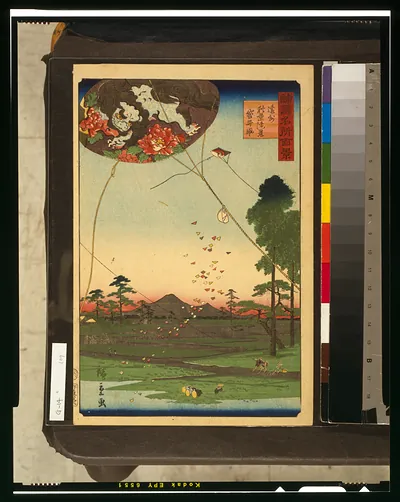 Enshū akiba enkei fukuroi no tako (1859)
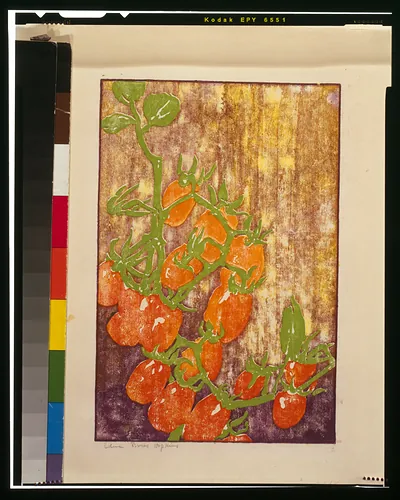 Color woodcut of tomato vine with orange fruit
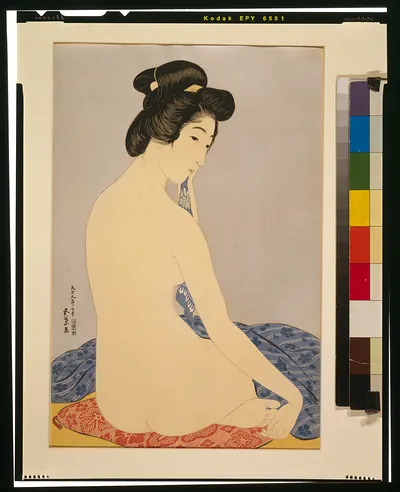 [Woman after bath (the model Tomi after bath)] (1920 July.)
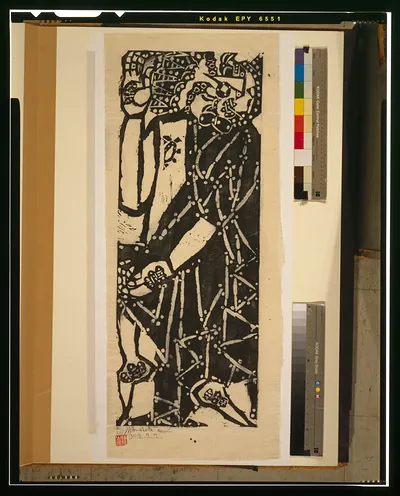 [Untitled] (1953)
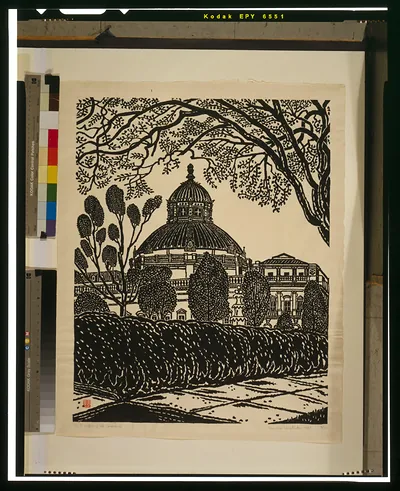 [Library of Congress, Washington, D.C.] (1966)
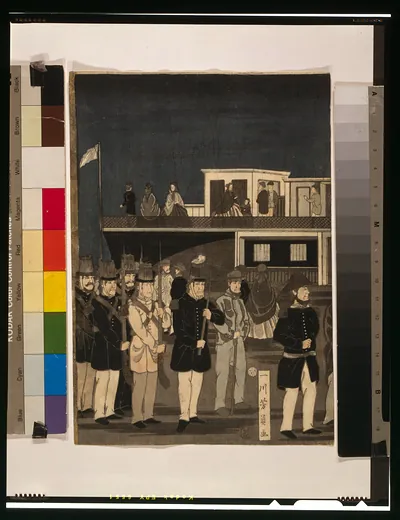 Amerikakoku jōkisha ōrai (Japan : Maruya Jinpa)
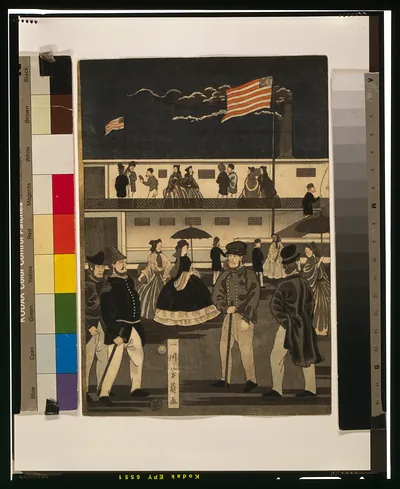 Amerikakoku jōkisha ōrai (Japan : Maruya Jinpa)
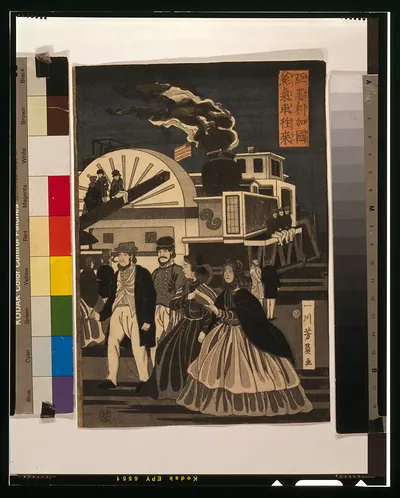 Amerikakoku jōkisha ōrai (Japan : Maruya Jinpa)
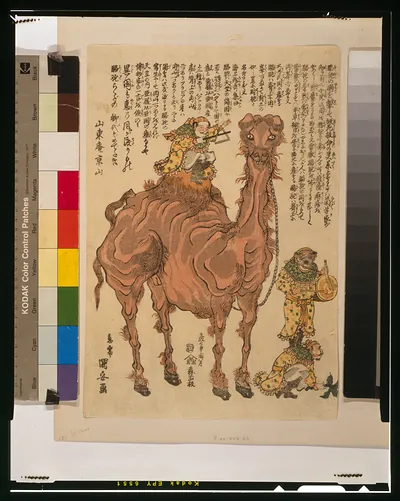 Rakuda no zu (1824)
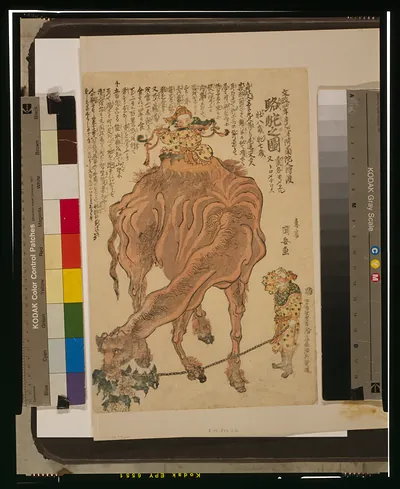 Rakuda no zu (1824)
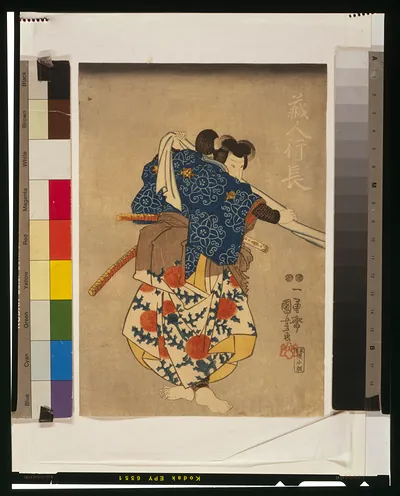 Kurando Yukinaga Saitō go Kunitake onnagyōja : Osada no tarō Nagamune. ([1847 or 1848])
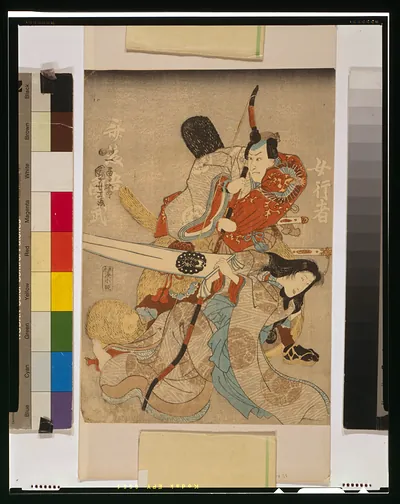 Kurando Yukinaga Saitō go Kunitake onnagyōja : Osada no tarō Nagamune. ([1847 or 1848])
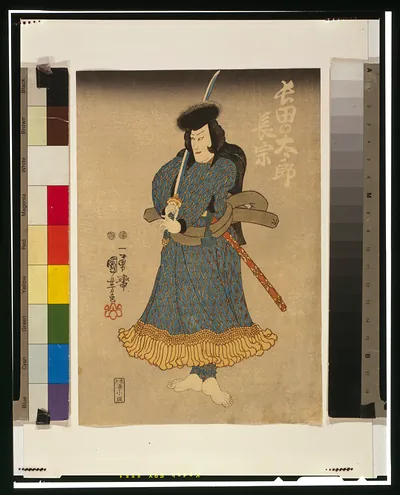 Kurando Yukinaga Saitō go Kunitake onnagyōja : Osada no tarō Nagamune. ([1847 or 1848])
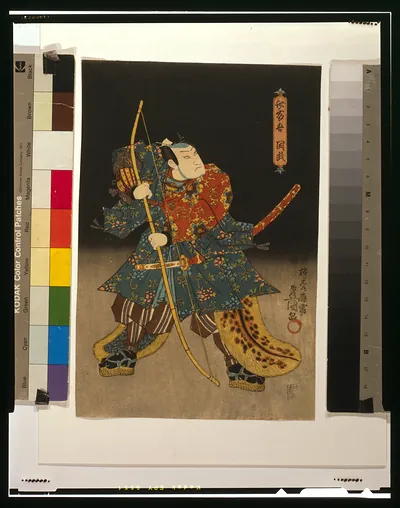 Saitō go Kunitake Tada no kurando Yukitsuna : Naruto no mae : Akugenta Yoshihira. ([1847 or 1848])
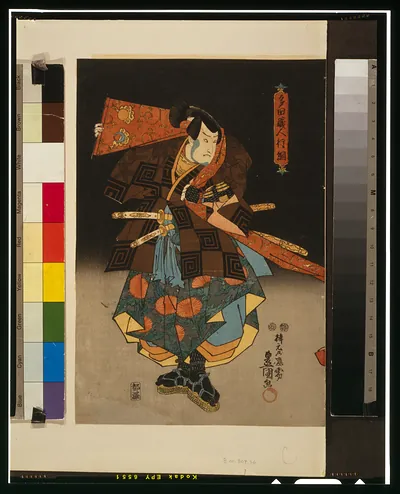 Saitō go Kunitake Tada no kurando Yukitsuna : Naruto no mae : Akugenta Yoshihira. ([1847 or 1848])
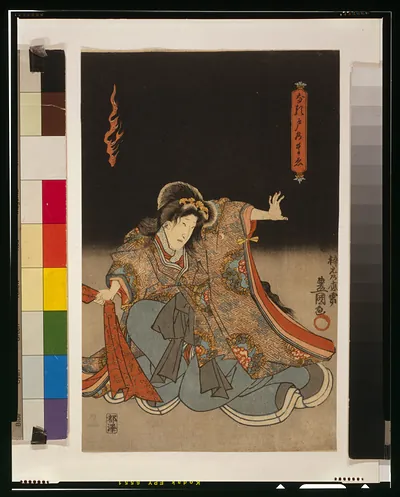 Saitō go Kunitake Tada no kurando Yukitsuna : Naruto no mae : Akugenta Yoshihira. ([1847 or 1848])
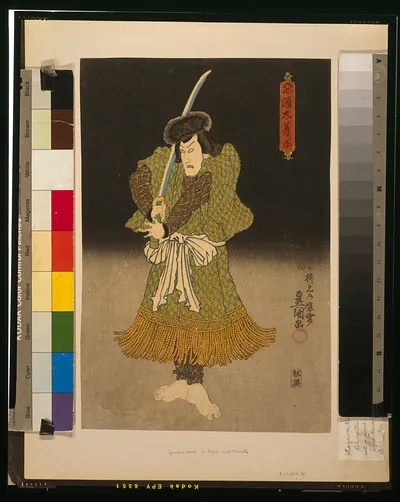 Saitō go Kunitake Tada no kurando Yukitsuna : Naruto no mae : Akugenta Yoshihira. ([1847 or 1848])
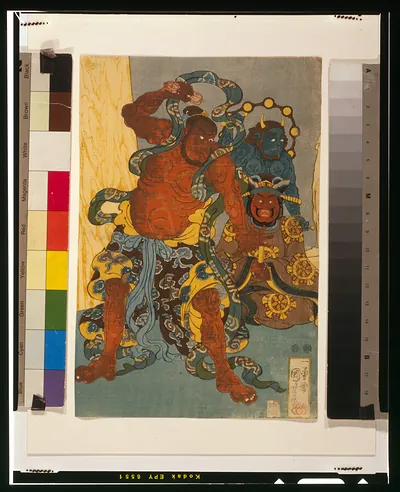 Meiyo migi ni tekinashi hidarijingorō ([between 1847 and 18)
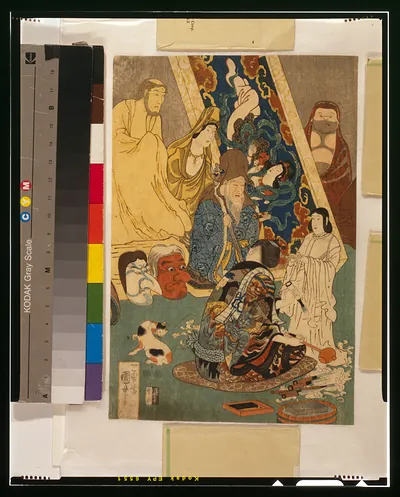 Meiyo migi ni tekinashi hidarijingorō ([between 1847 and 18)
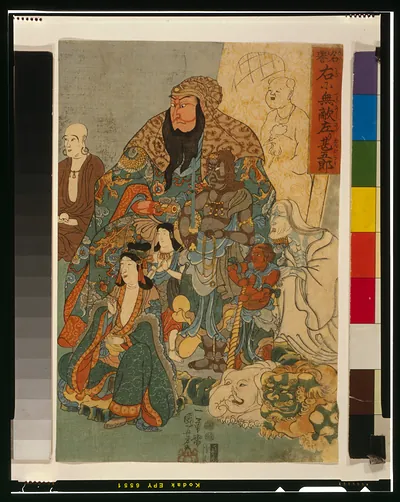 Meiyo migi ni tekinashi hidarijingorō ([between 1847 and 18)
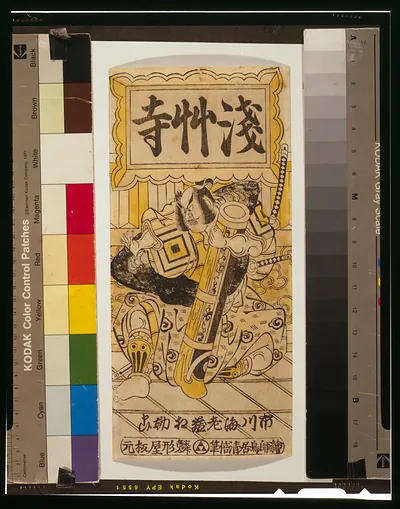 Ichikawa Ebizō ([between 1736 and 17)