African American History
78 historic pictures in the African American History collection, part of Subjects. Each one can be ordered as a print or licensed, and the collection is a starting point for telling stories about the past.
Open the interactive boardThe camera arrived in America at almost the same moment as the abolition movement was finding its voice, and some of the people who understood photography best were Black Americans who knew what it meant to control your own image.
Frederick Douglass is the clearest example. He sat for photographers again and again, and historians often describe him as the most photographed American of the 19th century. He wrote and spoke about photography and saw a dignified portrait as an answer to the caricatures that filled popular prints. His pictures always show him looking straight at the viewer, serious and composed.
Those caricatures are part of the record too, and they are worth seeing for what they are. Much of the printed material of the 1800s, from sheet music covers to advertising, used crude racial stereotypes. Set beside them, the studio portraits that Black families commissioned for themselves read as a deliberate correction.
In 1900 W.E.B. Du Bois helped assemble an exhibit for the Paris Exposition that included hundreds of photographs of Black Americans in Georgia and elsewhere. They show homes, businesses, students, teachers and families, and the point was plain: this is what progress looks like a generation after slavery. Those photographs are now in the Library of Congress. Photographers at schools such as Hampton and Tuskegee documented classrooms and trades in the same years, and in the 1930s and 1940s the government photographers of the Farm Security Administration, among them Gordon Parks, recorded Black life in the rural South and the cities of the North.
What these pictures show again and again is ordinary life carried on with care. A church congregation on the steps, a graduating class, a family in their best clothes on a porch. Look at the clothes and the poses. Nearly all of these sitters had chosen how they wanted to be seen, and it shows.
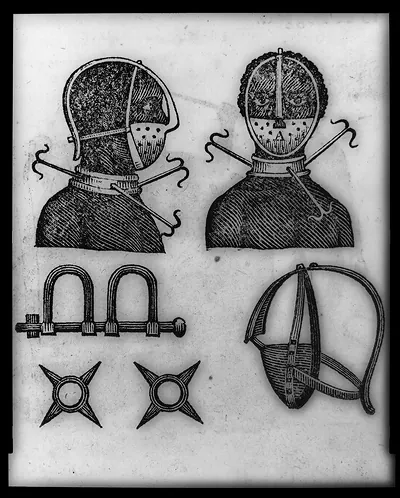 [Iron mask, collar, leg shackles and spurs used to restrict slaves] (New York : Samuel Wo)
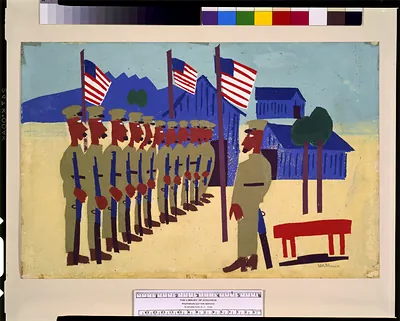 Training for war / W.H. Johnson. ([1941 or 1942])
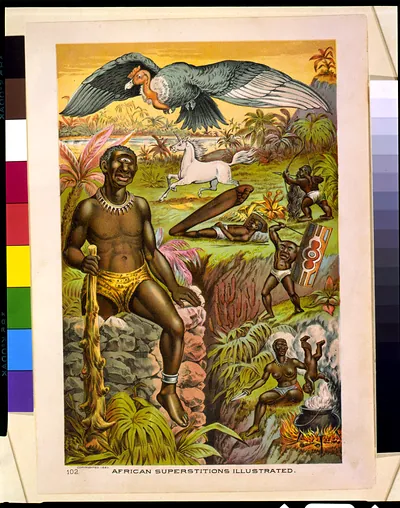 African superstitions illustrated (c1889.)
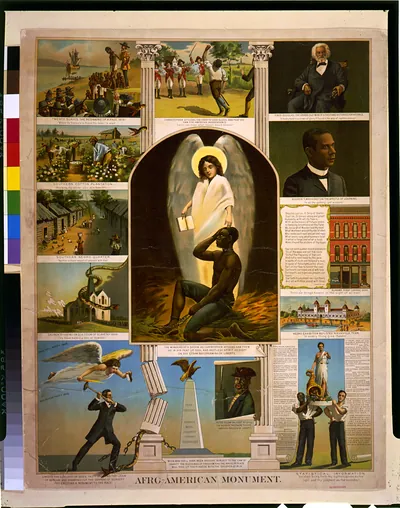 Afro-American Monument (Chicago : Goes Litho)
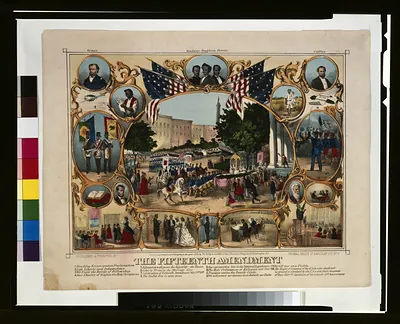 The Fifteenth amendment (N.Y. : Published & p)
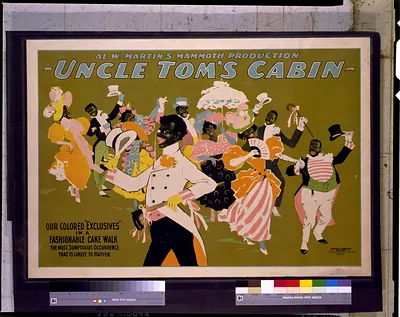 Uncle Tom's Cabin: Our Colored Exclusives Fashionable Cake Walk poster
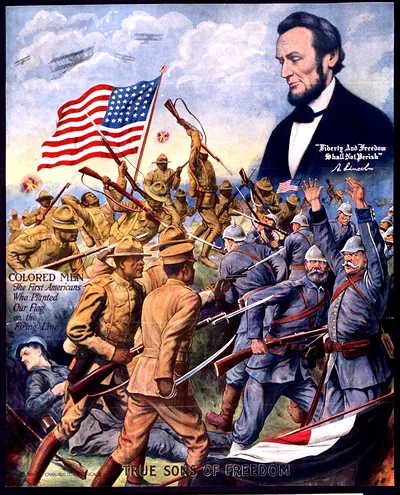 True sons of freedom (Chicago : Chas. Gust)
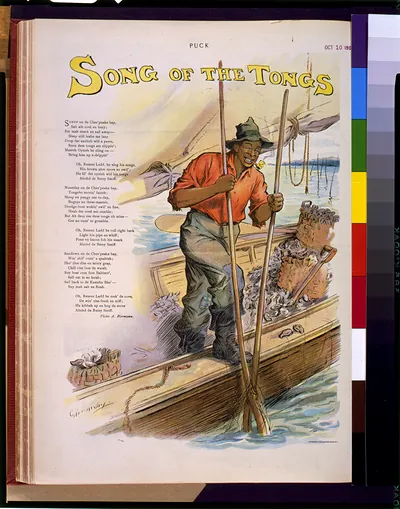 Song of the tongs / Gallaway. (N.Y. : J. Ottmann Li)
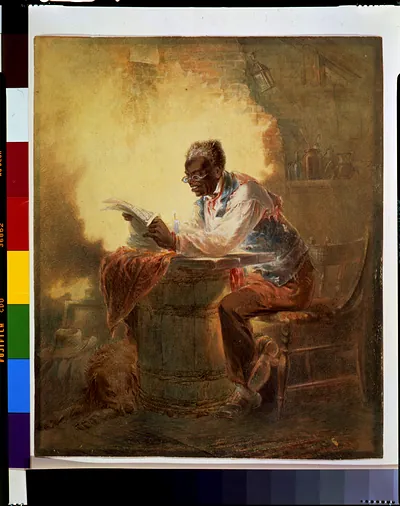 [Black man reading newspaper by candlelight]
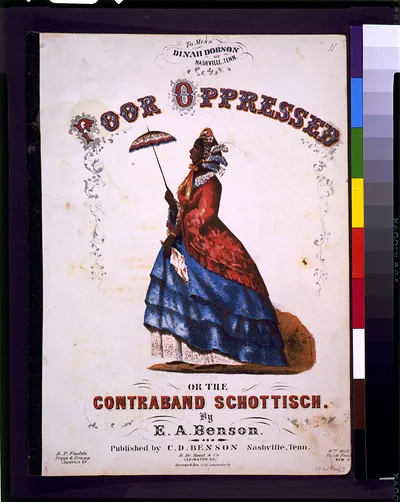 Poor oppressed or the contraband Schottisch, by E.A. Benson / German & Bro. lith., Louisvi (Nashville, Tenn. : P)
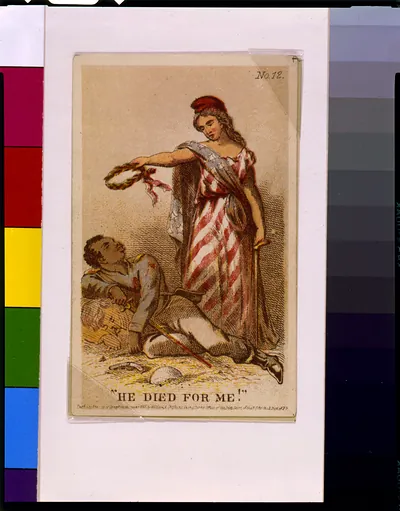 He died for me! (c1863.)
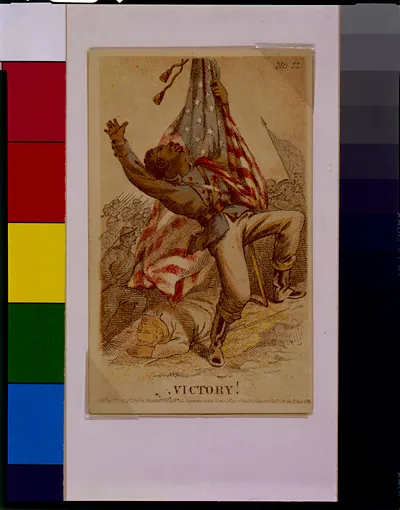 Victory! (c1863.)
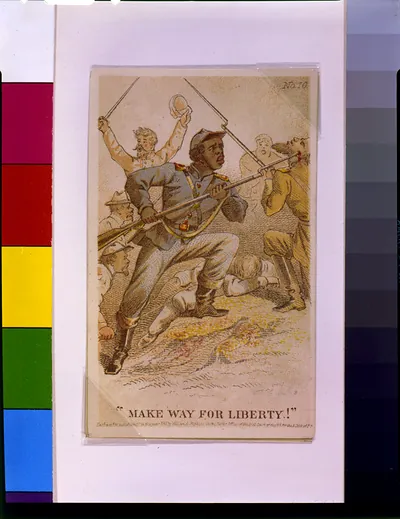 Make way for liberty! (c1863.)
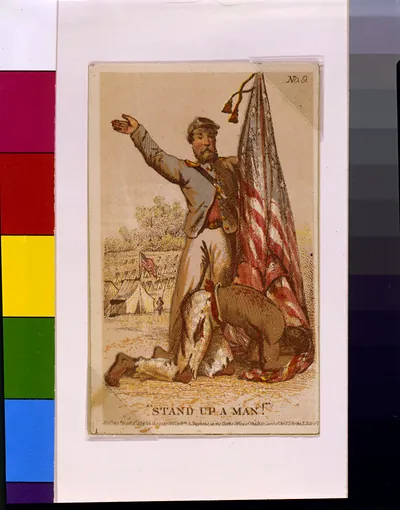 Stand up a man! (c1863.)
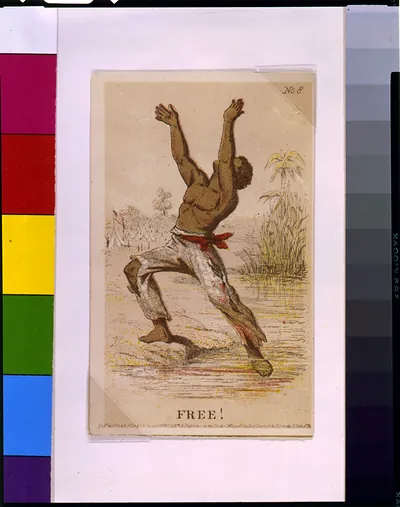 Free! (c1863.)
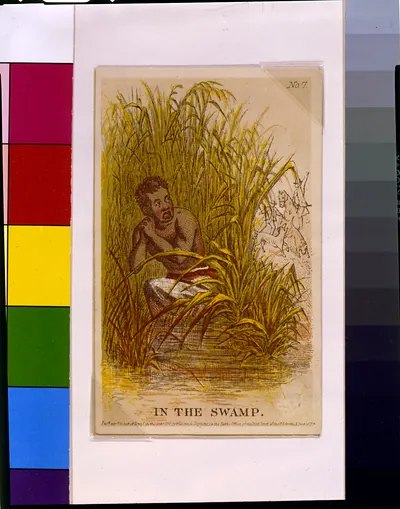 In the swamp (c1863.)
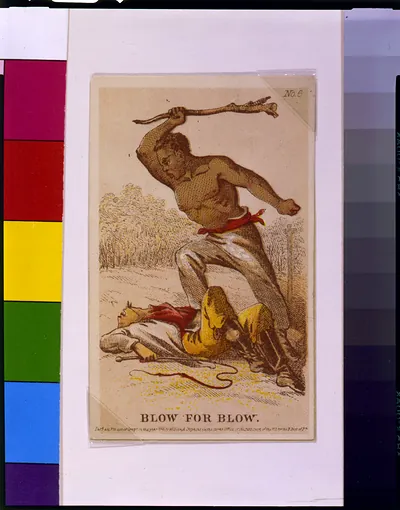 Blow for blow (c1863.)
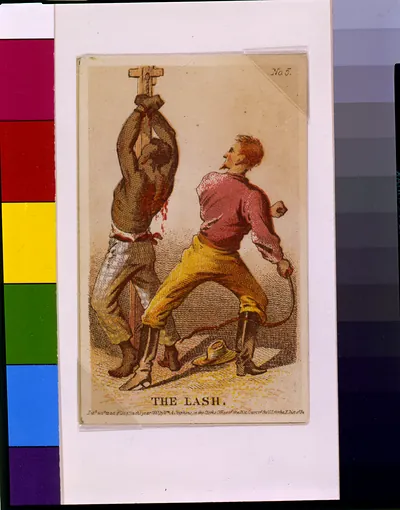 The Lash (c1863.)
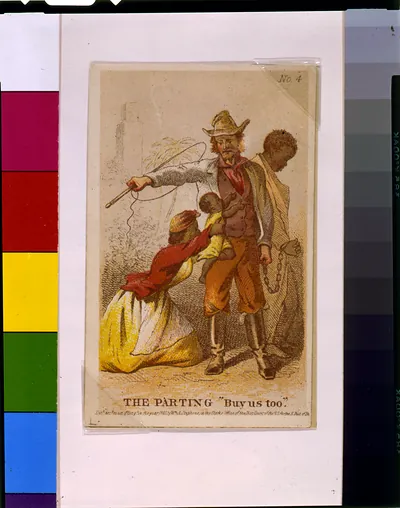 The Parting--Buy us too (c1863.)
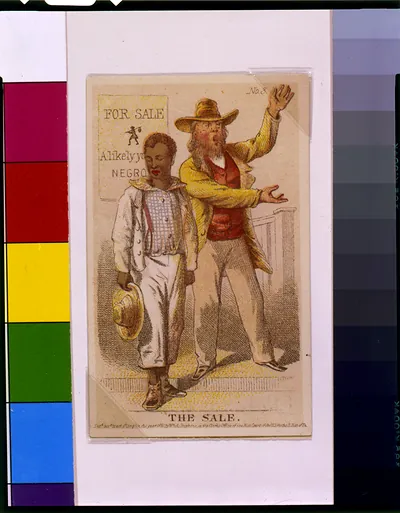 The Sale (c1863.)
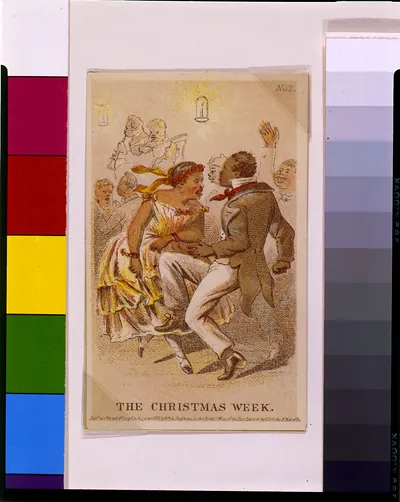 The Christmas week (c1863.)
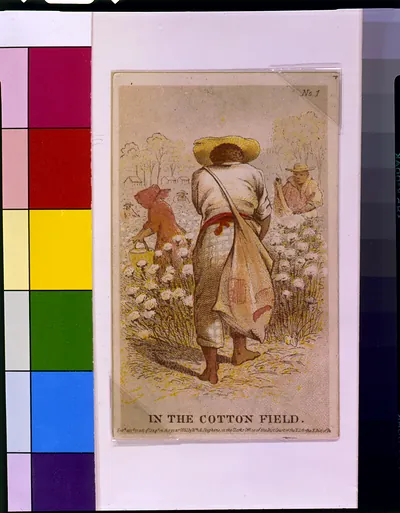 In the cotton field (c1863.)
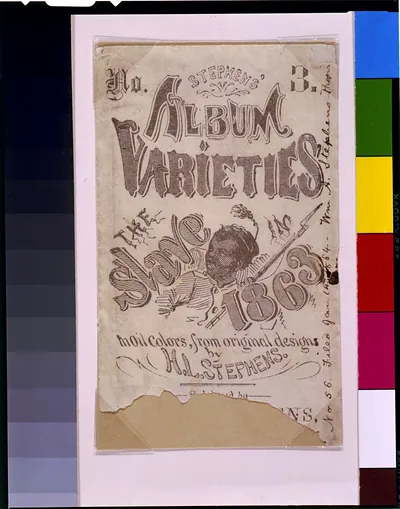 Stephen's varieties No. 3: The slave in 1863 (Philadelphia : c1863)
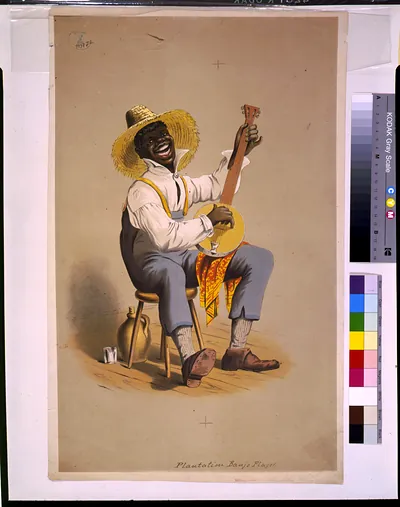 Plantation banjo player (c1875.)
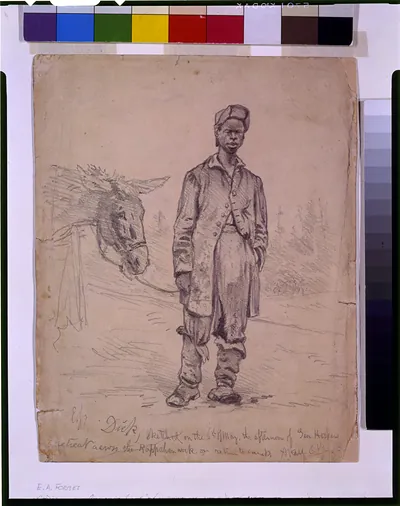 Dick, sketched on the 6th of May, on return to camp / E.F. ([18]63 May 6.)
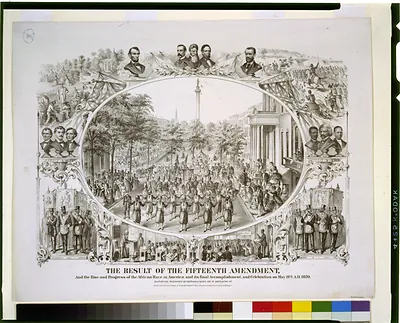 The result of the Fifteenth Amendment, and the rise and progress of the African race in Am ([Baltimore] : Publis)
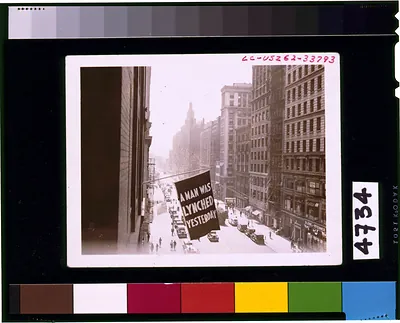 [Flag, announcing lynching, flown from the window of the NAACP headquarters on 69 Fifth Av
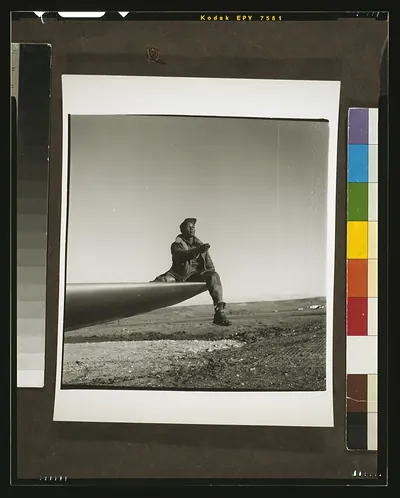 [Black fighter pilot series: Ground crewman of the Red-Tailed Mustangs, 332nd Fighter Pilo ([1945 March])
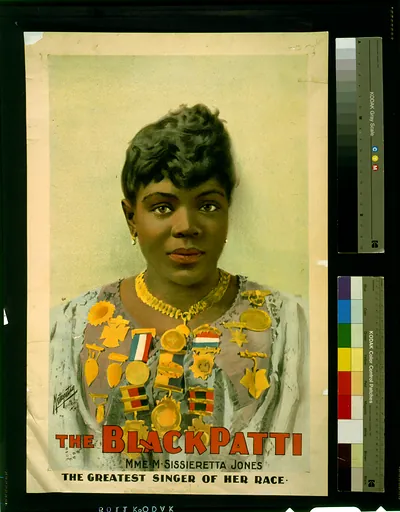 The Black Patti, Mme. M. Sissieretta Jones the greatest singer of her race. (N.Y. : Metropolitan )
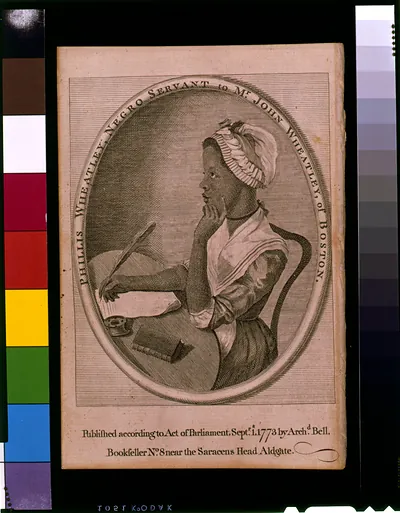 Phillis Wheatley, Negro servant to Mr. John Wheatley, of Boston ([London], Archd. Bel)
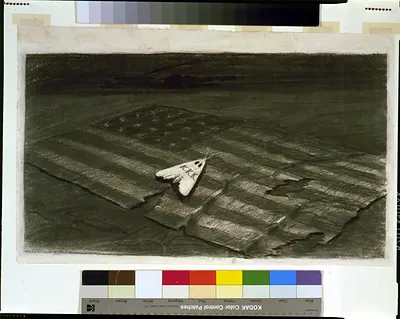 Like the moth, it works in the dark
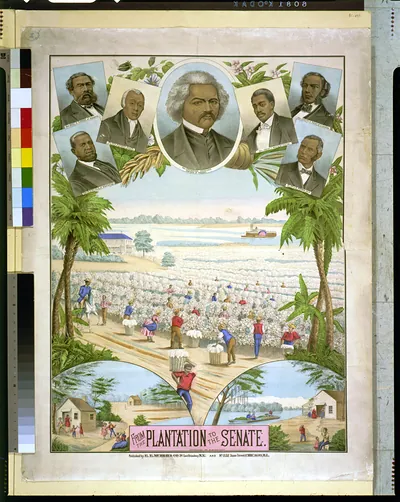 From the plantation to the Senate (New York : E.E. Murr)
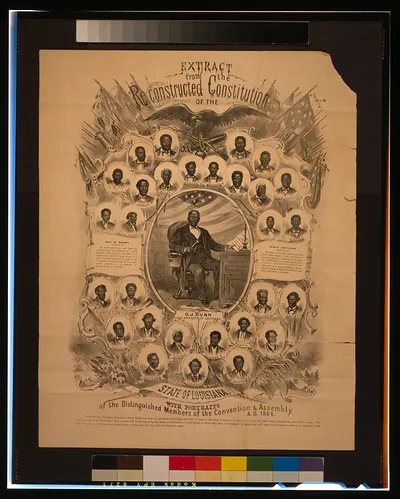 Extract from the reconstructed Constitution of the state of Louisiana, with portraits of t (1868)
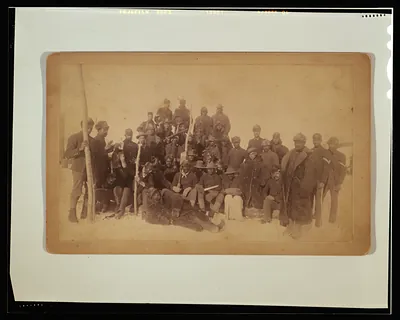 [Buffalo soldiers of the 25th Infantry, some wearing buffalo robes, Ft. Keogh, Montana] (1890)
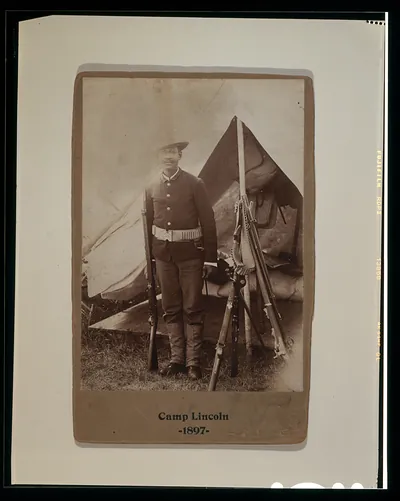 Camp Lincoln, 1897 (1897)
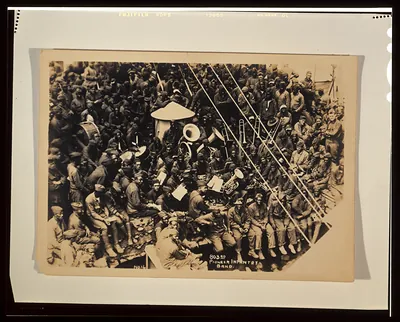 803rd Pioneer Infantry Band, No. 16 (1919)
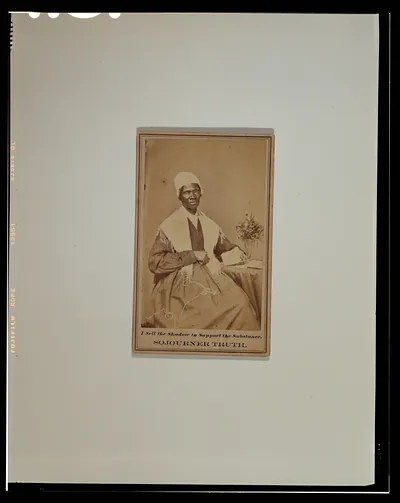 I sell the shadow to support the substance (c1864.)
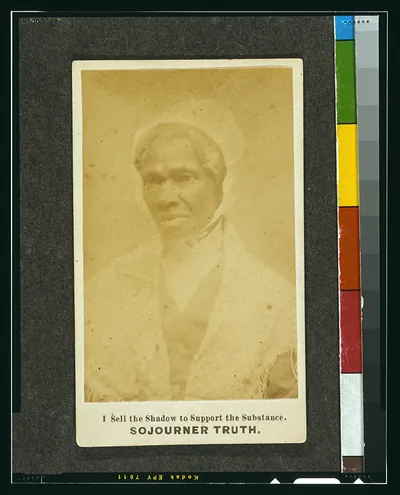 I sell the shadow to support the substance (c1864.)
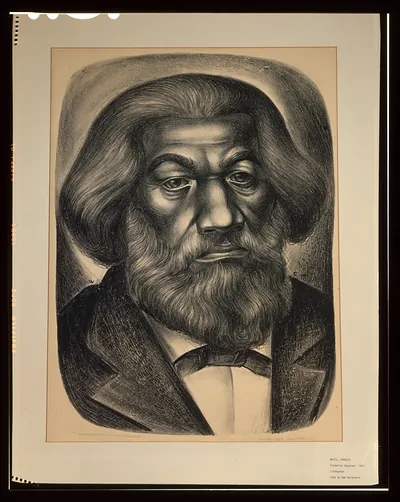 Frederick Douglass" / Charles White '51." (1951)
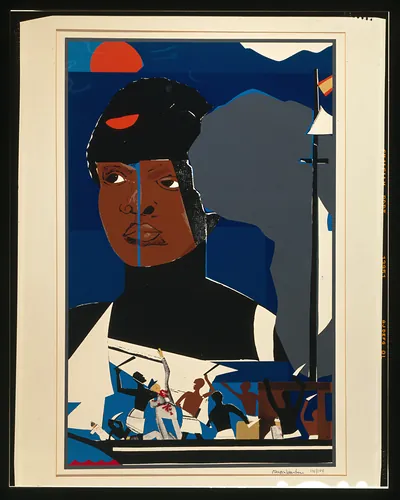 Prince Cinque / Romare Bearden. ([1971])
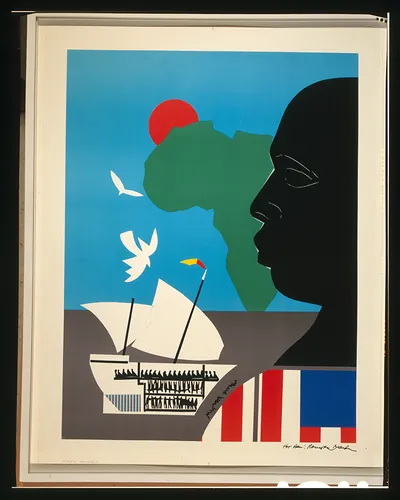 Roots odyssey / Romare Bearden. ([1976])
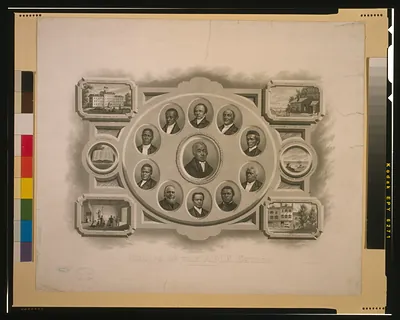 Bishops of the A.M.E. Church (Boston : J.H. Daniel)
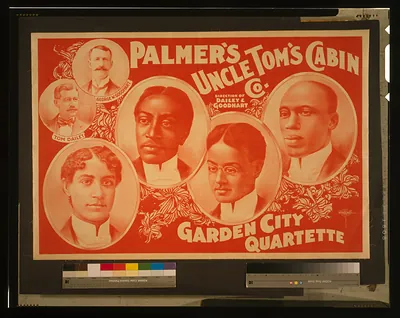 Uncle Tom's cabin. (Buffalo, N.Y. : Cour)
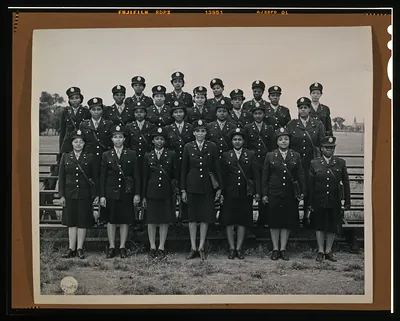 Women in Army Corps uniforms, group portrait on bleachers
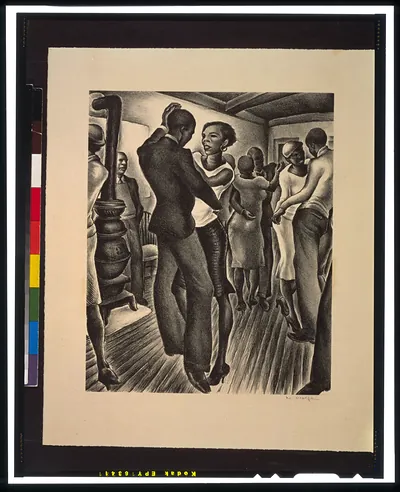 [Red Eye's hall] / M. Wolfe. ([1934])
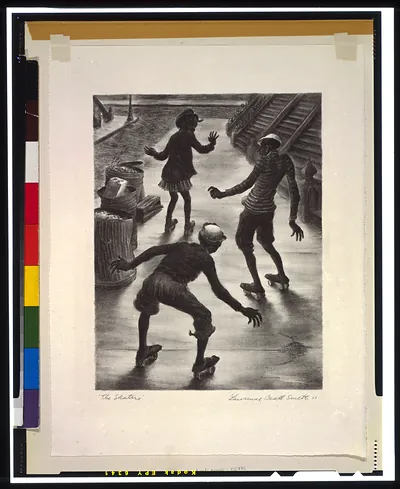 The skaters / Lawrence Beall Smith '39. ([19]39.)
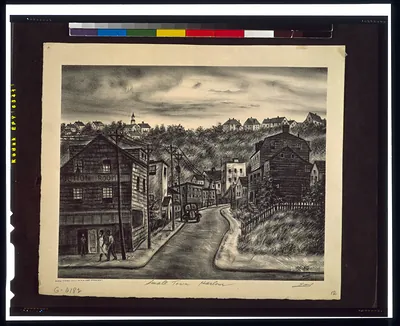 Small town Harlem / Saul. (1940)
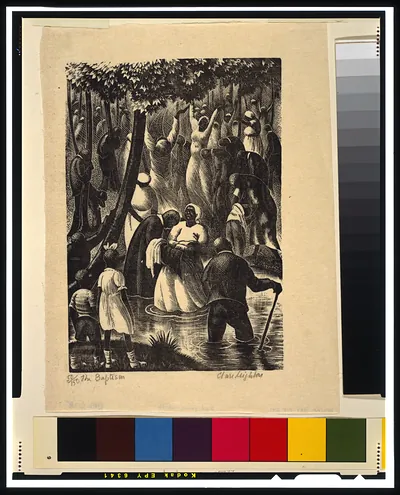 The baptism / Clare Leighton. ([between 1948 and 19)
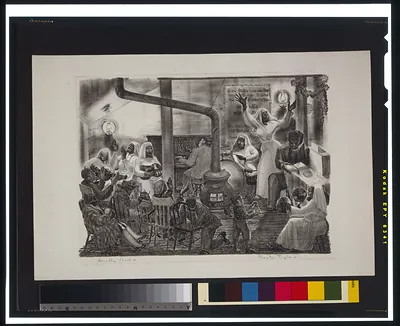 Assembly church / Prentiss Taylor. ([1936])
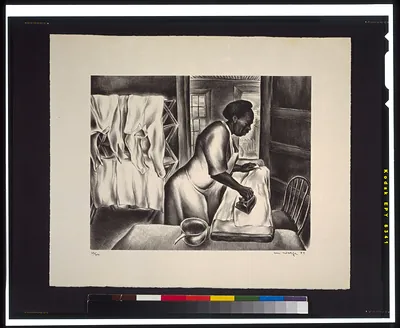 [Tuesday - Othelia] / M. Wolfe '34. ([19]34.)
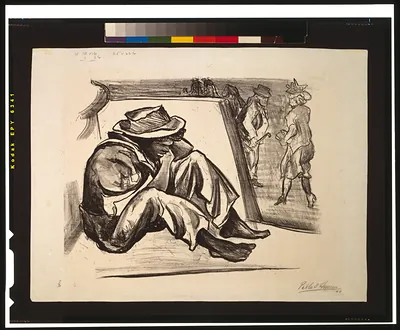 [Papelero en al zocalo] / Pablo O'Higgins '43. ([19]43.)
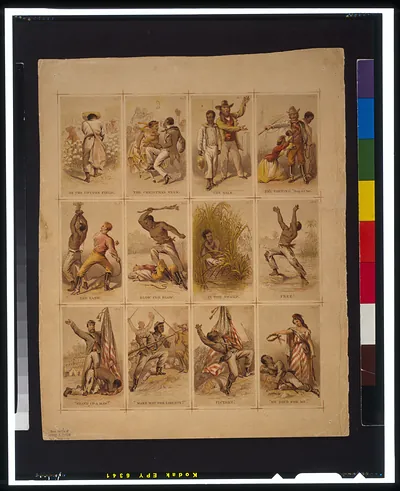 [Journey of a slave from the plantation to the battlefield] ([ca. 1863])
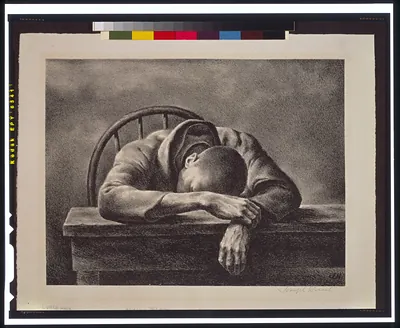 Lunch hour / JH. (1942)
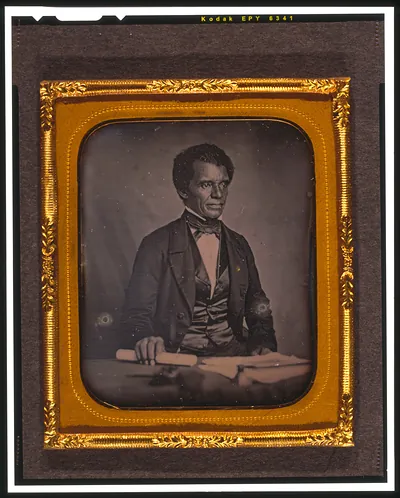 [Beverly Page Yates, half-length portrait, facing slightly right, seated at table, holding ([between 1856 and 18)
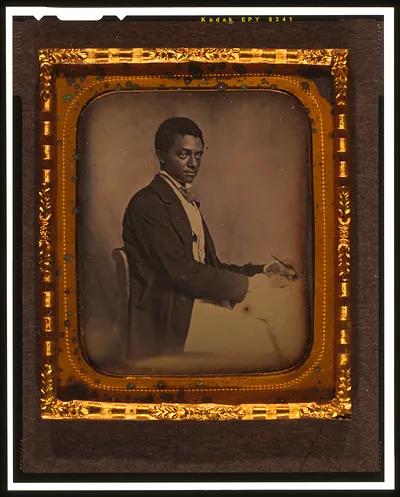 [James B. Yates, three-quarter length portrait, three-quarters view, seated in chair at de ([between 1856 and 18)
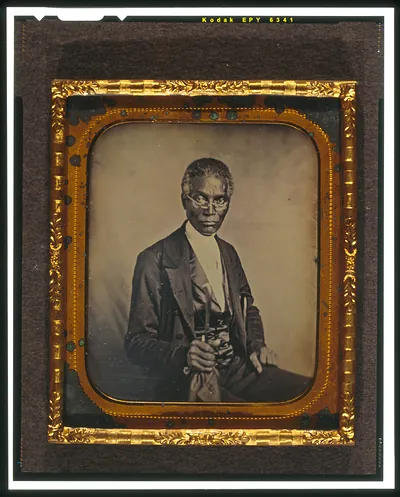 [Philip Coker, three-quarter length portrait, full face, seated, wearing spectacles] ([between 1856 and 18)
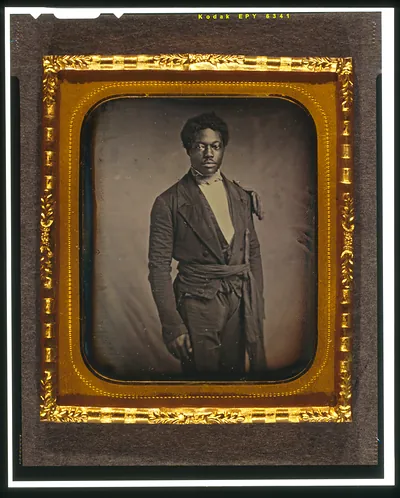 [Chancy Brown, three-quarter length portrait, facing front] ([between 1856 and 18)
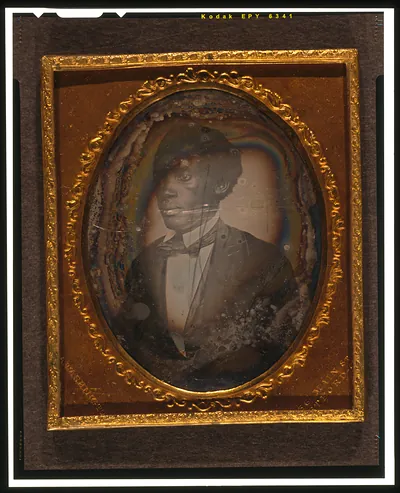 [Stephen Allen Benson, head-and-shoulders portrait, three-quarters to the left] ([between 1854 and 18)
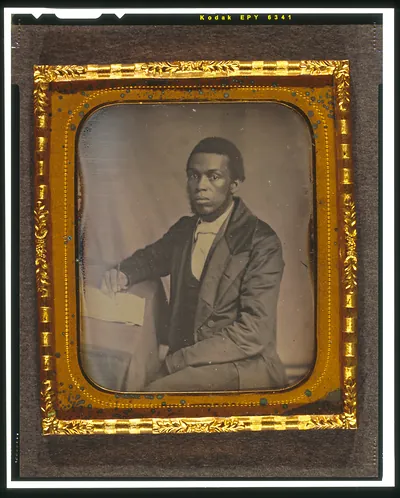 [James Skivring Smith, three-quarter length portrait, three-quarters view, seated at desk] ([between 1856 and 18)
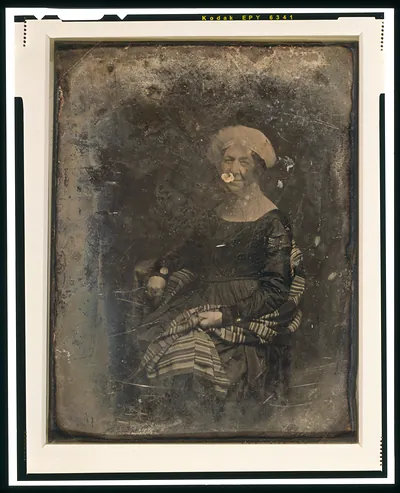 [Dolley Madison, three-quarter length portrait of a woman, facing front, seated] ([1848])
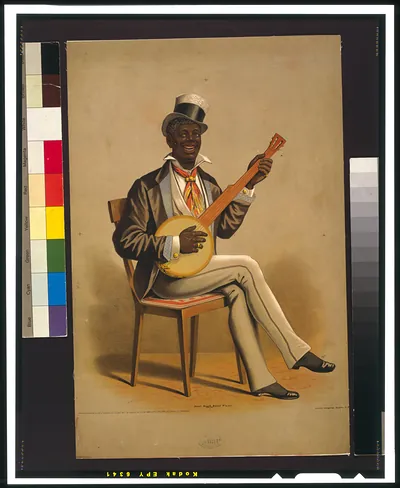 Swell negro banjo player ([Buffalo] : Courier )
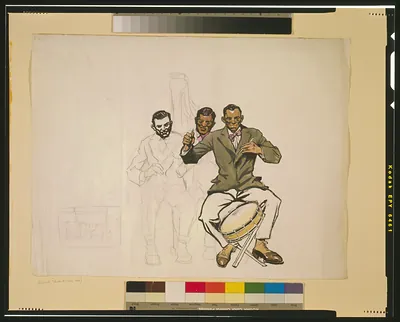 [Three black men in orchestra]
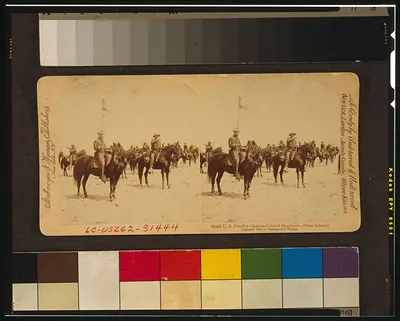 Ninth U.S. Cavalry--famous Colored Regiment--Draw Sabers! (New York, N.Y. : Str)
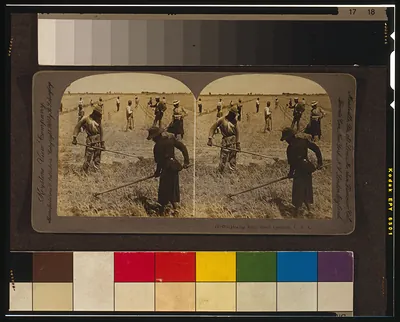 Hoeing rice, South Carolina, U.S.A. (Meadville, Pa. : Key)
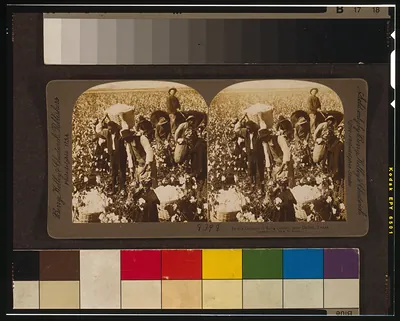 In the domain of King Cotton, near Dallas, Texas (Philadelphia, U.S.A.)
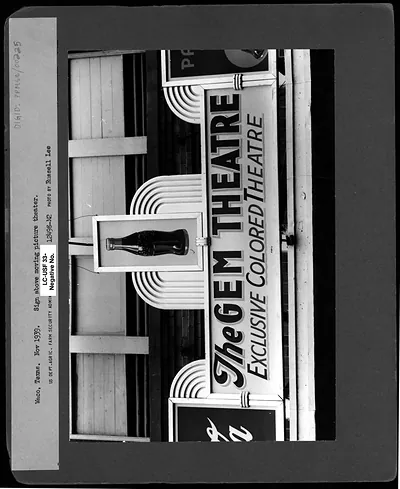 The Gem Theatre exclusive colored theatre sign, Waco, Texas
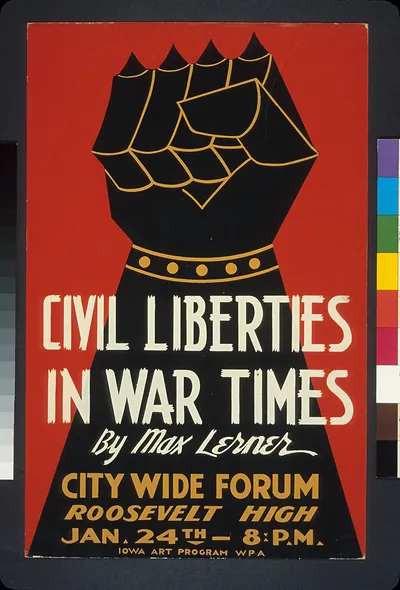 Civil liberties in war times by Max Lerner City wide forum. (1936)
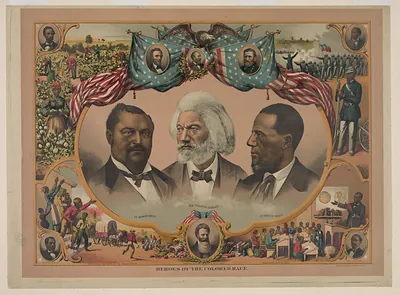 Heroes of the Colored Race
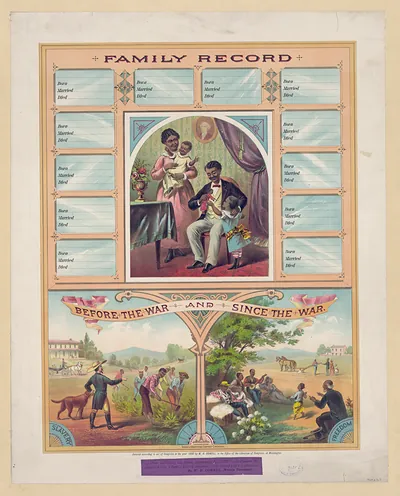 Family Record: Before the War and Since the War
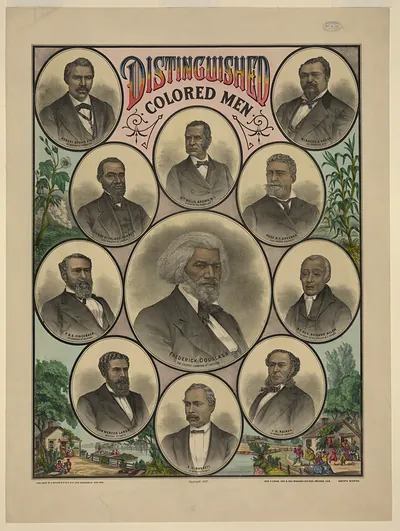 Distinguished Colored Men, oval portrait lithograph poster
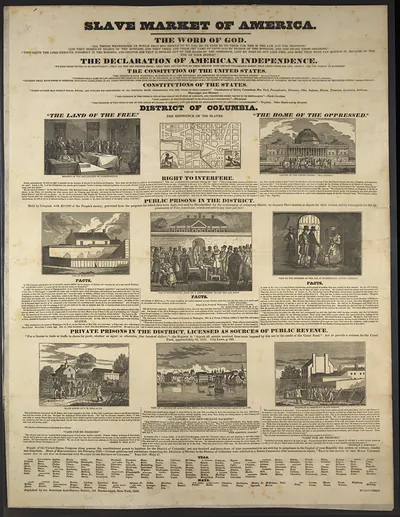 Slave Market of America broadside with declarations and prison notices
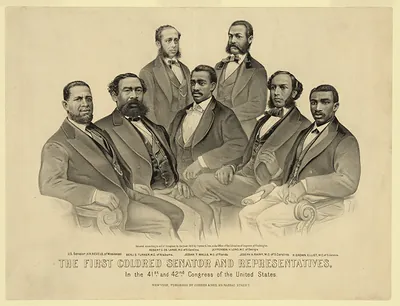 The First Colored Senator and Representatives in the 41st and 42nd Congress
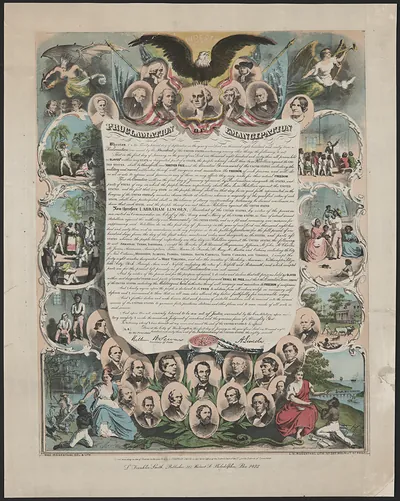 Proclamation of Emancipation with portraits and decorative border
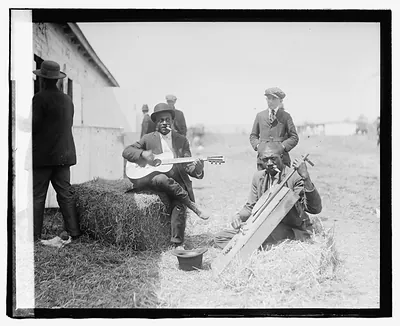 Character ([between 1918 and 19)
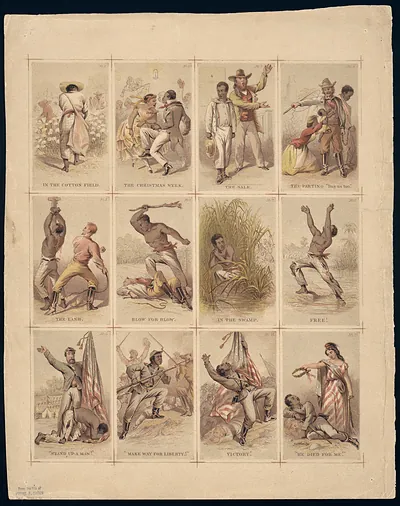 [Journey of a slave from the plantation to the battlefield] ([ca. 1863])
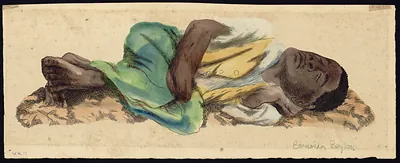 [Nat Turner's dream - sleeping runaway slave] / Bernarda Bryson.
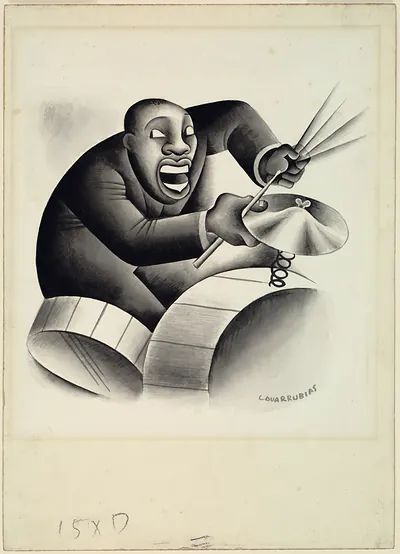 [Percussion] / Covarrubias. (1926)
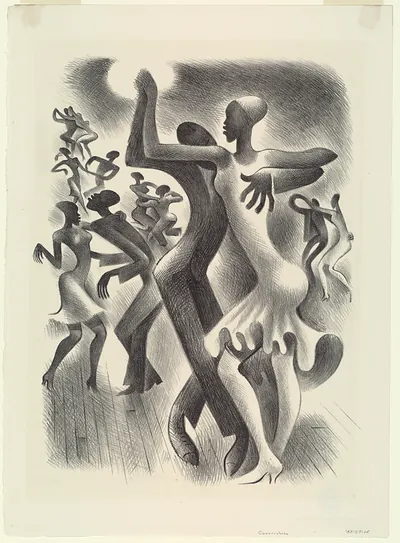 The Lindy hop (1936)