The Midwest
29 historic pictures in the The Midwest collection, in 7 sections, part of Cities. Each one can be ordered as a print or licensed, and the collection is a starting point for telling stories about the past.
Open the interactive boardThe Midwest was where much of 19th-century America went to work. It grew the wheat and corn, packed the meat, cut the timber and later built the cars. This board stretches the word a little past its usual borders, taking in Idaho and Montana along with the states around the Great Lakes and the Mississippi.
Chicago is at the center of the story. It grew from a small town in the 1830s to one of the largest cities in the world by 1900, mostly because the railroads met there. The Great Fire of 1871 burned much of it down. It rebuilt in time to invent the skyscraper and host the World's Columbian Exposition in 1893. Illinois beyond the city was farm country, and Lincoln's Springfield.
Michigan brings lumber, the Great Lakes and Detroit. In 1913 Henry Ford's Highland Park plant began using a moving assembly line, and within a few years Detroit was the automobile capital of the world. Mackinac Island, with no cars allowed and its Grand Hotel opened in 1887, was the summer escape. Wisconsin had dairy farms, breweries and lumber camps. Indiana had small towns, steel at Gary, and the Indianapolis 500, first run in 1911.
Missouri was the gateway. St. Louis sat near where the Missouri River joins the Mississippi, and wagons and steamboats headed west from there for decades. In 1904 the city hosted a world's fair to mark the centennial of the Louisiana Purchase. Further west, Montana grew on cattle, gold and the copper mines of Butte, which for a time were among the most productive in the world. Idaho, with its mountains, mines and the Snake River, is the least photographed of the group.
A good thing to look for in Midwestern town pictures is the grain elevator or the water tower. On flat land, they were the tallest thing for miles, and photographers often used them to frame a town. The railroad tracks are almost always somewhere in the picture, because without the railroad most of these towns would not have existed.
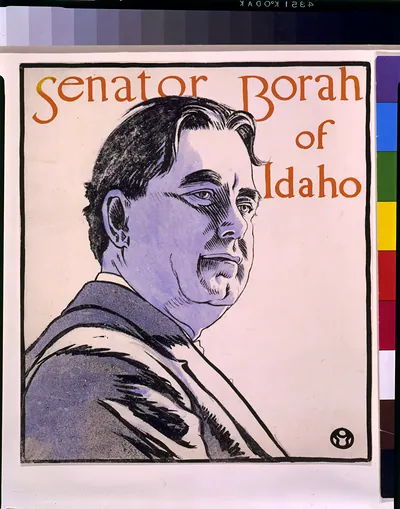
Idaho
Illinois
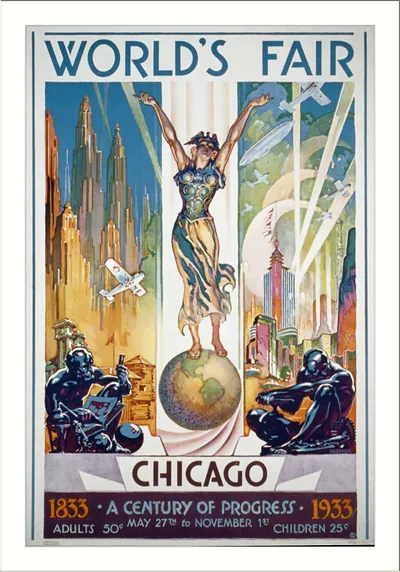 World's Fair, Chicago. A Century of Progress, 1833-1933 / Sheffer. (Chicago : Goes Litho)
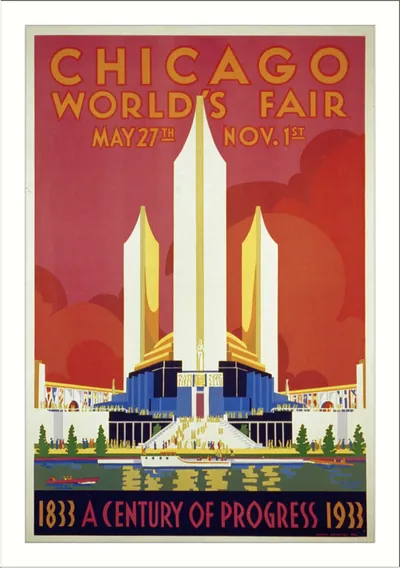 Chicago world's fair. A century of progress, 1833-1933 / Weimer Pursell. ([Chicago] : Neely Pr)
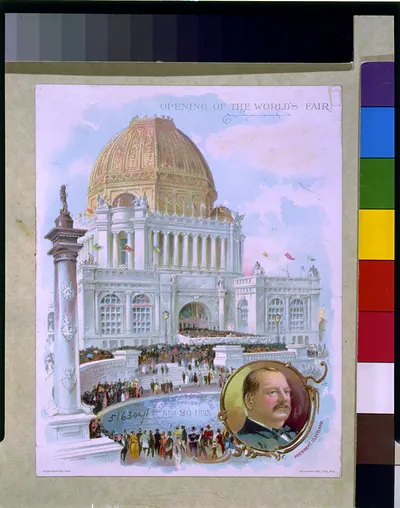 Opening of the World's Fair / The Knapp Co. lith., N.Y. (c1893.)
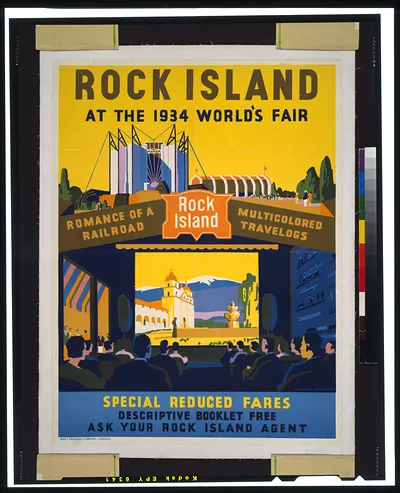 Rock Island at the 1934 World's Fair / Neely Printing Company, Chicago. (Chicago : Neely Prin)
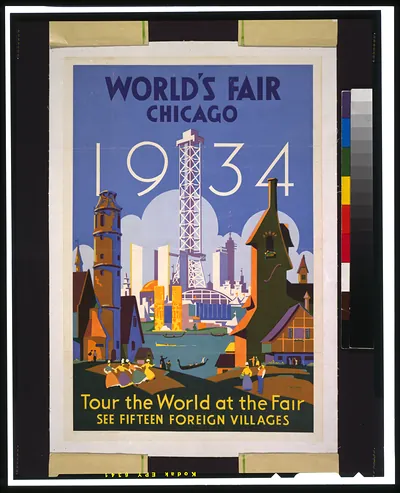 World's fair - Chicago - 1934 Tour the world at the fair--See fifteen foreign villages / W (Chicago : Neely Prin)
Indiana
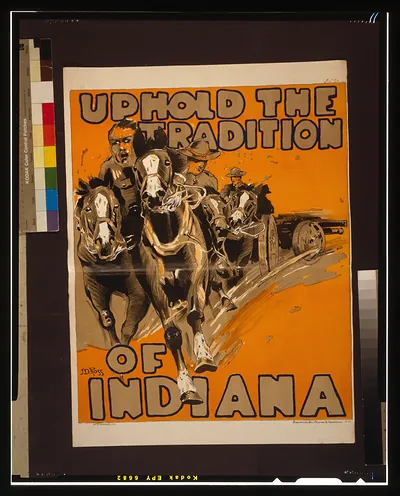 Uphold the tradition of Indiana / J.D. Ross; Wm. B. Burford, Lith. (Indianapolis : Bookw)
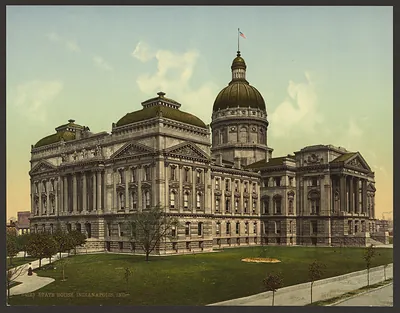 State House, Indianapolis, Ind.
Michigan
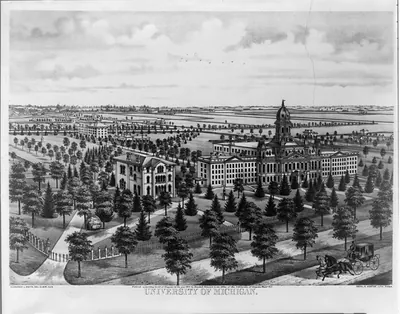 University of Michigan (c1874.)
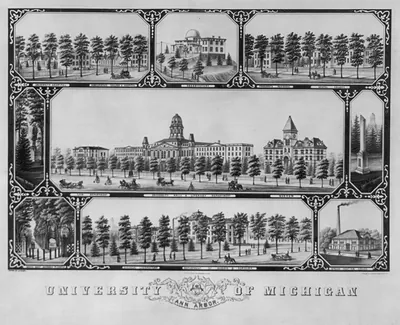 University of Michigan, Ann Arbor (c1881.)
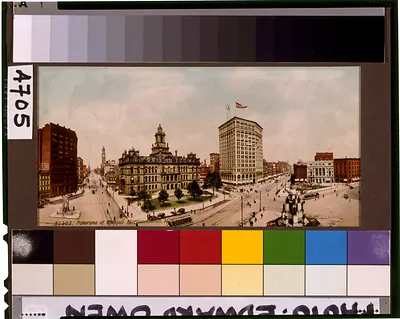 Panorama of Campus Martius, Detroit, Michigan ([ca. 1900])
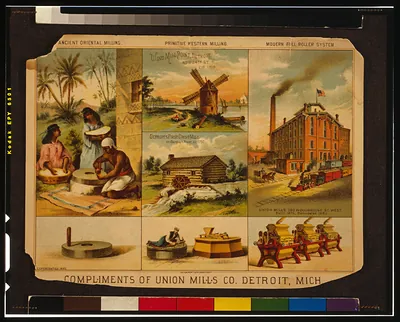 Compliments of Union Mills Co., Detroit, Mich. (c1895.)
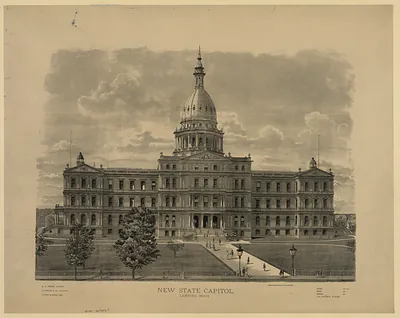 New State Capitol, Lansing, Mich.
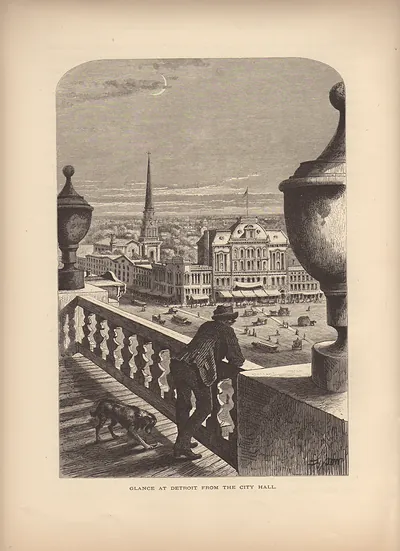 Glance at Detroit from the City Hall
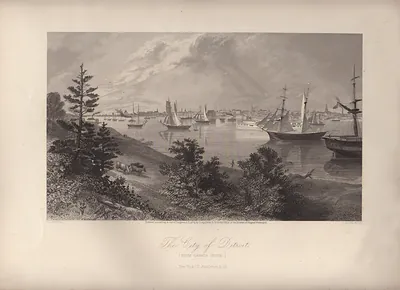 MI City of Detroit
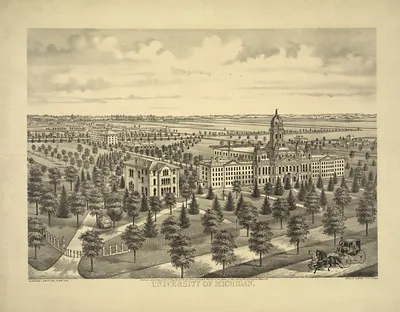 The University of Michigan
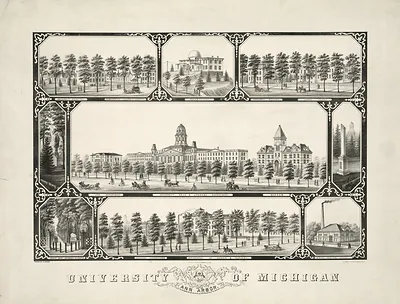 The University of Michigan Ann Arbor
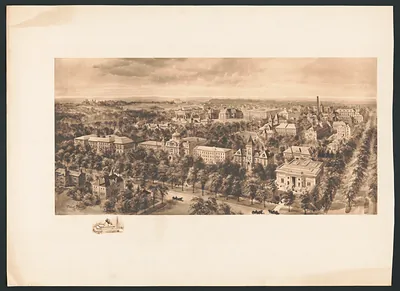 University of Michigan (c1874.)
Missouri
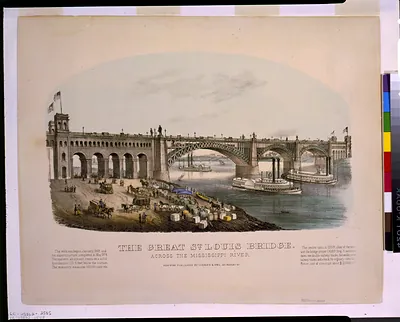 The great St. Louis Bridge - across the Mississippi River (New York : Published)
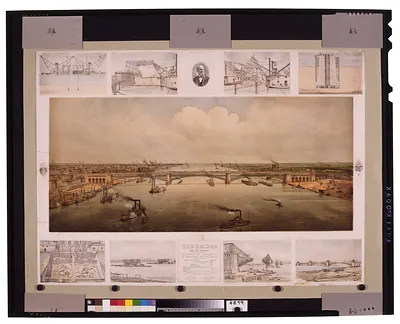 The bridge at St. Louis / CJK(?) ; F. Welcker. (St. Louis : Pub. by )
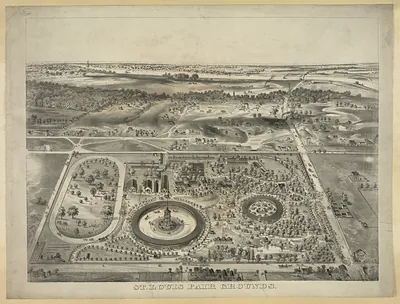 St. Louis Fair Grounds, bird's-eye lithograph view
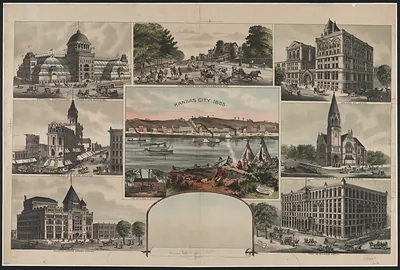 Kansas City 1885
Montana
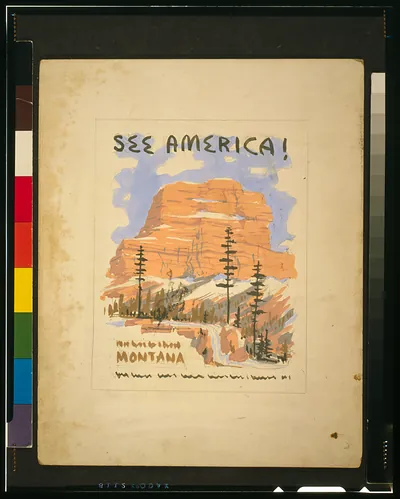 See America! ([1936])
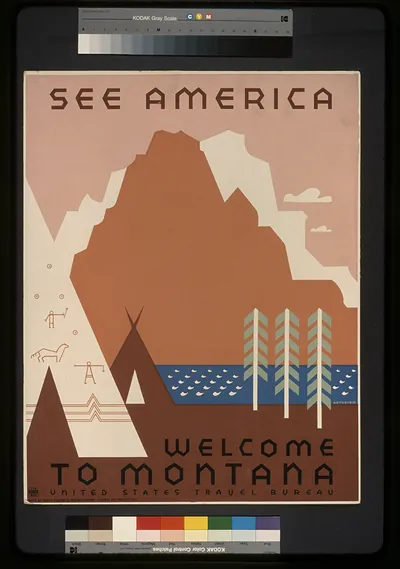 See America Welcome to Montana / Rothstein. (1936)
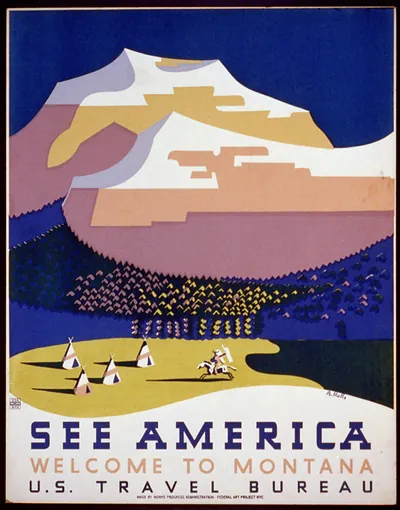 See America Welcome to Montana / R. Halls. (1936)
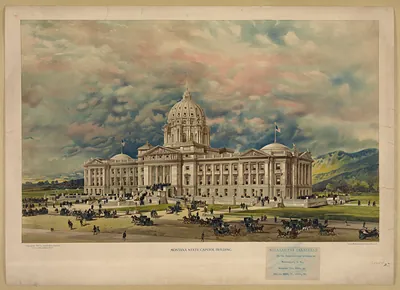 Montana State Capitol Building, lithograph print