Horseshoe Bend National Military Park
18 historic pictures in the Horseshoe Bend National Military Park collection, in 2 sections, part of Landmarks. Each one can be ordered as a print or licensed, and the collection is a starting point for telling stories about the past.
Open the interactive boardOn March 27, 1814, at a sharp bend in the Tallapoosa River in what is now Alabama, an army under Andrew Jackson attacked a fortified camp of Red Stick Creek warriors. By the end of the day, hundreds of the defenders were dead. It was one of the most lopsided battles in the history of American warfare with Native nations, and it changed the map of the South.
The battle came out of a civil war within the Creek Nation. One faction, called the Red Sticks, wanted to resist American expansion and the loss of their traditional ways. Other Creeks were willing to work with the United States. When fighting broke out, and especially after Red Sticks killed hundreds of people at Fort Mims in 1813, the United States sent militia into Creek country.
At Horseshoe Bend, the Red Sticks had built a strong log barricade across the neck of the peninsula, with the river around the other sides. Jackson's force included regular soldiers, Tennessee militia, and allied Cherokee and Creek warriors. While Jackson's men stormed the barricade, Cherokee fighters crossed the river and attacked from behind. A young officer named Sam Houston was badly wounded in the assault.
The treaty that followed, signed at Fort Jackson in August 1814, forced the Creeks to give up more than 20 million acres of land. It took territory even from the Creeks who had fought on Jackson's side. The battle made Jackson a national figure, and it opened large parts of Alabama and Georgia to settlement.
The battle came long before photography, so the pictures of it are not photographs of the event. Images of Horseshoe Bend come from later prints, maps and paintings, along with views of the quiet battlefield as it looks today. This board includes a set of greeting card images. When you look at the park today, it is a peaceful bend of river and woods. The neck of land where the barricade stood is easy to find. Standing there, it is not hard to see why the defenders chose it, or why the attack from across the river was so hard to stop.
Horseshoe Bend National Military Park
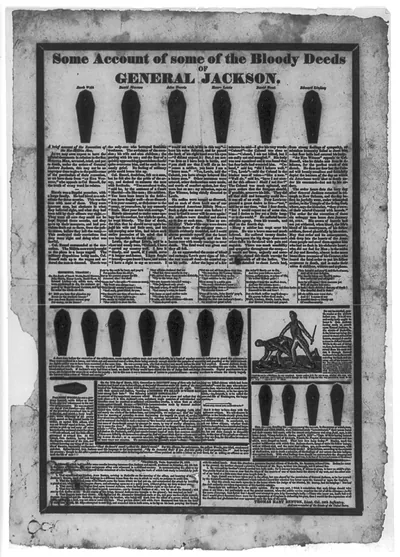 Some account of some of the bloody deeds of General Jackson ([Philadelphia? : s.n)
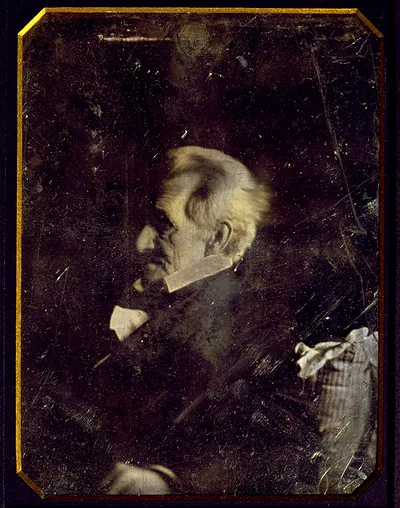 [Andrew Jackson, head-and-shoulders portrait, nearly in profile to left, leaning against p ([between 1844 and 18)
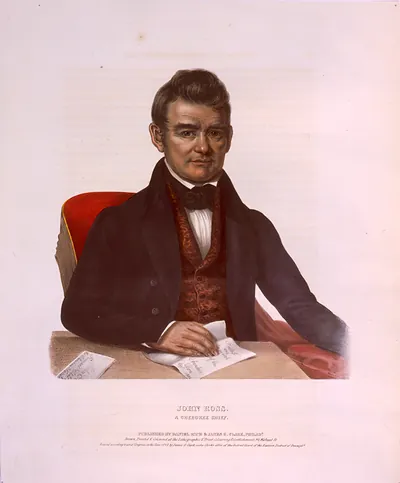 John Ross, a Cherokee chief / drawn, printed & coloured at the Lithographic & Print Colour (Philada. : published)
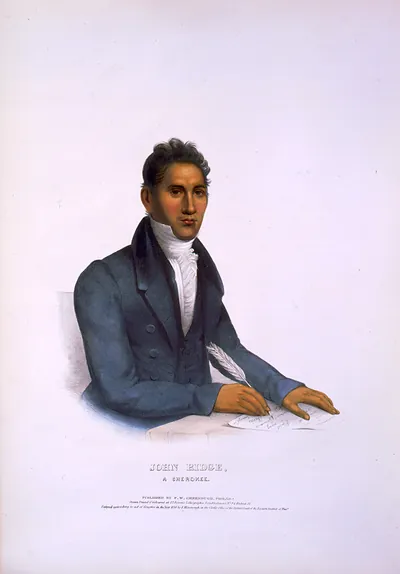 John Ridge, a Cherokee / drawn, printed & coloured at I.T. Bowen's Lithographic Establishm (Philada. : published)
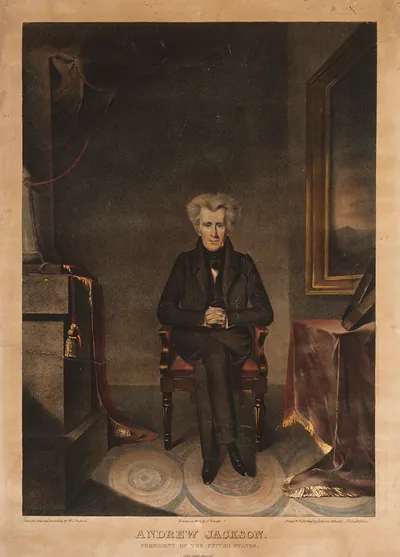 Andrew Jackson, President of the United States / from the original painting by W.J. Hubard (Philadelphia : Lehma)
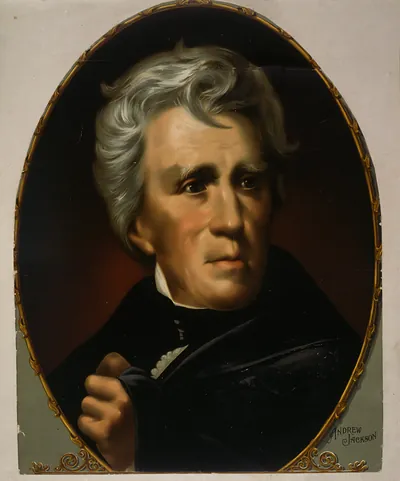 Andrew Jackson (c1896.)
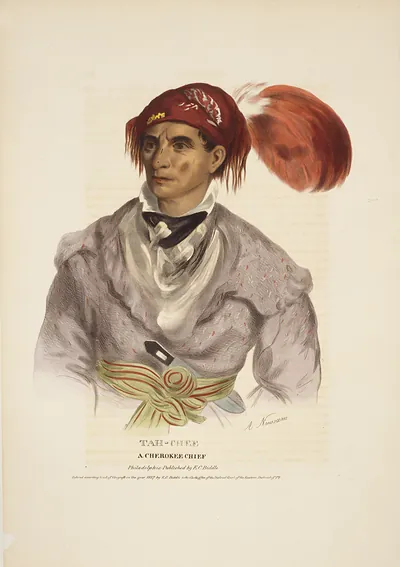 Tah-chee, a Cherokee chief / A. Newsam. (Philadelphia : publi)
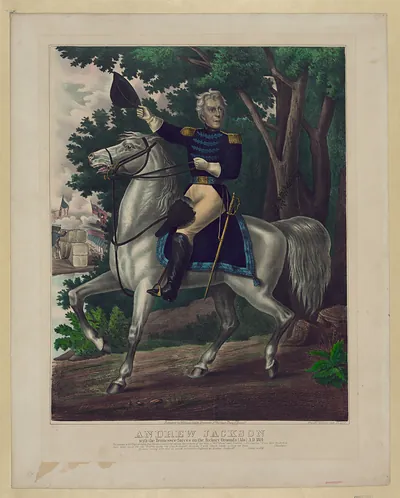
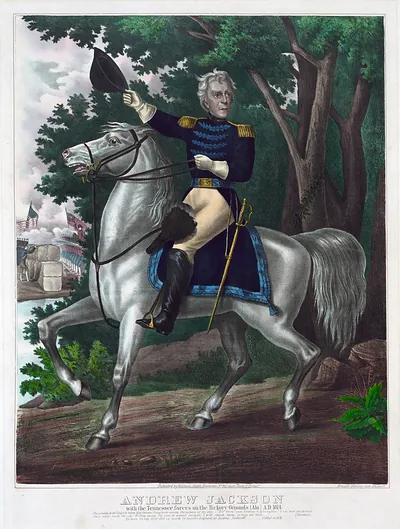 Andrew Jackson with the Tennessee Forces on the Hickory Grounds
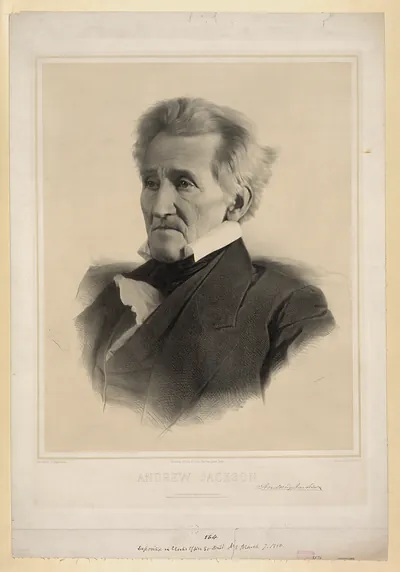
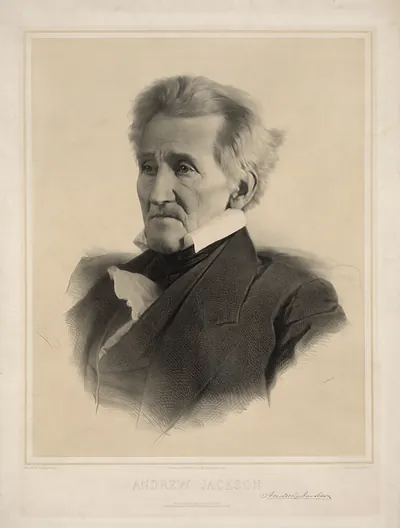 Lithograph portrait of Andrew Jackson, with printed name
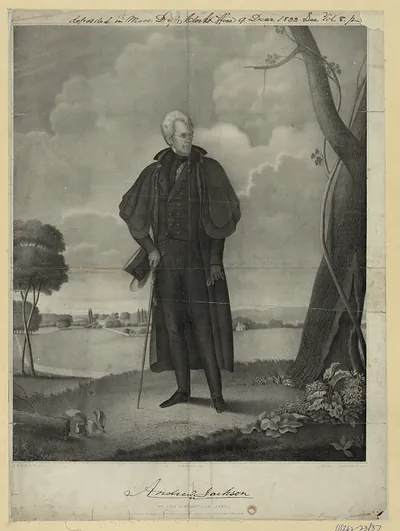
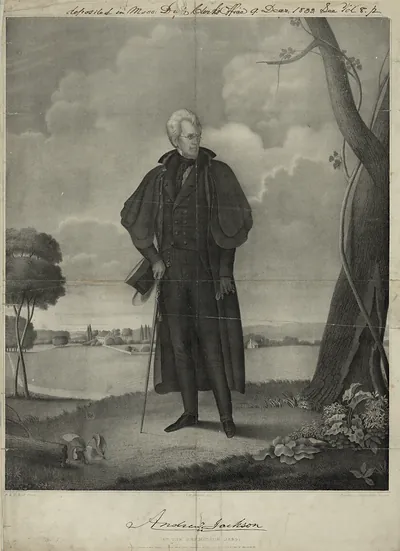 Andrew Jackson at the Hermitage, 1830
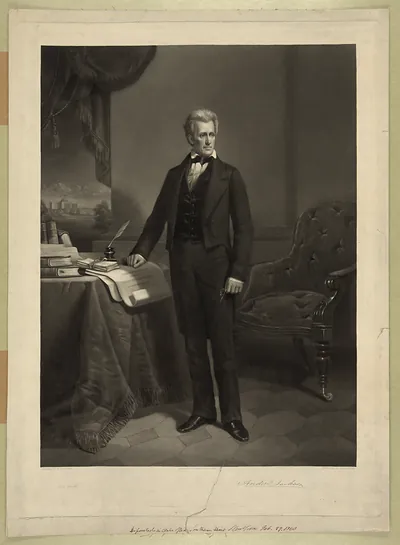
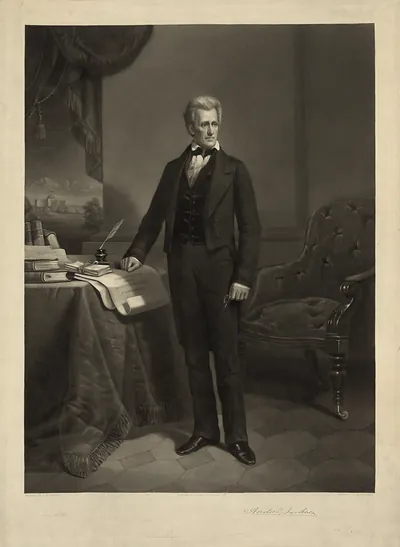 Engraved standing portrait of Andrew Jackson beside a table
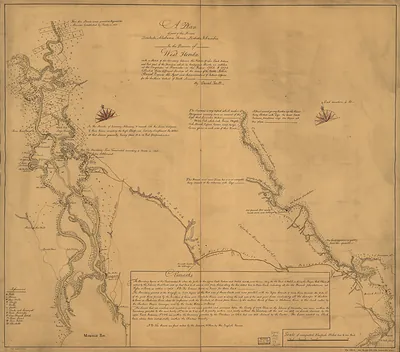 A Plan of part of the Rivers Tombecbe, Alabama, Tensaw, Perdido, Mobile
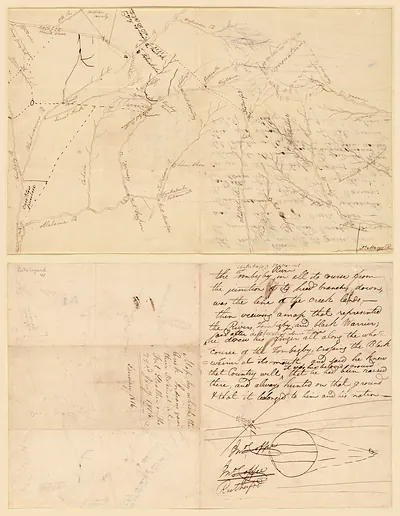 Map by which the Creek Indians
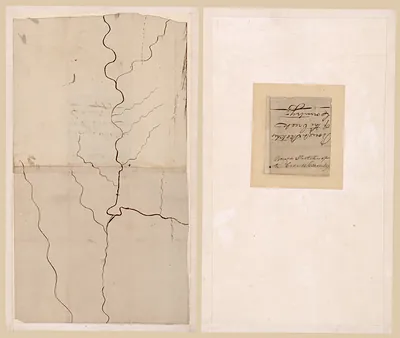 Rough sketches of the Creek Country