Asia, Africa & Australia
16 historic pictures in the Asia, Africa & Australia collection, in 2 sections, part of Landmarks. Each one can be ordered as a print or licensed, and the collection is a starting point for telling stories about the past.
Open the interactive boardFor more than 200 years, Japan kept almost all foreigners out. Trade with the West was limited to a small Dutch post at Nagasaki, and few outsiders saw anything of the country. That changed in 1853 and 1854, when Commodore Matthew Perry sailed into Edo Bay with American warships and pressed Japan to open its ports.
What followed was one of the fastest transformations any country has ever gone through. In 1868, the Meiji Restoration put the emperor back at the center of government, and Japan set out to build railroads, factories, a modern army and a new school system in a single generation. Photography arrived in the middle of all this.
Foreign and Japanese photographers set up studios in the treaty ports, especially Yokohama. They sold albums of hand-colored photographs to travelers, showing temples, gardens, Mount Fuji, rickshaw pullers, samurai in armor and women in kimono. The coloring was done by Japanese artists using fine brushes, and the best of it is remarkable. Many of these pictures were staged in the studio, and some showed a traditional Japan that was already disappearing outside.
Japanese woodblock prints made their own way west at about the same time. Artists such as Hokusai and Hiroshige had made landscapes and city scenes for ordinary buyers in Japan. In Europe, those prints caused a stir among painters, and Japanese style became a fashion in art and design. This board ranges across Asia, Africa and Australia, and its largest named group is Japan. The pictures from all 3 continents share something. Most were made by outsiders, for outsiders, and they tend to show what a Western traveler expected to find.
When you look at a Japanese studio photograph, notice the background. A painted backdrop, a few props and a carpet often stand in for a garden or a street. Then look for the outdoor pictures, where the same years show telegraph poles, Western-style buildings and men in bowler hats walking beside kimono. Both kinds of pictures are true. They just tell different parts of the same story.
Asia, Africa & Australia
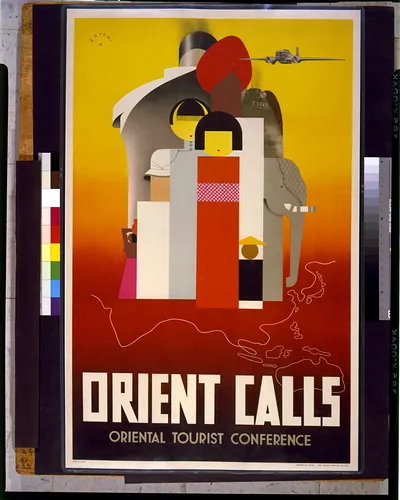 Orient calls / Satomi. ([19]36 (Japan : The )
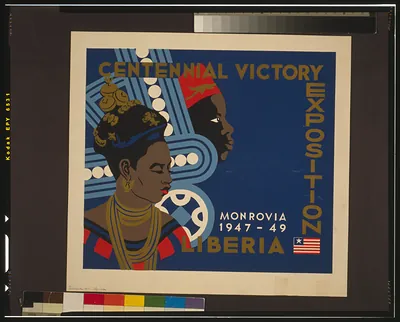 Centennial Victory Exposition Monrovia 1947-1949 Liberia (1947)
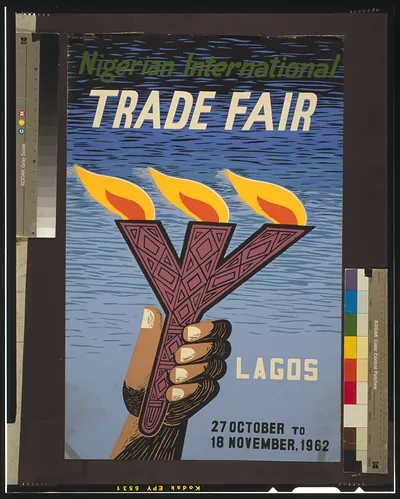 Nigerian International Trade Fair, Lagos 27 October to 18 November, 1962. (1962)
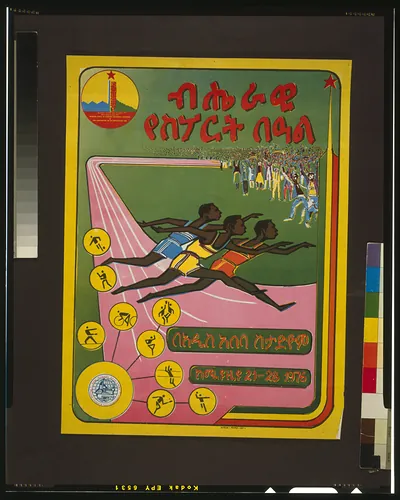 [Sporting event poster showing athletes running a race as spectators cheer] (1976)
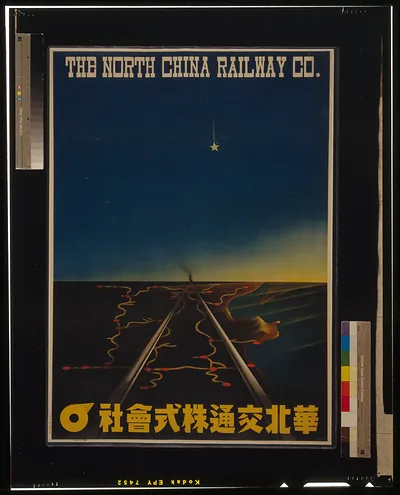 The North China Railway Co. ([Peking : New China )
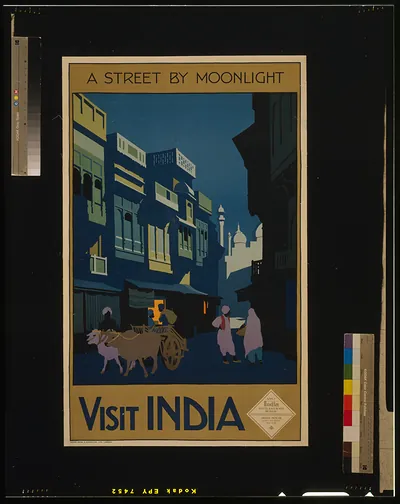 A street by moonlight - Visit India / H. G. Gawthorn. (London : Adams Bros.)
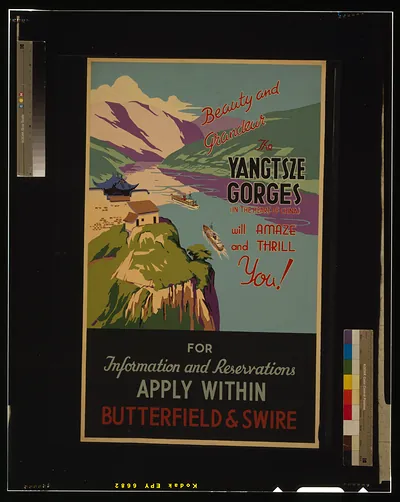 Beauty and grandeur - The Yangtsze (i.e., Yangtze) Gorges, in the heart of China, will ama ([S.l. : s.n., ca. 19)
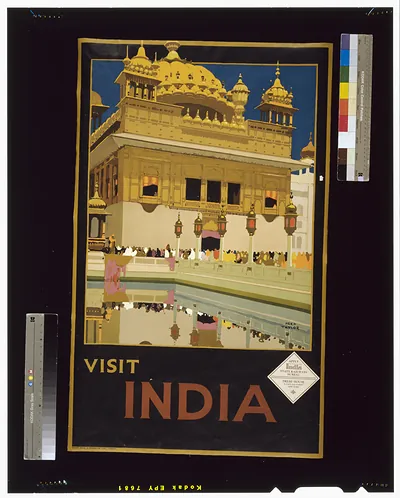 Visit India / Fred Taylor.
Japan
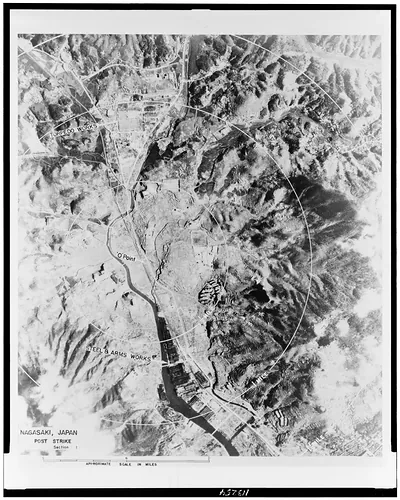 Aerial view of Nagasaki, after the bombing, ... (1946 Jun 26.)
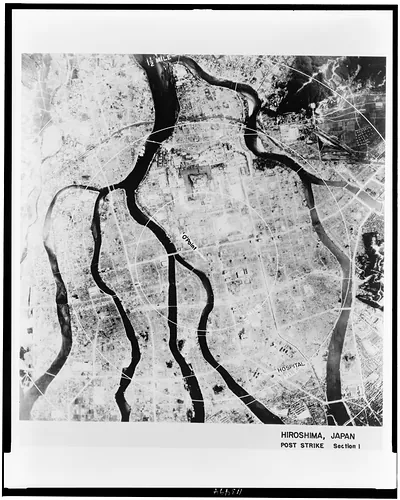 Aerial view of Hiroshima after the bomb (1946 Jun 26.)
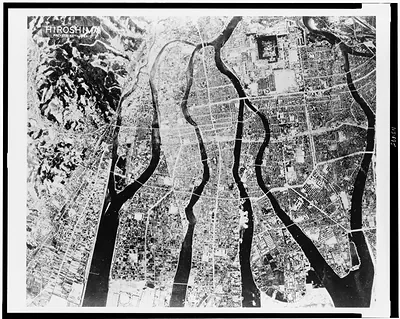 Pre-strike aerial view of Hiroshima [...] ([Before Aug. 6, 1945)
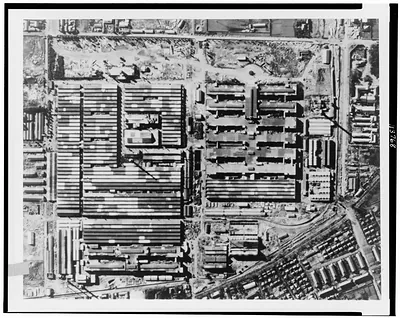 [Aerial view of Musashino, Japan (Tokyo area), before bombing by U.S. 20th Air Force] ([1945])
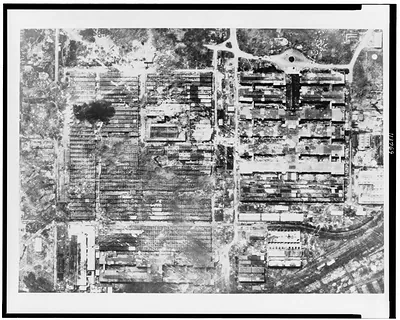 [Aerial view of Musashino, Japan (Tokyo area), bombing by U.S. 20th Air Force] ([1945])
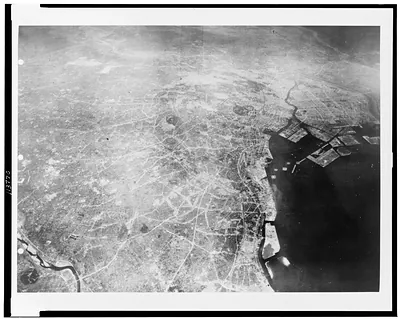 [Aerial view of Tokyo, after bombing (?) by U.S. 20th Air Force] ([1945])
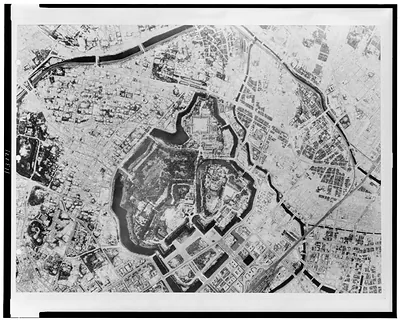 [Aerial view of Tokyo, after bombing by U.S. 20th Air Force] ([1945])
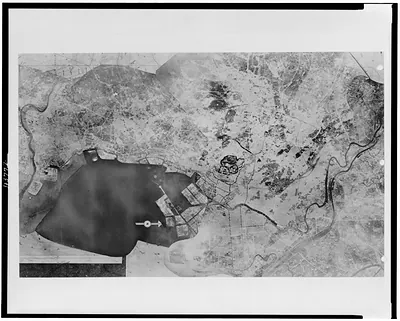 [Aerial view of Tokyo, after bombing by U.S. 20th Air Force] ([1945])