Georgia
15 historic pictures in the Georgia collection, part of Cities. Each one can be ordered as a print or licensed, and the collection is a starting point for telling stories about the past.
Open the interactive boardSavannah was planned on paper before anyone lived there. James Oglethorpe founded the colony of Georgia in 1733, the last of the 13, and he laid out its first town as a grid of streets organized around small public squares. As the city grew, new squares were added on the same pattern, and many of them survive today, shaded by live oaks draped in Spanish moss. Savannah is still one of the best-preserved planned cities in the country.
The rest of Georgia's story in the 1800s was cotton. Plantations spread across the state, worked by enslaved people, and cotton was shipped out through Savannah to mills in England and New England. The Civil War came hard. In 1864 General William T. Sherman captured Atlanta, burned much of it, and marched his army across the state to the sea, reaching Savannah in December. He spared Savannah and offered it to Lincoln as a Christmas present.
Atlanta rebuilt quickly. It was a railroad city, and after the war it became the leading city of what boosters called the New South. In 1895 it hosted the Cotton States and International Exposition to show off its recovery, and it was there that Booker T. Washington gave his best-known speech. Coca-Cola was invented in Atlanta in 1886.
The coast and the mountains offer a different Georgia. On Jekyll Island, some of the richest families in America formed a private club in 1886 and built winter cottages. North Georgia has the Blue Ridge, mountain farms and the site of the country's first major gold rush, around Dahlonega in 1829. In the 1920s Franklin Roosevelt began visiting Warm Springs for polio treatment, and he later built a small house there that became known as the Little White House.
In the Savannah pictures, look for the squares. Many photographs were taken looking across them toward the houses and churches on their edges, and once you know the plan, you can often tell which square you are in.
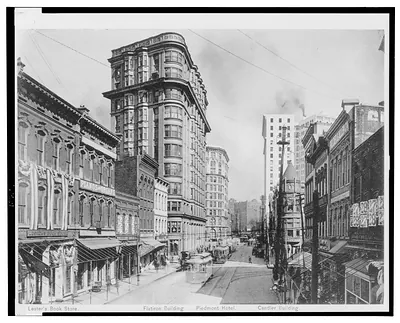 Lower Peachtree Street (Atlanta, GA : Publis)
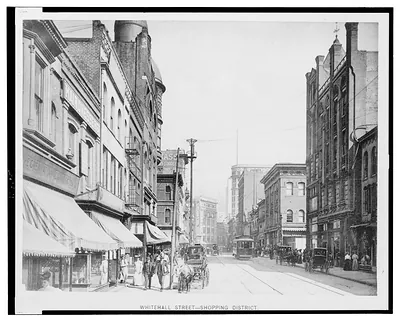 Whitehall Street - shopping district (Atlanta, GA : Publis)
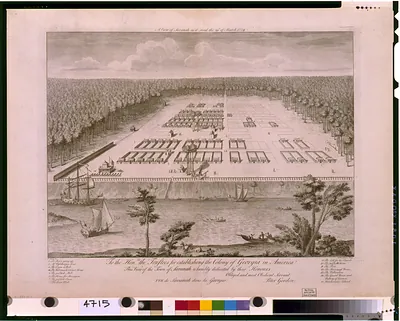 A view of Savanah [sic] as it stood the 29th of March, 1734 / P. Gordon inv. ; P. Fourdrin ([London : ca. 1735])
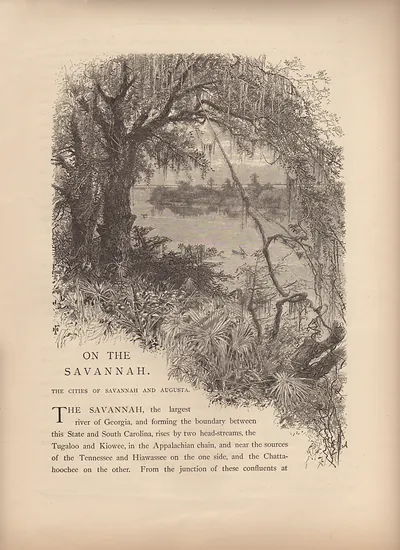 On the Savannah: engraved river scene with trees and Spanish moss
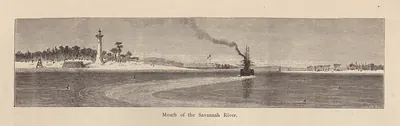 Mouth of the Savannah River
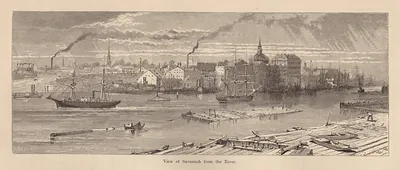 View of Savannah from the River
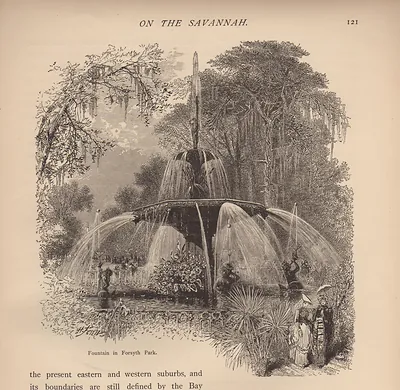 Fountain in Forsyth Park
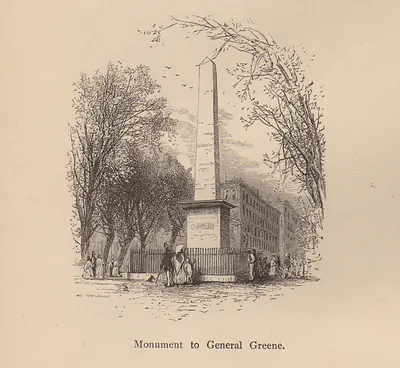 Monument to General Greene
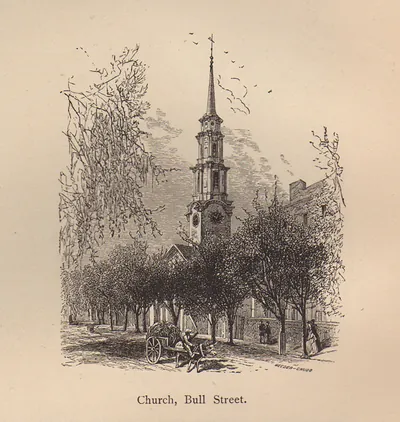 Church, Bull Street
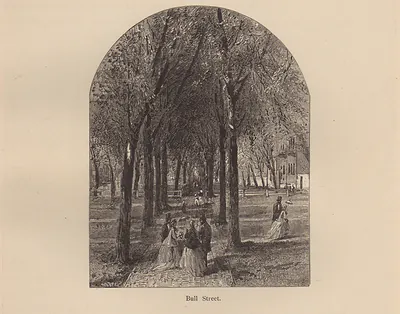 Bull Street, tree-lined avenue with strolling figures
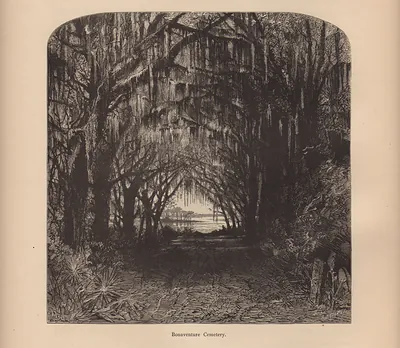 Bonaventure Cemetery, avenue of oaks hung with Spanish moss
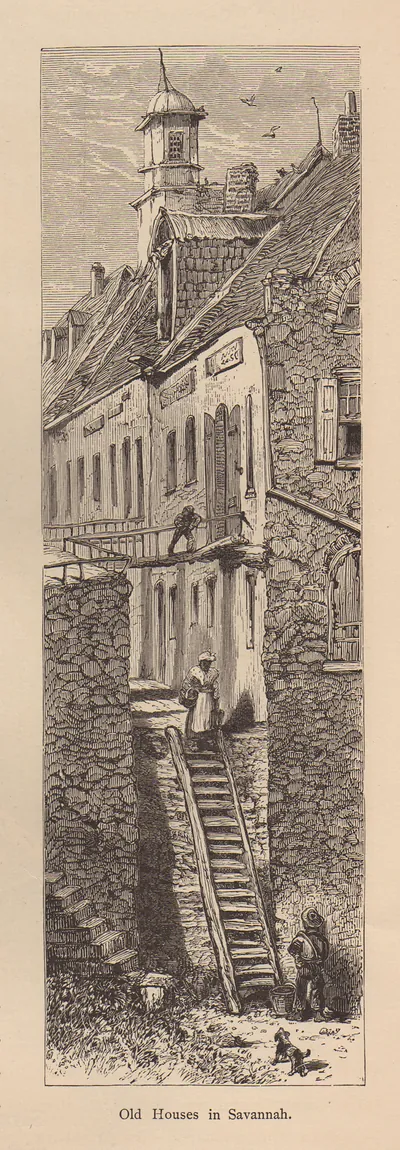 Old Houses in Savannah
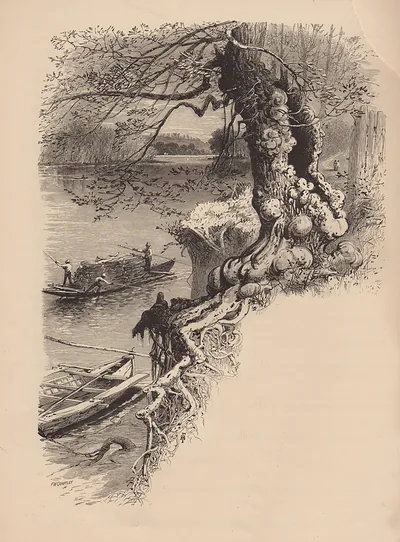 River bank with gnarled tree, log raft and boats
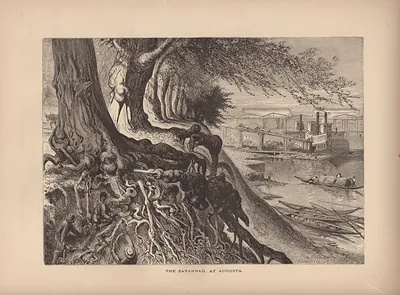 The Savannah, at Augusta
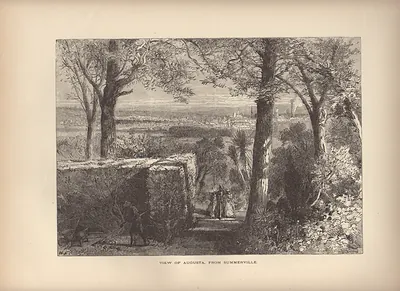 View of Augusta, from Summerville