Bokusui tsutsumi hanazakari no zuTITLE TRANSLATION:Cherry blossoms in full bloom along Sumida River. – Historic Reproduction

(Originally scanned by the Library of Congress. Each image is professionally and digitally cleaned of artifacts such as color bars and extra borders prior to printing.)
Description
This rare historic print captures Bokusui tsutsumi hanazakari no zuTITLE TRANSLATION:Cherry blossoms in full bloom along Sumida River. in remarkable detail. The original is held by the Library of Congress, so what you hang is a true record of its time.
Choose the framed print, ready to hang the day it arrives, or the unframed print for a frame of your own. It makes a striking addition to a living room, study or office, and a thoughtful gift. Free shipping in the lower 48 states. Since 2001, Snapshots of the Past has shipped historic prints to tens of thousands of customers around the world.
Bokusui tsutsumi hanazakari no zuTITLE TRANSLATION:Cherry blossoms in full bloom along Sumida River.
Order a print
Thank you. Your order went through, and a receipt is on its way by email.
Secure checkout · SSL encryptedPowered by Stripe and PayPal
Free shipping in the lower 48 states. The checkout page shows the picture, size and price before you pay.
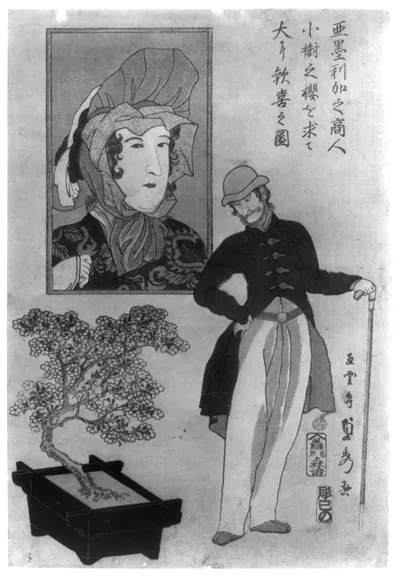
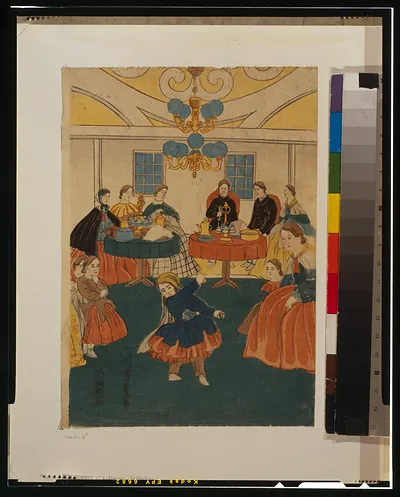
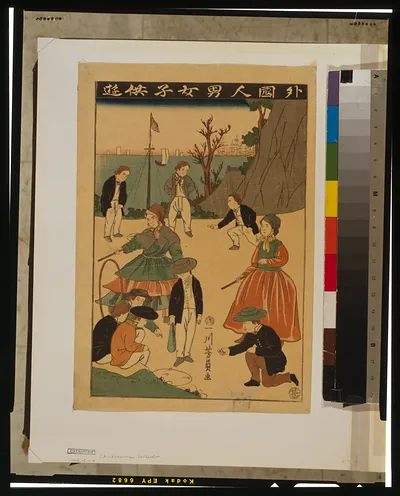
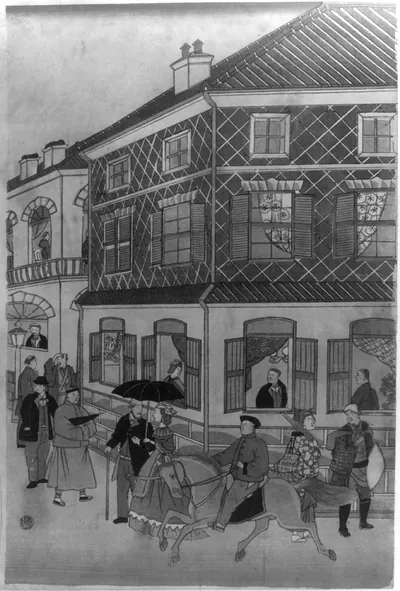
Cherry trees in full bloom line the banks of the Sumida River in this triptych, with foreign visitors mingling among Japanese strollers. The sheet belongs to a series titled *The Most Beautiful Place in Tokyo*, published in 1881 under the name of Nemoto Masayoshi. Its signature credits Hiroshige, and the record identifies the artist as Ando Hiroshige III, a later artist who used the name of the celebrated Edo-period printmaker. Spring viewing of blossoms along the Sumida was a long-standing custom, and by the 1880s it drew both local residents and the newly arrived foreigners who appear here.
| Created / published | 1881 |
|---|---|
| Creator | Koizumi Minokichi 1833-1906 engraver. |
| Medium | 1 print on hōsho paper : woodcut color ; 34.9 x 72.3 cm. (block) 34.9 x 72.4 cm. (sheet). |
| Notes | Title from item. Signature: Motome ni ōzu Hiroshige ga (by request). From series entitled: Tōkyō meisho dai ichi no shōkei (The most beautiful place in Tokyo). Annotations stamps etc. on verso of print: 4162-7; 47623a (white label); 997-1. Earlier control number: 4162-7. Gift; Mrs. E. Crane Chadbourne; 1930; (DLC/PP-1930:47623a). Forms part of: Chadbourne collection of Japanese prints (Library of Congress). Form of name (100) in original record: Ando Hiroshige III; Source of name (100): LCNA; Per NAR Ando Tokubei is alternate name for Ando Hiroshige(Hiroshige I). Per Lane Tokubei is an alternate name for both Hiroshige I and Hiroshige III. Dates would argue that would be III rather than I. Could an artist be also the engraver? Presumably could be. If so would he use a different name in his engravers capacity? Need to find out where 700 came from. Several records |
| Subjects | Foreign visitors--Japan--1880-1890. Cherry trees--Japan--1880-1890. Sumida River (Japan)--1880-1890. |
| Source | Library of Congress, Japanese Fine Prints |
| Original scan | 5,113 × 4,142 px · prints to 17 × 14 in at 300 dpi |
| Reference | AMZ-SOTP-JFP-227283 |
More from the Japanese Prints collection
Snapshots of the Past helps heritage brands, museums, historians and storytellers tell stories with history: historic prints, image licensing and historical storytelling drawn from more than 25 years of research and curation.