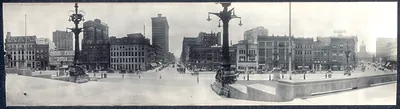
Indianapolis, 1914 – Historic Photograph Print

(Each image is professionally and digitally cleaned of artifacts such as color bars and extra borders prior to printing.)
Description
Step back in time with Indianapolis, 1914, a historic image rich in period detail. Drawn from the Snapshots of the Past archive, it is an authentic piece of documented history.
The framed print arrives ready to hang; the unframed option suits custom framing. It brings character to any room and makes a memorable gift. Free shipping in the lower 48 states. Snapshots of the Past, founded in 2001, has served tens of thousands of customers worldwide.
Indianapolis, 1914
Order a print
Thank you. Your order went through, and a receipt is on its way by email.
Secure checkout · SSL encryptedPowered by Stripe and PayPal
Free shipping in the lower 48 states. The checkout page shows the picture, size and price before you pay.
Indianapolis in 1914 was the state capital of Indiana and a growing manufacturing and rail center, with a population that had climbed past 230,000 in the previous decade. The city sat at the crossroads of many interurban and steam railroad lines, and its factories produced automobiles, engines, furniture, and farm machinery, while the Bates Street and Union Station area served as a busy freight and passenger hub. Politically the city was tied to the Republican-leaning state government and to the Circle, the central monument and traffic point laid out in the 1820s when Indianapolis was first planned. Residents in 1914 knew the city as the home of the Indianapolis Motor Speedway, which had opened in 1909 on the western edge of town, and as a place where new automobile makers were setting up shop.
| Created / published | 1914 |
|---|---|
| Notes | Panoramic photograph. |
| Subjects | Panoramic photographs--Indiana |
| Original scan | 5,400 × 904 px · prints to 18 × 3 in at 300 dpi |
| Reference | IN Indianapolis 1914 |
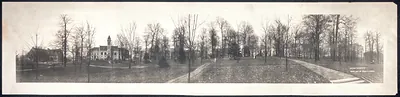
More from the Panoramic Photos collection
Snapshots of the Past helps heritage brands, museums, historians and storytellers tell stories with history: historic prints, image licensing and historical storytelling drawn from more than 25 years of research and curation.