Indianapolis 1914a – Vintage Photo Print

(Each image is professionally and digitally cleaned of artifacts such as color bars and extra borders prior to printing.)
Description
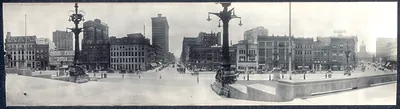
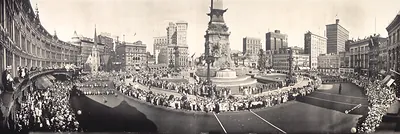
Few images capture their era like this historic image of Indianapolis 1914a. It is part of the Snapshots of the Past archive, gathered over 25 years of research.
The framed print arrives ready to hang; the unframed option suits custom framing. It makes a striking addition to a living room, study or office, and a thoughtful gift. Free shipping in the lower 48 states. Snapshots of the Past has been bringing history to the wall since 2001, for tens of thousands of customers worldwide.
Indianapolis 1914a
Order a print
Thank you. Your order went through, and a receipt is on its way by email.
Secure checkout · SSL encryptedPowered by Stripe and PayPal
Free shipping in the lower 48 states. The checkout page shows the picture, size and price before you pay.
Indianapolis in 1914 was the state capital of Indiana, a city of roughly a quarter million people that had grown quickly on the strength of rail lines, manufacturing, and pharmaceuticals from Eli Lilly and Company. Its carmakers, including Stutz, Marmon, and National, were building automobiles, and the Indianapolis Motor Speedway, opened in 1909, had already drawn crowds before the first 500-mile race in 1911. Residents still remembered the flood of March 1913, when the White River and its tributaries swamped low neighborhoods and downtown streets, and the rebuilding that followed was a recent civic concern. Around Monument Circle, the Soldiers and Sailors Monument and the courthouse marked the center of a city that many Hoosiers called home to politics, trade, and the railroads that ran through it.
| Notes | Panoramic photograph. |
|---|---|
| Subjects | Panoramic photographs--Indiana |
| Original scan | 5,400 × 923 px · prints to 18 × 3 in at 300 dpi |
| Reference | IN Indianapolis 1914a |
More from the Panoramic Photos collection
Snapshots of the Past helps heritage brands, museums, historians and storytellers tell stories with history: historic prints, image licensing and historical storytelling drawn from more than 25 years of research and curation.