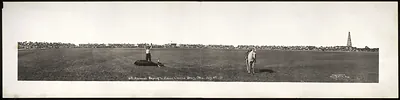
Roping Contest Oklahoma City, 1910 – Historic Photograph Print

(Each image is professionally and digitally cleaned of artifacts such as color bars and extra borders prior to printing.)
Description
This historic image of Roping Contest Oklahoma City, 1910 brings a moment of history to your wall. Drawn from the Snapshots of the Past archive, it is an authentic piece of documented history.
The framed print arrives ready to hang; the unframed option suits custom framing. It brings character to any room and makes a memorable gift. Free shipping in the lower 48 states. Snapshots of the Past, founded in 2001, has served tens of thousands of customers worldwide.
Roping Contest Oklahoma City, 1910
Order a print
Thank you. Your order went through, and a receipt is on its way by email.
Secure checkout · SSL encryptedPowered by Stripe and PayPal
Free shipping in the lower 48 states. The checkout page shows the picture, size and price before you pay.
Oklahoma City in 1910 was a young city, not yet two decades past the 1889 land run that opened the district to settlement. Statehood in 1907 had made it a center of commerce for a farming and ranching region, and that year the state capital was moved there from Guthrie. Cattle, grain, and cotton moved through its rail yards, and the stockyards on the city's south side helped make livestock the backbone of local business. A roping contest put the working skills of ranch hands on display, and for many residents such events recalled the cattle drives and open range that had defined the territory only a few years earlier.
| Created / published | 1910 |
|---|---|
| Notes | Panoramic photograph. |
| Subjects | Panoramic photographs--Oklahoma |
| Original scan | 5,383 × 1,199 px · prints to 18 × 4 in at 300 dpi |
| Reference | OK 1910 Roping Contest Oklahoma City |
More from the Panoramic Photos collection
Snapshots of the Past helps heritage brands, museums, historians and storytellers tell stories with history: historic prints, image licensing and historical storytelling drawn from more than 25 years of research and curation.