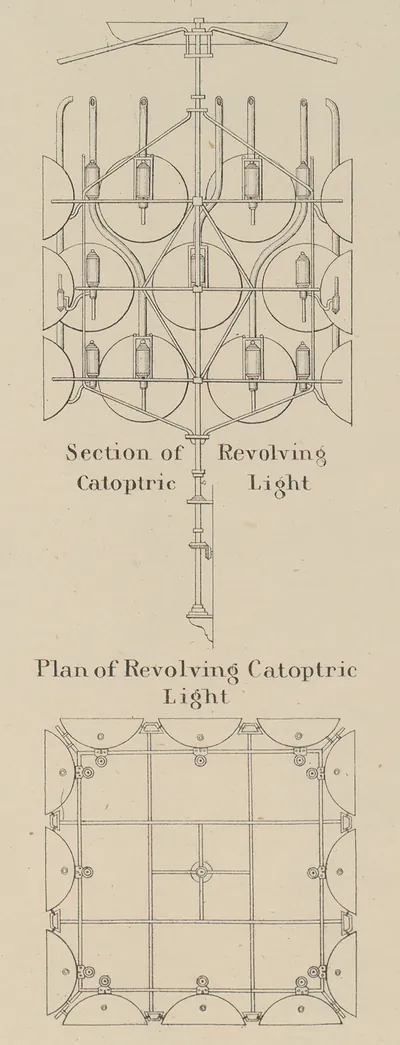
Fixed Light Catoptric Apparatus, Section and Plan – Vintage Print

(Each image is professionally and digitally cleaned of artifacts such as color bars and extra borders prior to printing.)
Description
This rare historic image captures Fixed Light Catoptric Apparatus, Section and Plan in remarkable detail. It is part of the Snapshots of the Past archive, gathered over 25 years of research.
The framed print arrives ready to hang; the unframed option suits custom framing. It makes a striking addition to a living room, study or office, and a thoughtful gift. Free shipping in the lower 48 states. Snapshots of the Past has been bringing history to the wall since 2001, for tens of thousands of customers worldwide.
Fixed Light Catoptric Apparatus, Section and Plan
Order a print
Thank you. Your order went through, and a receipt is on its way by email.
Secure checkout · SSL encryptedPowered by Stripe and PayPal
Free shipping in the lower 48 states. The checkout page shows the picture, size and price before you pay.
The phrase "catoptric" in the title points to the heart of this drawing: it shows a lens-free lighthouse optic, one that bends light with curved metal mirrors rather than refracting it through glass prisms. Catoptric systems were the older approach to lighthouse illumination, and the section and plan views together let a viewer see both the vertical stacking of the reflectors and their arrangement around the lamp. Drawings like this were produced by lighthouse engineers and makers of optical apparatus, who needed precise diagrams to build, install and maintain the equipment. Comparing a reflector system such as this with the later Fresnel lens shows how much lighthouse design changed during the nineteenth century.
| Original scan | 707 × 1,324 px · prints to 2 × 4 in at 300 dpi |
|---|---|
| Reference | tif09388_DetailofPlate16Fixedlightcator |
More from the Lighthouses collection
Snapshots of the Past helps heritage brands, museums, historians and storytellers tell stories with history: historic prints, image licensing and historical storytelling drawn from more than 25 years of research and curation.