Plate 4: Vertical Section of a First Order Lighthouse Lens – Antique Wall Art

(Each image is professionally and digitally cleaned of artifacts such as color bars and extra borders prior to printing.)
Description
A window into the past: Plate 4: Vertical Section of a First Order Lighthouse Lens, preserved in this historic image. Drawn from the Snapshots of the Past archive, it is an authentic piece of documented history.
Framed, it is ready for the wall; unframed, it is ready for the frame you choose. It makes a striking addition to a living room, study or office, and a thoughtful gift. Free shipping in the lower 48 states. Snapshots of the Past has been bringing history to the wall since 2001, for tens of thousands of customers worldwide.
Plate 4: Vertical Section of a First Order Lighthouse Lens
Order a print
Thank you. Your order went through, and a receipt is on its way by email.
Secure checkout · SSL encryptedPowered by Stripe and PayPal
Free shipping in the lower 48 states. The checkout page shows the picture, size and price before you pay.
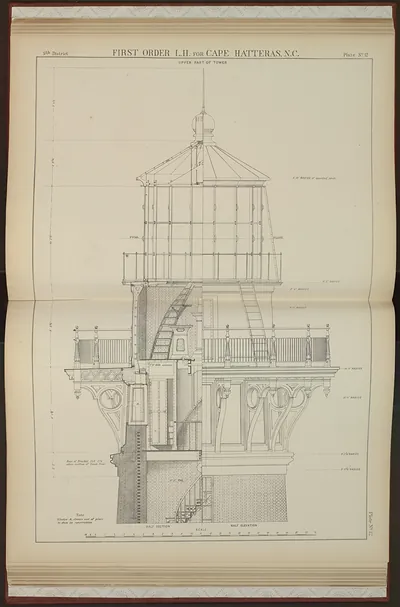
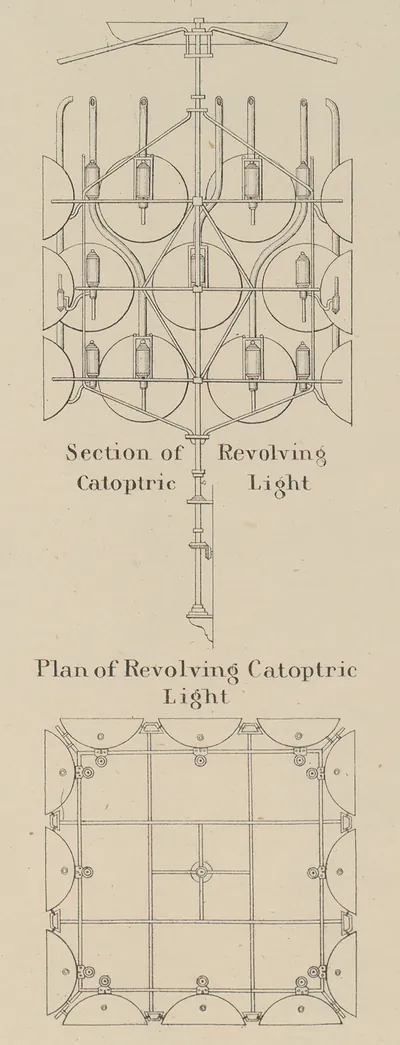
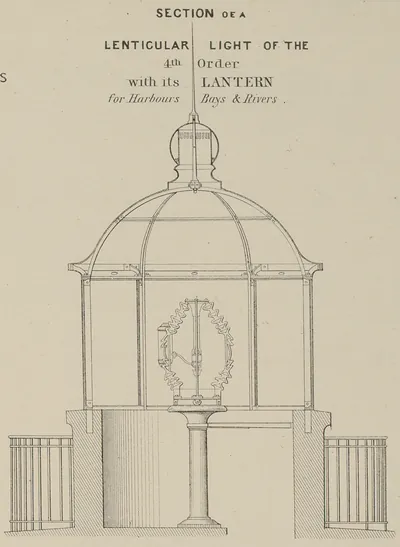
A first order lens was the largest and most powerful class of Fresnel lighthouse optic, built from concentric rings of prisms and glass that bent and concentrated lamp light into a single narrow beam. This plate shows the lens in vertical section, cut through its center so the stacked panels, dioptric prisms and catadioptric bands can be read from top to bottom. Such drawings were issued in engineering and navigation publications of the nineteenth century, where mariners and lighthouse keepers needed to understand how each part of the apparatus worked. Augustin-Jean Fresnel's design, developed in France in the 1820s, transformed coastal navigation by making distant lights far brighter without enormous fuel use.
| Original scan | 1,870 × 3,110 px · prints to 6 × 10 in at 300 dpi |
|---|---|
| Reference | tif09387_FixedDioptriclightofthefirstor |
More from the Lighthouses collection
Snapshots of the Past helps heritage brands, museums, historians and storytellers tell stories with history: historic prints, image licensing and historical storytelling drawn from more than 25 years of research and curation.