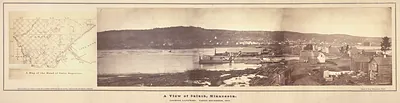
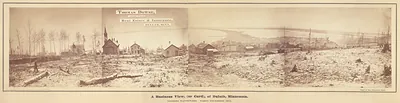
Duluth December, Minnesota, 1870 – Historic Photo Reproduction

(Each image is professionally and digitally cleaned of artifacts such as color bars and extra borders prior to printing.)
Description
Step back in time with Duluth December, Minnesota, 1870, a historic image rich in period detail. It is part of the Snapshots of the Past archive, gathered over 25 years of research.
Order it framed and ready to hang, or unframed to match a frame you already love. It brings character to any room and makes a memorable gift. Free shipping in the lower 48 states. Since 2001, Snapshots of the Past has shipped historic prints to tens of thousands of customers around the world.
Duluth December, Minnesota, 1870
Order a print
Thank you. Your order went through, and a receipt is on its way by email.
Secure checkout · SSL encryptedPowered by Stripe and PayPal
Free shipping in the lower 48 states. The checkout page shows the picture, size and price before you pay.
Duluth, Minnesota, in 1870 was a raw lake port on the western tip of Lake Superior, still a few years away from the railroad boom that would transform it. The town had been platted only in the 1850s and was tied to the wider region chiefly through shipping of lumber, fur, and iron ore prospects, with Lake Superior navigation closed by ice each winter. Its population was small, a few thousand people at most, and much of its civic life revolved around the waterfront, the sawmills, and the hopes that a rail link to the Twin Cities would bring permanent growth. The Northern Pacific Railroad's westward plans, which reached Duluth in the following years, were still uncertain in 1870, and residents knew their town as a gamble on the lake trade and the frontier economy.
| Created / published | 1870 |
|---|---|
| Notes | Panoramic photograph. |
| Subjects | Panoramic photographs--Minnesota |
| Original scan | 10,180 × 2,040 px · prints to 34 × 7 in at 300 dpi |
| Reference | MN Duluth December 1870 |
More from the Panoramic Photos collection
Snapshots of the Past helps heritage brands, museums, historians and storytellers tell stories with history: historic prints, image licensing and historical storytelling drawn from more than 25 years of research and curation.