Amerique Septentrionale divisée en ses principales parties – Antique Wall Art

(Each image is professionally and digitally cleaned of artifacts such as color bars and extra borders prior to printing.)
Description
Step back in time with Amerique Septentrionale divisée en ses principales parties, a historic image rich in period detail. It comes from the Snapshots of the Past collection, curated over 25 years for its historical value.
Order it framed and ready to hang, or unframed to match a frame you already love. It makes a striking addition to a living room, study or office, and a thoughtful gift. Free shipping in the lower 48 states. Snapshots of the Past has been bringing history to the wall since 2001, for tens of thousands of customers worldwide.
Amerique Septentrionale divisée en ses principales parties
Order a print
Thank you. Your order went through, and a receipt is on its way by email.
Secure checkout · SSL encryptedPowered by Stripe and PayPal
Free shipping in the lower 48 states. The checkout page shows the picture, size and price before you pay.
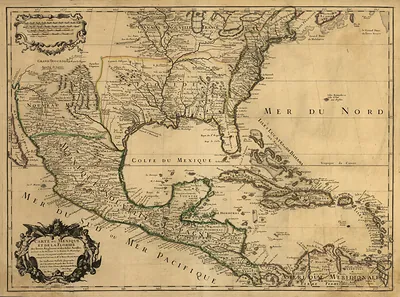
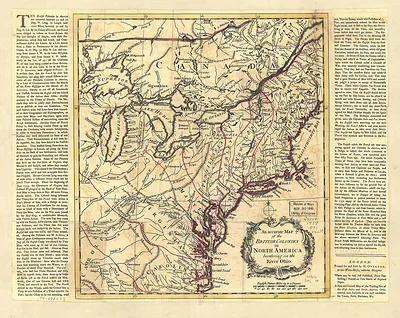
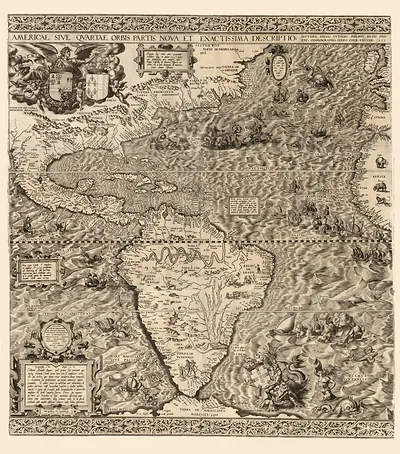
Its French title, *Amérique Septentrionale divisée en ses principales parties*, announces a map that splits North America into its main regions rather than focusing on a single city or coastline. Paris printed large numbers of maps like this in the eighteenth century, when French geographers such as Guillaume Delisle set the standard for how the continent was drawn. The divisions often reflected the competing claims of France, Spain, and Britain, so the boundaries reveal as much about colonial ambition as about the land. The labels and borders also changed with each generation of mapmakers, which makes the interior worth reading closely.
| Original scan | 5,350 × 4,532 px · prints to 18 × 15 in at 300 dpi |
|---|---|
| Reference | 1694 |
More from the Across America collection
Snapshots of the Past helps heritage brands, museums, historians and storytellers tell stories with history: historic prints, image licensing and historical storytelling drawn from more than 25 years of research and curation.