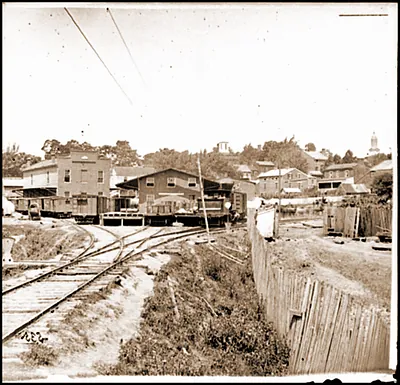
Red brick railroad depot with green gabled dormer – Historic Print

(Each image is professionally and digitally cleaned of artifacts such as color bars and extra borders prior to printing.)
Description
A window into the past: Red brick railroad depot with green gabled dormer, preserved in this historic image. It is part of the Snapshots of the Past archive, gathered over 25 years of research.
Choose the framed print, ready to hang the day it arrives, or the unframed print for a frame of your own. A fine choice for anyone who loves history, and a gift that gets noticed. Free shipping in the lower 48 states. Since 2001, Snapshots of the Past has shipped historic prints to tens of thousands of customers around the world.
Red brick railroad depot with green gabled dormer
Order a print
Thank you. Your order went through, and a receipt is on its way by email.
Secure checkout · SSL encryptedPowered by Stripe and PayPal
Free shipping in the lower 48 states. The checkout page shows the picture, size and price before you pay.
A red brick depot with a green gabled dormer stands out from the plainer wooden stations common along many American lines, since its bright roof trim and brickwork suggest a builder who wanted the station to look substantial and inviting. Depots like this were usually the busiest civic spaces in small towns. They housed the ticket window, the freight room, and often the telegraph key, so the station served as the town's link to mail, news, and travelers. The dormer, a small window set into a steep roof, would have let light into an upper floor, which in many stations held the agent's living quarters. Details like these help show how railroads shaped the look of the communities they served.
| Original scan | 3,000 × 2,002 px · prints to 10 × 7 in at 300 dpi |
|---|---|
| Reference | 3397474948_2ef3ff5dc2_o old train station |
More from the Railroads & Depots collection
Snapshots of the Past helps heritage brands, museums, historians and storytellers tell stories with history: historic prints, image licensing and historical storytelling drawn from more than 25 years of research and curation.