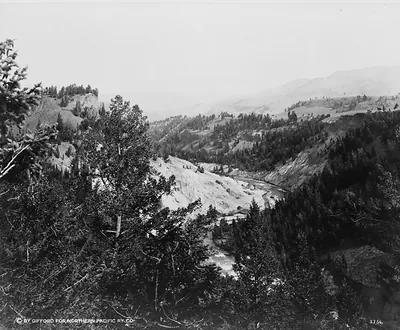
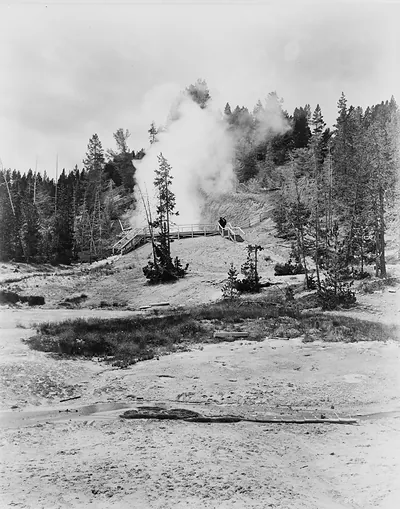
Entrance to Yellowstone Park at Gardiner, Montana, arch – Historic Reproduction

(Each image is professionally and digitally cleaned of artifacts such as color bars and extra borders prior to printing.)
Description
This rare historic image captures Entrance to Yellowstone Park at Gardiner, Montana, arch in remarkable detail. It comes from the Snapshots of the Past collection, curated over 25 years for its historical value.
Order it framed and ready to hang, or unframed to match a frame you already love. A conversation-starting piece for home, office, or as a meaningful gift. Free shipping in the lower 48 states. Since 2001, Snapshots of the Past has shipped historic prints to tens of thousands of customers around the world.
Entrance to Yellowstone Park at Gardiner, Montana, arch
Order a print
Thank you. Your order went through, and a receipt is on its way by email.
Secure checkout · SSL encryptedPowered by Stripe and PayPal
Free shipping in the lower 48 states. The checkout page shows the picture, size and price before you pay.
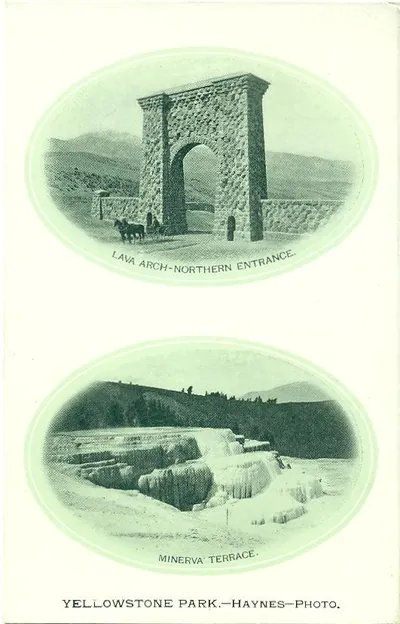
The Roosevelt Arch stands at the north entrance to Yellowstone National Park, just outside Gardiner, Montana, and it was the main gateway for visitors arriving by road from the north. Dedicated in 1903 and designed by architect Robert Reamer, the rough-hewn stone arch carries the inscription "For the Benefit and Enjoyment of the People," a line drawn from the 1872 act that created the park. Its placement reflects an era when the railroad brought tourists to Gardiner and stagecoaches and early automobiles carried them onward into the park's interior.
| Original scan | 1,890 × 2,690 px · prints to 6 × 9 in at 300 dpi |
|---|---|
| Reference | RRG0044c |
More from the Yellowstone collection
Snapshots of the Past helps heritage brands, museums, historians and storytellers tell stories with history: historic prints, image licensing and historical storytelling drawn from more than 25 years of research and curation.