Mount Vernon – Historic Print

(Originally scanned by the Library of Congress. Each image is professionally and digitally cleaned of artifacts such as color bars and extra borders prior to printing.)
Description
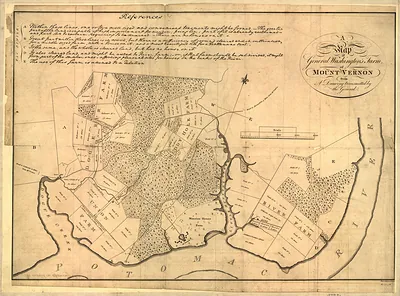
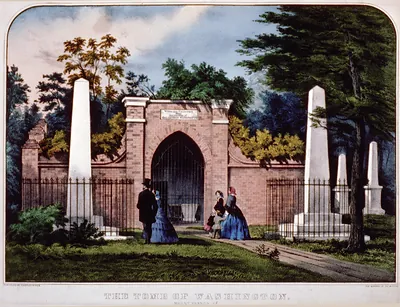
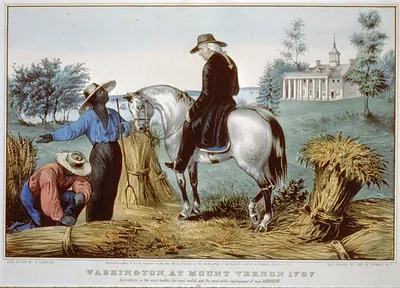
This rare historic print captures Mount Vernon in remarkable detail. Sourced directly from the Library of Congress, it represents an authentic piece of documented history.
Order it framed and ready to hang, or unframed to match a frame you already love. A fine choice for anyone who loves history, and a gift that gets noticed. Free shipping in the lower 48 states. Snapshots of the Past, founded in 2001, has served tens of thousands of customers worldwide.
Mount Vernon
Order a print
Thank you. Your order went through, and a receipt is on its way by email.
Secure checkout · SSL encryptedPowered by Stripe and PayPal
Free shipping in the lower 48 states. The checkout page shows the picture, size and price before you pay.
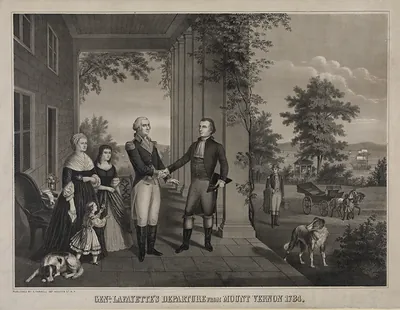
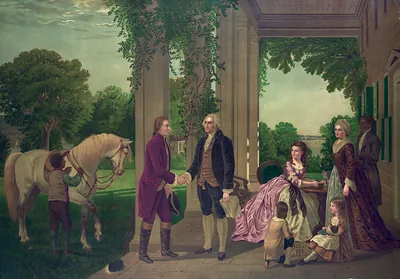
Here Washington and the Marquis de Lafayette stand together on the lawn at Mount Vernon, the Virginia plantation where Washington lived. Lafayette first met Washington in 1777, and he visited Mount Vernon in 1784 and again in 1824, during his tour of the United States. Because the print dates from about 1867, more than three decades after Lafayette's death, it shows a remembered friendship rather than a record of a single moment. Its place among Revolutionary War subjects reflects how Lafayette's role in the war became part of the national story.
| Created / published | c. 1867 |
|---|---|
| Medium | 1 print |
| Notes | Thomas Lawler. SUMMARY: George Washington and the Marquis de Lafayette are in group on lawn |
| Source | Library of Congress, Prints and Photographs Division |
| Original scan | 3,892 × 2,966 px · prints to 13 × 10 in at 300 dpi |
| Reference | 01995u |
More from the Washington collection
Snapshots of the Past helps heritage brands, museums, historians and storytellers tell stories with history: historic prints, image licensing and historical storytelling drawn from more than 25 years of research and curation.