Death of Abraham Lincoln, April 15th, 1865 – Vintage Print

(Each image is professionally and digitally cleaned of artifacts such as color bars and extra borders prior to printing.)
Description
This rare historic image captures Death of Abraham Lincoln, April 15th, 1865 in remarkable detail. It is part of the Snapshots of the Past archive, gathered over 25 years of research.
Order it framed and ready to hang, or unframed to match a frame you already love. It brings character to any room and makes a memorable gift. Free shipping in the lower 48 states. Since 2001, Snapshots of the Past has shipped historic prints to tens of thousands of customers around the world.
Death of Abraham Lincoln, April 15th, 1865
Order a print
Thank you. Your order went through, and a receipt is on its way by email.
Secure checkout · SSL encryptedPowered by Stripe and PayPal
Free shipping in the lower 48 states. The checkout page shows the picture, size and price before you pay.
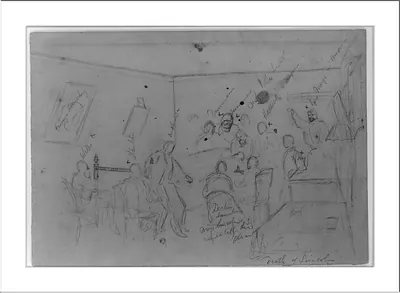
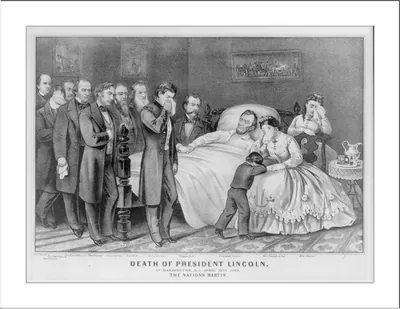
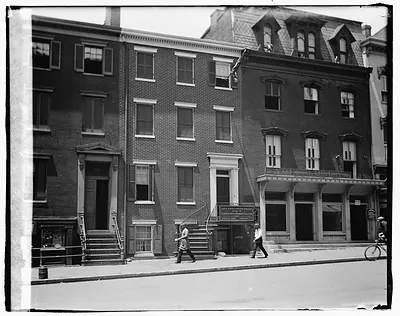
The picture shows the death of Abraham Lincoln on April 15, 1865, the morning after he was shot in the presidential box at Ford's theater. He was carried across the street to the Petersen House, a boarding house on Tenth Street, and he died there at 7:22 a.m. with his cabinet, family, and physicians gathered around him. Scenes like this were widely circulated in the following weeks, as the nation mourned and the city of Washington lined the route of his funeral procession. Today the theater is part of the National Park Service site, and visitors can see the box where the assassination took place.
| Original scan | 1,150 × 923 px |
|---|---|
| Reference | L-D-8 |
More from the More National Park Sites collection
Snapshots of the Past helps heritage brands, museums, historians and storytellers tell stories with history: historic prints, image licensing and historical storytelling drawn from more than 25 years of research and curation.