Willst Du dies Vereinig – Historic Print

(Each image is professionally and digitally cleaned of artifacts such as color bars and extra borders prior to printing.)
Description
This rare historic image captures Willst Du dies Vereinig in remarkable detail. It is part of the Snapshots of the Past archive, gathered over 25 years of research.
Order it framed and ready to hang, or unframed to match a frame you already love. A conversation-starting piece for home, office, or as a meaningful gift. Free shipping in the lower 48 states. Since 2001, Snapshots of the Past has shipped historic prints to tens of thousands of customers around the world.
Willst Du dies Vereinig
Order a print
Thank you. Your order went through, and a receipt is on its way by email.
Secure checkout · SSL encryptedPowered by Stripe and PayPal
Free shipping in the lower 48 states. The checkout page shows the picture, size and price before you pay.
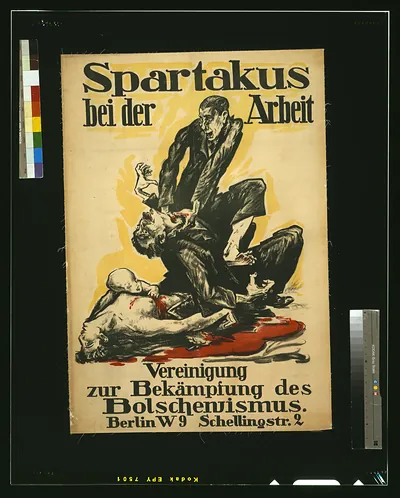
The German title, which appears to be cut short, asks a question about a union, a phrasing more like an appeal than a battlefield scene. Dated 1919, the picture belongs to the months after the Armistice of November 1918, when Germany faced revolution, the new Weimar Republic, and the harsh terms of the Treaty of Versailles. Printed images from this period often used allegory and direct address to argue political points to a public divided by the war's end. Its place on a World War I board reflects how deeply the conflict shaped visual culture well after the fighting stopped.
| Created / published | 1919 |
|---|---|
| Original scan | 5,000 × 4,038 px · prints to 17 × 13 in at 300 dpi |
| Reference | 198_Willst_Du_dies_Vereinig_1919 |
More from the World War I collection
Snapshots of the Past helps heritage brands, museums, historians and storytellers tell stories with history: historic prints, image licensing and historical storytelling drawn from more than 25 years of research and curation.