Chyenne 1868 reduced, Wyoming – Historic Map Reproduction

(Each image is professionally and digitally cleaned of artifacts such as color bars and extra borders prior to printing.)
Description
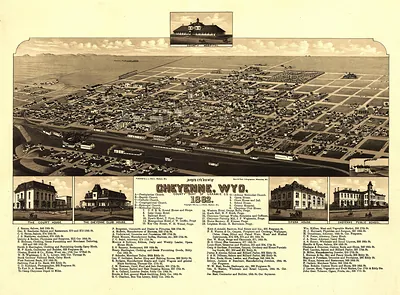
A window into the past: Chyenne 1868 reduced, Wyoming, preserved in this antique map. Drawn from the Snapshots of the Past archive, it is an authentic piece of documented history.
Order it framed and ready to hang, or unframed to match a frame you already love. A conversation-starting piece for home, office, or as a meaningful gift. Free shipping in the lower 48 states. Since 2001, Snapshots of the Past has shipped historic prints to tens of thousands of customers around the world.
Chyenne 1868 reduced, Wyoming
Order a print
Thank you. Your order went through, and a receipt is on its way by email.
Secure checkout · SSL encryptedPowered by Stripe and PayPal
Free shipping in the lower 48 states. The checkout page shows the picture, size and price before you pay.
Cheyenne in 1868 was barely a year old, a town that had sprung up in 1867 when the Union Pacific Railroad pushed its tracks across the high plains of southeastern Wyoming. The rail line made it a supply point for freight, cattle, and soldiers from nearby Fort Russell, and its streets were laid out in a grid around the tracks. That same year Cheyenne became the capital of the newly organized Wyoming Territory, so its government was taking shape alongside saloons, gambling halls, and railroad workers. Residents would have known it as a raw, fast-growing railroad town on the Overland route, where lawmakers, gamblers, and track crews shared the same dusty main street.
| Notes | Bird's-eye view map. |
|---|---|
| Subjects | Panoramic maps--Wyoming |
| Original scan | 4,567 × 3,371 px · prints to 15 × 11 in at 300 dpi |
| Reference | WY-Chyenne-1868-reduced |
More from the Panoramic Maps collection
Snapshots of the Past helps heritage brands, museums, historians and storytellers tell stories with history: historic prints, image licensing and historical storytelling drawn from more than 25 years of research and curation.