Beinn Bhreagh Estate, Nova Scotia – Historic Print

(Originally scanned by the Library of Congress. Each image is professionally and digitally cleaned of artifacts such as color bars and extra borders prior to printing.)
Description
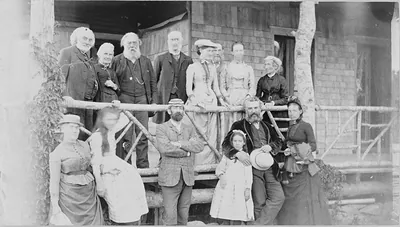
A window into the past: Beinn Bhreagh Estate, Nova Scotia, preserved in this historic photograph. It comes from the collections of the Library of Congress, scanned from the original and carefully restored.
Framed, it is ready for the wall; unframed, it is ready for the frame you choose. It brings character to any room and makes a memorable gift. Free shipping in the lower 48 states. Snapshots of the Past, founded in 2001, has served tens of thousands of customers worldwide.
Beinn Bhreagh Estate, Nova Scotia
Order a print
Thank you. Your order went through, and a receipt is on its way by email.
Secure checkout · SSL encryptedPowered by Stripe and PayPal
Free shipping in the lower 48 states. The checkout page shows the picture, size and price before you pay.
Beinn Bhreagh, the summer estate Alexander Graham Bell built on Cape Breton Island in Nova Scotia, is the setting here, and the 1910 date places the view at a busy stage of Bell's experiments there. Bell, the inventor of the telephone, had established the property near Baddeck around 1886 and kept working on aviation, hydrofoil boats and other projects on the grounds for decades. The Gallery board files it under Thanksgiving, a holiday Canada observes in October, which gives the scene a seasonal setting worth noticing alongside its engineering history.
| Medium | photographic print, gelatin silver, 10 x 48 in. |
|---|---|
| Notes | Dodge, photographer. Forms part of Gilbert H. Grosvenor collection of photographs of the Alexander Graham Bell family, Library of Congress |
| Source | Library of Congress |
| Original scan | 5,400 × 1,175 px · prints to 18 × 4 in at 300 dpi |
| Reference | CANADA Beinn Bhreagh estate, Nova Scotia, 1910 |
More from the Thanksgiving collection
Snapshots of the Past helps heritage brands, museums, historians and storytellers tell stories with history: historic prints, image licensing and historical storytelling drawn from more than 25 years of research and curation.