The Battle Of Gettysburg – Vintage Print

(Originally scanned by the Library of Congress. Each image is professionally and digitally cleaned of artifacts such as color bars and extra borders prior to printing.)
Description
Step back in time with The Battle Of Gettysburg, an antique lithograph rich in period detail. An authentic image from the Library of Congress, it carries the weight of the real historical record.
Order it framed and ready to hang, or unframed to match a frame you already love. A conversation-starting piece for home, office, or as a meaningful gift. Free shipping in the lower 48 states. Snapshots of the Past has been bringing history to the wall since 2001, for tens of thousands of customers worldwide.
The Battle Of Gettysburg
Order a print
Thank you. Your order went through, and a receipt is on its way by email.
Secure checkout · SSL encryptedPowered by Stripe and PayPal
Free shipping in the lower 48 states. The checkout page shows the picture, size and price before you pay.
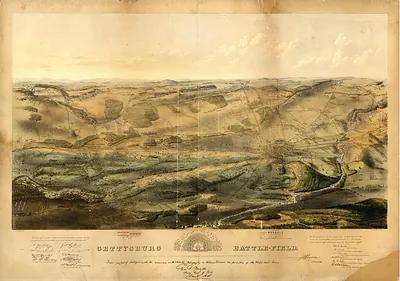
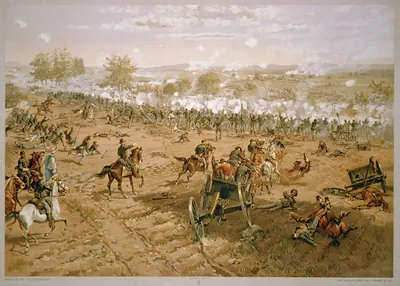
Published by Thomas Kelly in New York around 1867, this lithograph shows how the Battle of Gettysburg was remembered within two years of the war's end. The battle was fought over three days in early July 1863 in south-central Pennsylvania, and its outcome ended Robert E. Lee's invasion of the North at a heavy cost in casualties on both sides. Printed by Wm. C. Robertson, the sheet reflects the postwar demand for large battle images that were displayed in homes, veterans' halls and businesses.
| Created / published | c. 1867 |
|---|---|
| Medium | lithograph |
| Notes | Published by Thomas Kelly, New York. Printed by Wm. C. Robertson, New York |
| Source | Library of Congress, Prints and Photographs Division |
| Original scan | 8,118 × 6,226 px · prints to 27 × 21 in at 300 dpi |
| Reference | L-CW-17 |
More from the Lincoln collection
Snapshots of the Past helps heritage brands, museums, historians and storytellers tell stories with history: historic prints, image licensing and historical storytelling drawn from more than 25 years of research and curation.