Battle of Gettysburg showing the position of the two contending armies – Vintage Wall Art

(Each image is professionally and digitally cleaned of artifacts such as color bars and extra borders prior to printing.)
Description
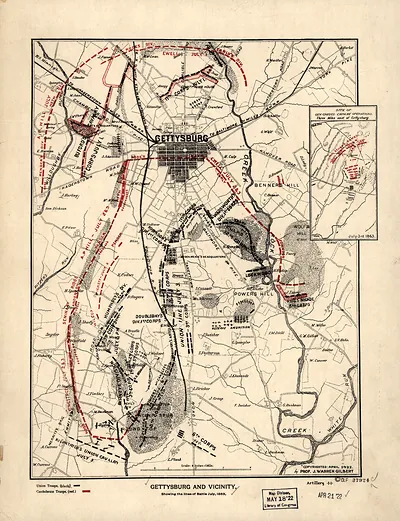
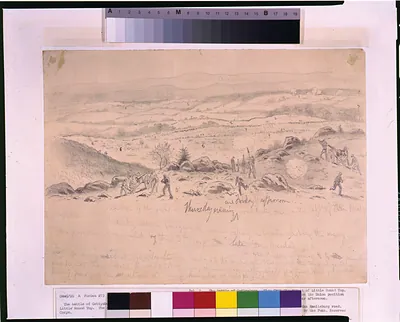
This rare historic image captures Battle of Gettysburg showing the position of the two contending armies in remarkable detail. It is part of the Snapshots of the Past archive, gathered over 25 years of research.
Order it framed and ready to hang, or unframed to match a frame you already love. It makes a striking addition to a living room, study or office, and a thoughtful gift. Free shipping in the lower 48 states. Snapshots of the Past has been bringing history to the wall since 2001, for tens of thousands of customers worldwide.
Battle of Gettysburg showing the position of the two contending armies
Order a print
Thank you. Your order went through, and a receipt is on its way by email.
Secure checkout · SSL encryptedPowered by Stripe and PayPal
Free shipping in the lower 48 states. The checkout page shows the picture, size and price before you pay.
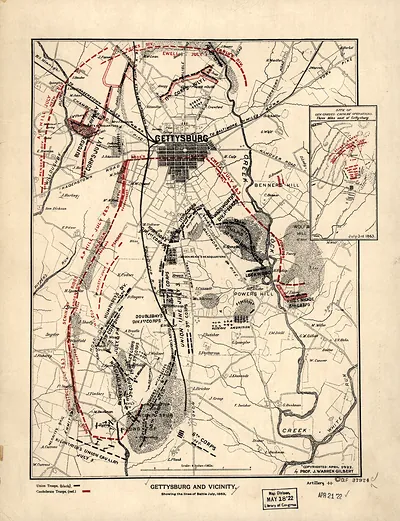
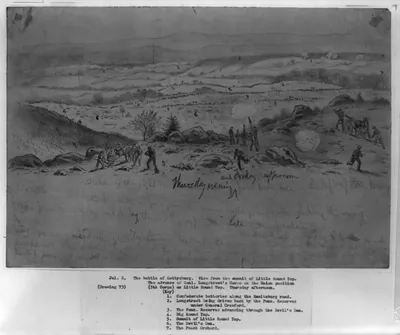
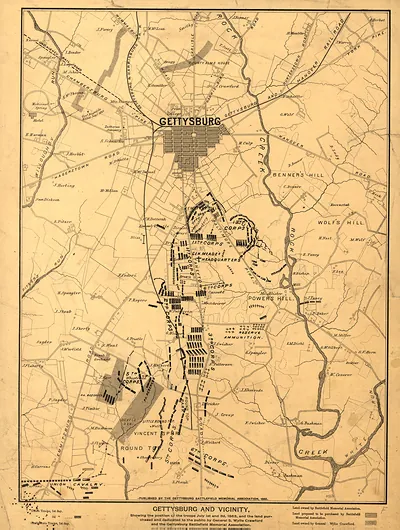
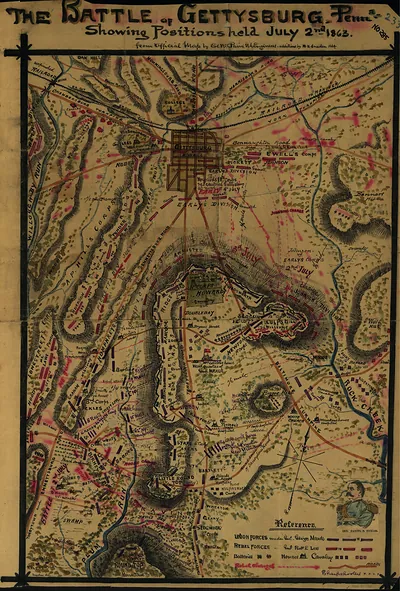
The map-style view of the Battle of Gettysburg lays out the positions of the two armies that met in the Pennsylvania town in early July 1863, which makes it useful for seeing how the fighting unfolded across the surrounding ridges and fields. The Union Army of the Potomac and the Confederate Army of Northern Virginia clashed there from July 1 to 3, and the engagement is widely regarded as the turning point of the Civil War in the East. Because the image shows both lines at once, it helps explain why the high ground south and east of town, including Cemetery Hill and Little Round Top, carried so much weight in the three days of fighting.
| Created / published | 1863 |
|---|---|
| Original scan | 7,339 × 6,110 px · prints to 24 × 20 in at 300 dpi |
| Reference | 3660BattleofGettysburgshowi_1863 |
More from the Gettysburg collection
Snapshots of the Past helps heritage brands, museums, historians and storytellers tell stories with history: historic prints, image licensing and historical storytelling drawn from more than 25 years of research and curation.