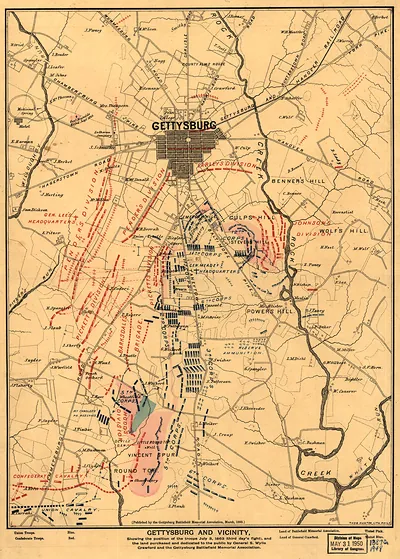
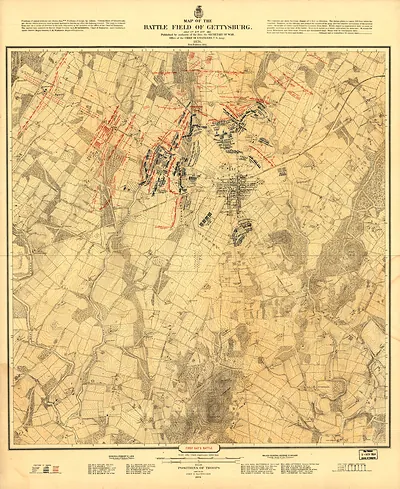
Gettysburg and Vicinity, Showing the Position of the Troops July 1st and 3rd, 1863 – Historic Reproduction

(Each image is professionally and digitally cleaned of artifacts such as color bars and extra borders prior to printing.)
Description
Few images capture their era like this historic image of Gettysburg and Vicinity, Showing the Position of the Troops July 1st and 3rd, 1863. It is part of the Snapshots of the Past archive, gathered over 25 years of research.
Order it framed and ready to hang, or unframed to match a frame you already love. Perfect for a home, office, library or classroom wall, and a gift with a story behind it. Free shipping in the lower 48 states. Since 2001, Snapshots of the Past has shipped historic prints to tens of thousands of customers around the world.
Gettysburg and Vicinity, Showing the Position of the Troops July 1st and 3rd, 1863
Order a print
Thank you. Your order went through, and a receipt is on its way by email.
Secure checkout · SSL encryptedPowered by Stripe and PayPal
Free shipping in the lower 48 states. The checkout page shows the picture, size and price before you pay.
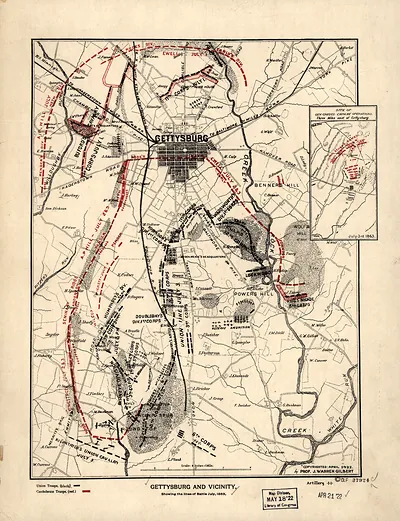
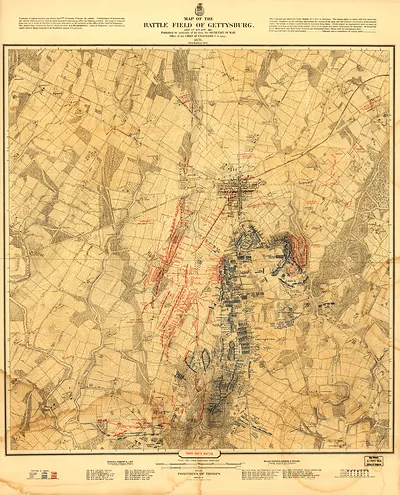
A printed map rather than a photograph, this 1885 sheet lays out the Gettysburg battlefield and its surroundings with the troop positions for July 1 and July 3, 1863, the first day of fighting and the final day of Pickett's Charge. Maps like this were made in the decades after the war, when veterans, families and military historians wanted a clear picture of how the armies had been arranged across the ridges and farmland south of town. Its value lies in showing the terrain as well as the lines: the converging roads into Gettysburg, Cemetery Hill, Culp's Hill and the long ridge south toward the Round Tops, all of which shaped the three-day battle.
| Created / published | 1885 |
|---|---|
| Original scan | 3,902 × 5,170 px · prints to 13 × 17 in at 300 dpi |
| Reference | 4728Gettysburgandvicinitysh_1885 |
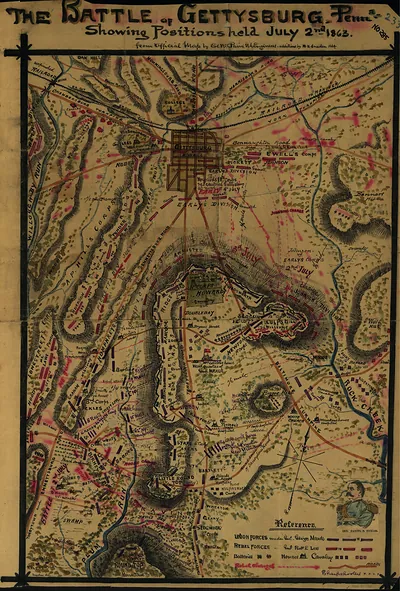
More from the Gettysburg collection
Snapshots of the Past helps heritage brands, museums, historians and storytellers tell stories with history: historic prints, image licensing and historical storytelling drawn from more than 25 years of research and curation.