Oberschlesien poster: Deutschland ist unsre gemeinsame Muttererde – Historic Poster Reproduction

(Each image is professionally and digitally cleaned of artifacts such as color bars and extra borders prior to printing.)
Description
Step back in time with Oberschlesien poster: Deutschland ist unsre gemeinsame Muttererde, a vintage poster rich in period detail. Drawn from the Snapshots of the Past archive, it is an authentic piece of documented history.
The framed print arrives ready to hang; the unframed option suits custom framing. Perfect for a home, office, library or classroom wall, and a gift with a story behind it. Free shipping in the lower 48 states. Snapshots of the Past has been bringing history to the wall since 2001, for tens of thousands of customers worldwide.
Oberschlesien poster: Deutschland ist unsre gemeinsame Muttererde
Order a print
Thank you. Your order went through, and a receipt is on its way by email.
Secure checkout · SSL encryptedPowered by Stripe and PayPal
Free shipping in the lower 48 states. The checkout page shows the picture, size and price before you pay.
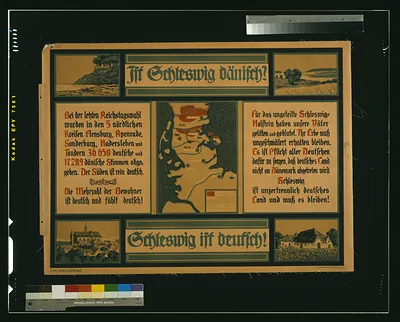
Its slogan, "Germany is our common mother earth," frames the territory as a family inheritance rather than a political line. Printed in 1920, the poster belongs to the German campaign to keep Upper Silesia before the plebiscite that the Treaty of Versailles required, held in March 1921 under Allied supervision. Such appeals were aimed at a population with both Polish and German speakers and strong local loyalties. The vote was divided, and in 1922 the region was partitioned between Germany and Poland, with the heavily industrial eastern part going to Poland.
| Created / published | 1920 |
|---|---|
| Original scan | 3,973 × 5,000 px · prints to 13 × 17 in at 300 dpi |
| Reference | 596_OberSchlesien_MittelSch_1920 |
More from the World War I collection
Snapshots of the Past helps heritage brands, museums, historians and storytellers tell stories with history: historic prints, image licensing and historical storytelling drawn from more than 25 years of research and curation.