Abraham Lincoln's Last Reception – Antique Wall Art

(Each image is professionally and digitally cleaned of artifacts such as color bars and extra borders prior to printing.)
Description
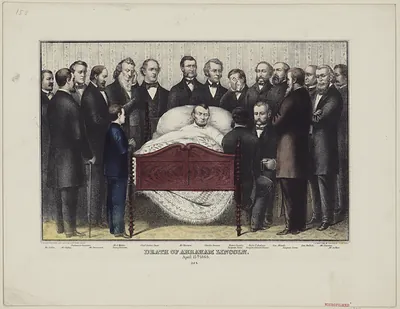
A window into the past: Abraham Lincoln's Last Reception, preserved in this antique lithograph. Drawn from the Snapshots of the Past archive, it is an authentic piece of documented history.
Framed, it is ready for the wall; unframed, it is ready for the frame you choose. It makes a striking addition to a living room, study or office, and a thoughtful gift. Free shipping in the lower 48 states. Since 2001, Snapshots of the Past has shipped historic prints to tens of thousands of customers around the world.
Abraham Lincoln's Last Reception
Order a print
Thank you. Your order went through, and a receipt is on its way by email.
Secure checkout · SSL encryptedPowered by Stripe and PayPal
Free shipping in the lower 48 states. The checkout page shows the picture, size and price before you pay.
Lincoln's name and the title "Last Reception" point to the public receptions he held at the White House, where ordinary citizens lined up to shake the president's hand. The image was made around 1865, the last months of his life, and Lincoln was shot at Ford's theater in April of that year. A hand-colored lithograph like this one was a popular way to sell scenes of the president to a broad public, both during the war and in the grief that followed. The print was issued by John Smith of Philadelphia from a design by Anton Hohenstein, so viewers can compare its composition and coloring with other images of Lincoln from the same period.
| Created / published | c. 1865 |
|---|---|
| Medium | lithograph, hand-colored |
| Notes | Artist, Hohenstein, Anton. Published, John Smith, Philadelphia |
| Original scan | 4,586 × 3,147 px · prints to 15 × 10 in at 300 dpi |
| Reference | L-CW-21 |
More from the Lincoln collection
Snapshots of the Past helps heritage brands, museums, historians and storytellers tell stories with history: historic prints, image licensing and historical storytelling drawn from more than 25 years of research and curation.