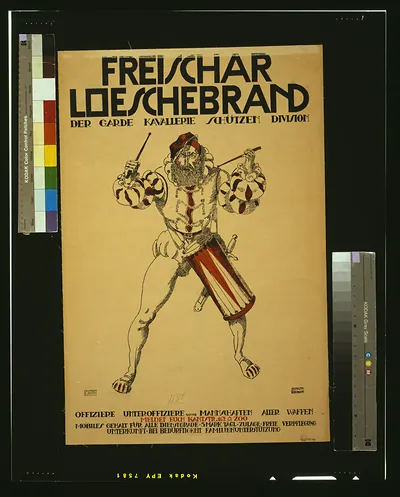
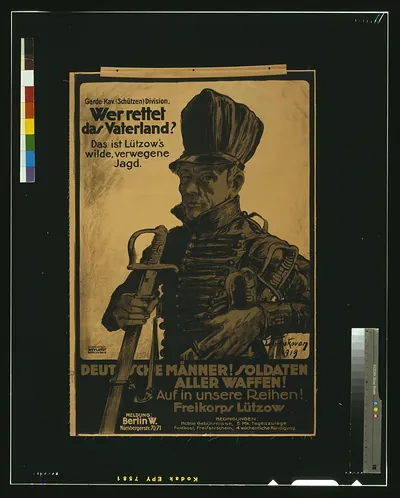
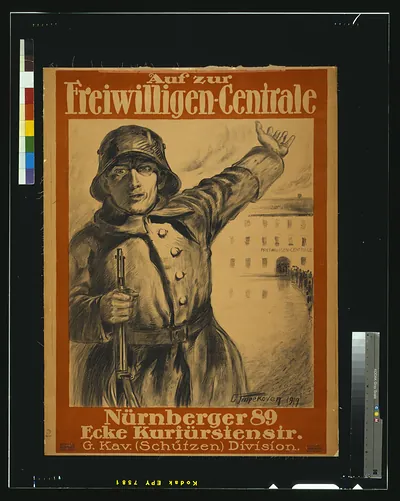
Pioniere heraus! G.Kav. Schützen Div. recruitment poster – Antique Poster Print

(Each image is professionally and digitally cleaned of artifacts such as color bars and extra borders prior to printing.)
Description
This rare vintage poster captures Pioniere heraus! G.Kav. Schützen Div. recruitment poster in remarkable detail. It is part of the Snapshots of the Past archive, gathered over 25 years of research.
Choose the framed print, ready to hang the day it arrives, or the unframed print for a frame of your own. A fine choice for anyone who loves history, and a gift that gets noticed. Free shipping in the lower 48 states. Since 2001, Snapshots of the Past has shipped historic prints to tens of thousands of customers around the world.
Pioniere heraus! G.Kav. Schützen Div. recruitment poster
Order a print
Thank you. Your order went through, and a receipt is on its way by email.
Secure checkout · SSL encryptedPowered by Stripe and PayPal
Free shipping in the lower 48 states. The checkout page shows the picture, size and price before you pay.
Pioniere heraus!" ("Pioneers, step forward!") is a 1918 German recruitment call aimed at men with engineering and construction skills, here for the unit abbreviated G.Kav. Schützen Div., the Guards Cavalry Rifle Division. Pioneers were the combat engineers who built bridges, dug field works and cleared obstacles, so the appeal went after a specialized trade rather than the general infantry pool. Printed as Germany's manpower ran short through the final year of the war, the poster shows how recruiters tried to fill skilled roles quickly. Its blunt imperative makes it a useful example of late-war appeals.
| Created / published | 1918 |
|---|---|
| Original scan | 4,013 × 5,000 px · prints to 13 × 17 in at 300 dpi |
| Reference | 1594_Pioniere_heraus_GKavSch_1918 |
More from the World War I collection
Snapshots of the Past helps heritage brands, museums, historians and storytellers tell stories with history: historic prints, image licensing and historical storytelling drawn from more than 25 years of research and curation.