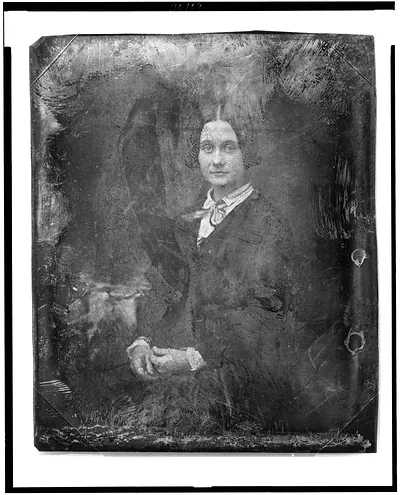
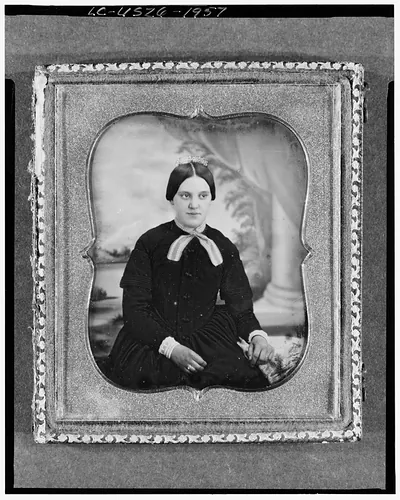
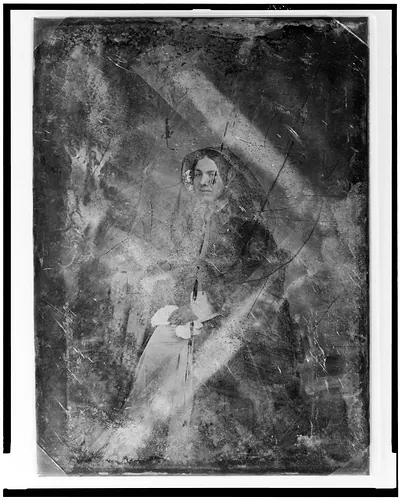
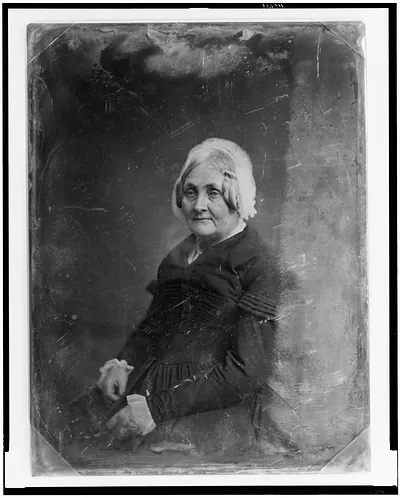
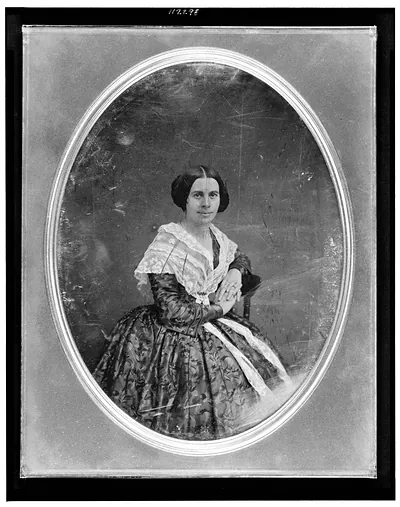
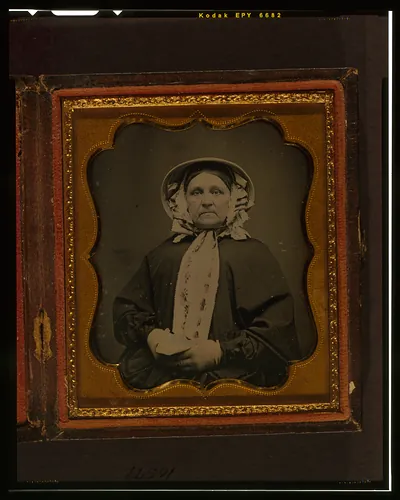
Unidentified woman in bonnet, seated daguerreotype portrait – Vintage Photo Print

(Each image is professionally and digitally cleaned of artifacts such as color bars and extra borders prior to printing.)
Description
Step back in time with Unidentified woman in bonnet, seated daguerreotype portrait, a historic photograph rich in period detail. Drawn from the Snapshots of the Past archive, it is an authentic piece of documented history.
Choose the framed print, ready to hang the day it arrives, or the unframed print for a frame of your own. It brings character to any room and makes a memorable gift. Free shipping in the lower 48 states. Since 2001, Snapshots of the Past has shipped historic prints to tens of thousands of customers around the world.
Unidentified woman in bonnet, seated daguerreotype portrait
Order a print
Thank you. Your order went through, and a receipt is on its way by email.
Secure checkout · SSL encryptedPowered by Stripe and PayPal
Free shipping in the lower 48 states. The checkout page shows the picture, size and price before you pay.
A seated woman in a bonnet, sitting for a daguerreotype in about 1840, is one of the earliest kinds of photographic portrait people could sit for. The daguerreotype was introduced in 1839 and produced a single, mirror-like image on a silvered copper plate, so each one is unique and has no negative to reproduce it from. Because exposures then ran for minutes, sitters were held still with head braces and asked to keep a steady expression, which gives early portraits their stiff, formal look. The woman's identity is not recorded, but her bonnet and pose reflect the fashions and portrait conventions of the period.
| Created / published | 1840 |
|---|---|
| Original scan | 3,299 × 4,096 px · prints to 11 × 14 in at 300 dpi |
| Reference | 528_Unidentified_woman_thre_1840 |
More from the Daguerreotypes & Early Photography collection
Snapshots of the Past helps heritage brands, museums, historians and storytellers tell stories with history: historic prints, image licensing and historical storytelling drawn from more than 25 years of research and curation.