Bridge Comparison: elevations and bridge sections drawing – Historic Print

(Each image is professionally and digitally cleaned of artifacts such as color bars and extra borders prior to printing.)
Description
Few images capture their era like this historic drawing of Bridge Comparison: elevations and bridge sections drawing. It comes from the Snapshots of the Past collection, curated over 25 years for its historical value.
Order it framed and ready to hang, or unframed to match a frame you already love. It brings character to any room and makes a memorable gift. Free shipping in the lower 48 states. Snapshots of the Past has been bringing history to the wall since 2001, for tens of thousands of customers worldwide.
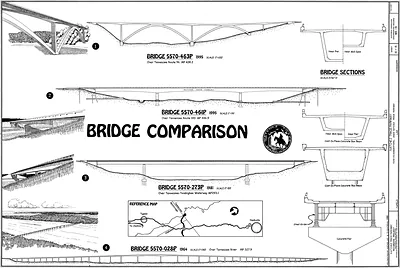
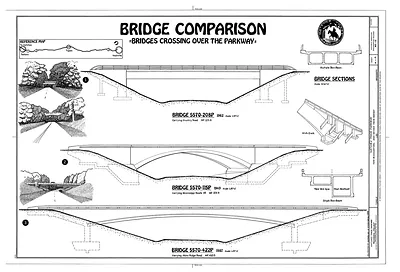
Bridge Comparison: elevations and bridge sections drawing
Order a print
Thank you. Your order went through, and a receipt is on its way by email.
Secure checkout · SSL encryptedPowered by Stripe and PayPal
Free shipping in the lower 48 states. The checkout page shows the picture, size and price before you pay.
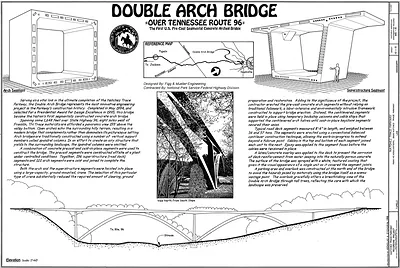
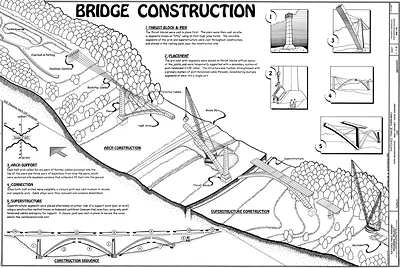
This drawing sets side-by-side elevations and cross-sections of several bridge types, so it shows how engineers weighed one structural solution against another for the same roadway. Its comparative format suggests it was prepared as a design reference rather than a view of any single crossing. The Natchez Trace Parkway, which was built through the 1930s and into the 1940s, needed many small bridges over creeks and hollows, and designers generally favored reinforced concrete spans faced with local stone to suit the rural Mississippi and Tennessee landscape. Drawings like this one record those choices and are useful for seeing how the parkway's structures were planned.
| Original scan | 14,458 × 9,810 px · prints to 48 × 33 in at 300 dpi |
|---|---|
| Reference | 00013a |
More from the Natchez Trace Parkway collection
Snapshots of the Past helps heritage brands, museums, historians and storytellers tell stories with history: historic prints, image licensing and historical storytelling drawn from more than 25 years of research and curation.