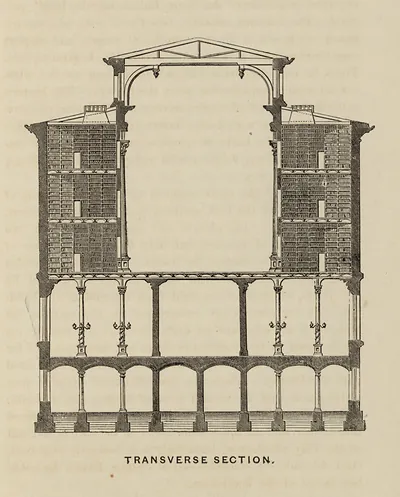
Longitudinal section of north stack, Library of Congress, Washington, D.C. – Antique Wall Art

(Each image is professionally and digitally cleaned of artifacts such as color bars and extra borders prior to printing.)
Description
Step back in time with Longitudinal section of north stack, Library of Congress, Washington, D.C., a historic image rich in period detail. It is part of the Snapshots of the Past archive, gathered over 25 years of research.
Order it framed and ready to hang, or unframed to match a frame you already love. Perfect for a home, office, library or classroom wall, and a gift with a story behind it. Free shipping in the lower 48 states. Snapshots of the Past has been bringing history to the wall since 2001, for tens of thousands of customers worldwide.
Longitudinal section of north stack, Library of Congress, Washington, D.C.
Order a print
Thank you. Your order went through, and a receipt is on its way by email.
Secure checkout · SSL encryptedPowered by Stripe and PayPal
Free shipping in the lower 48 states. The checkout page shows the picture, size and price before you pay.
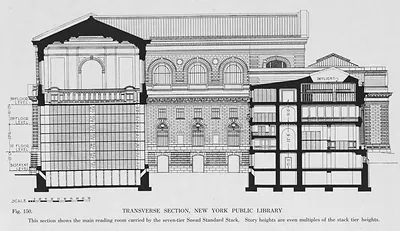
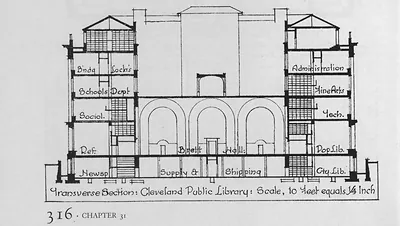
A cross-section through the north book stack shows how the Library of Congress planned its storage upward in tiers rather than spreading shelves across a single floor. The drawing records the iron framing and floor levels that let the stacks rise several stories within a narrow footprint. The Library moved into its new building in Washington in 1897, and its designers leaned on iron and masonry partly to reduce the fire risk that had destroyed much of the earlier collection in 1851. Worth noticing is how the section makes the stacks legible as working machinery, with each level sized for shelving, access and the handling of heavy volumes.
| Original scan | 3,697 × 5,391 px · prints to 12 × 18 in at 300 dpi |
|---|---|
| Reference | tif15563_Longitudinalsectionofnorthstac |
More from the Libraries collection
Snapshots of the Past helps heritage brands, museums, historians and storytellers tell stories with history: historic prints, image licensing and historical storytelling drawn from more than 25 years of research and curation.