Valentine postcard with cherub and forget-me-nots – Vintage Print

(Each image is professionally and digitally cleaned of artifacts such as color bars and extra borders prior to printing.)
Description
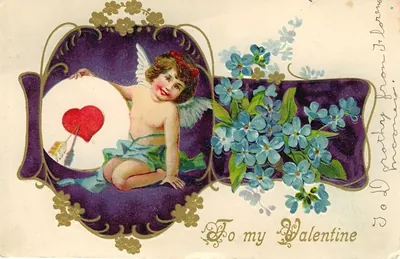
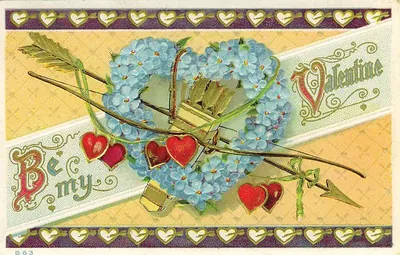
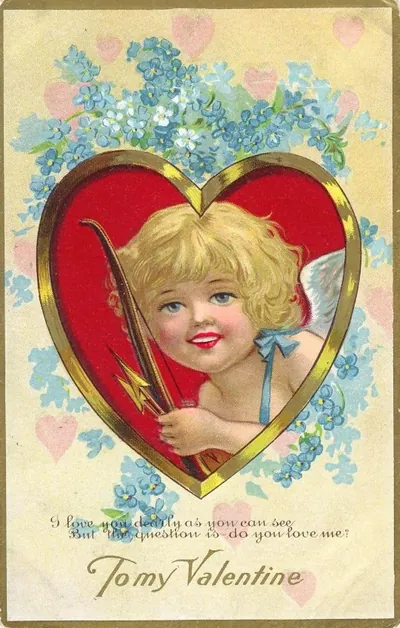
A window into the past: Valentine postcard with cherub and forget-me-nots, preserved in this vintage postcard. It comes from the Snapshots of the Past collection, curated over 25 years for its historical value.
Choose the framed print, ready to hang the day it arrives, or the unframed print for a frame of your own. It brings character to any room and makes a memorable gift. Free shipping in the lower 48 states. Since 2001, Snapshots of the Past has shipped historic prints to tens of thousands of customers around the world.
Valentine postcard with cherub and forget-me-nots
Order a print
Thank you. Your order went through, and a receipt is on its way by email.
Secure checkout · SSL encryptedPowered by Stripe and PayPal
Free shipping in the lower 48 states. The checkout page shows the picture, size and price before you pay.
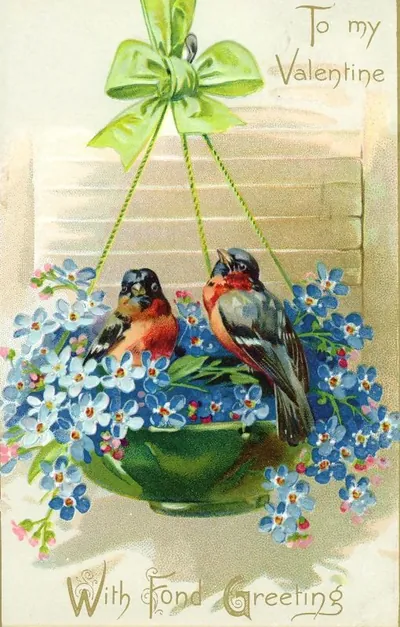
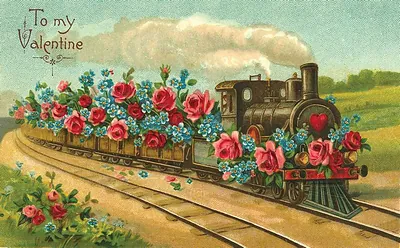
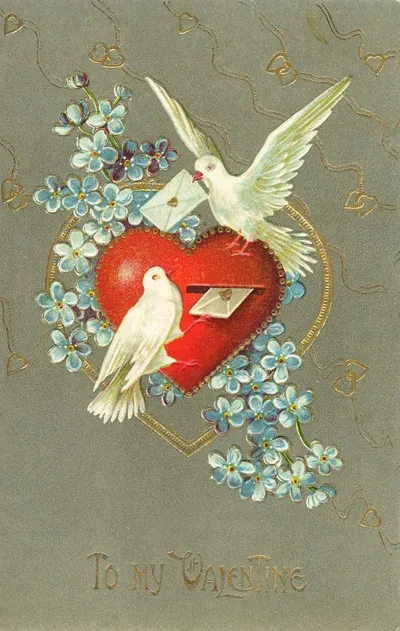
Cherubs and forget-me-nots make this card a typical product of the early twentieth-century Valentine trade, when printers in Germany, Britain and the United States turned out millions of small embossed cards for the holiday. The forget-me-not, a small blue flower, had long carried a sentiment of constancy, so pairing it with a winged infant Cupid let senders express affection without writing much at all. Cards like this were often mailed with only a brief signature or a line of verse, and the lithographed borders and gilt details were meant to be kept in a scrapbook or sweetheart's box. Look closely at the printing to see the layered colors and the soft, almost painterly shading that mass-produced cards of the period were known for.
| Original scan | 515 × 816 px |
|---|---|
| Reference | Img129 |
More from the Valentine's Day collection
Snapshots of the Past helps heritage brands, museums, historians and storytellers tell stories with history: historic prints, image licensing and historical storytelling drawn from more than 25 years of research and curation.