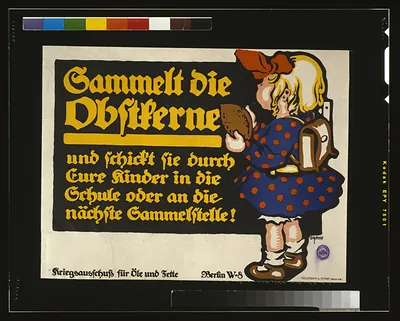
Sammelt die Obstkerne, WWI fruit stone collection poster – Vintage Poster

(Each image is professionally and digitally cleaned of artifacts such as color bars and extra borders prior to printing.)
Description
This rare vintage poster captures Sammelt die Obstkerne, WWI fruit stone collection poster in remarkable detail. It is part of the Snapshots of the Past archive, gathered over 25 years of research.
Framed, it is ready for the wall; unframed, it is ready for the frame you choose. It brings character to any room and makes a memorable gift. Free shipping in the lower 48 states. Snapshots of the Past, founded in 2001, has served tens of thousands of customers worldwide.
Sammelt die Obstkerne, WWI fruit stone collection poster
Order a print
Thank you. Your order went through, and a receipt is on its way by email.
Secure checkout · SSL encryptedPowered by Stripe and PayPal
Free shipping in the lower 48 states. The checkout page shows the picture, size and price before you pay.
Sammelt die Obstkerne," or "Collect the fruit stones," urged this 1917 German wartime appeal, asking households to save pits instead of throwing them away. The stones were burned into charcoal and processed into activated carbon for gas mask filters, a material that grew scarce as the Allied blockade tightened. Posters like this one turned everyday kitchen waste into a civilian contribution to the war effort and show how far the home front was drawn into military supply.
| Created / published | 1917 |
|---|---|
| Original scan | 5,000 × 4,018 px · prints to 17 × 13 in at 300 dpi |
| Reference | 998_Sammelt_die_Obstkerne_u_1917 |
More from the World War I collection
Snapshots of the Past helps heritage brands, museums, historians and storytellers tell stories with history: historic prints, image licensing and historical storytelling drawn from more than 25 years of research and curation.