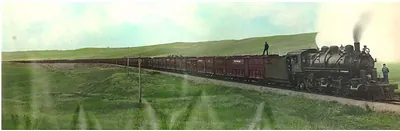
Steam train through a canyon, Black Hills railroad – Historic Print

(Each image is professionally and digitally cleaned of artifacts such as color bars and extra borders prior to printing.)
Description
This historic image of Steam train through a canyon, Black Hills railroad brings a moment of history to your wall. It is part of the Snapshots of the Past archive, gathered over 25 years of research.
The framed print arrives ready to hang; the unframed option suits custom framing. It brings character to any room and makes a memorable gift. Free shipping in the lower 48 states. Snapshots of the Past has been bringing history to the wall since 2001, for tens of thousands of customers worldwide.
Steam train through a canyon, Black Hills railroad
Order a print
Thank you. Your order went through, and a receipt is on its way by email.
Secure checkout · SSL encryptedPowered by Stripe and PayPal
Free shipping in the lower 48 states. The checkout page shows the picture, size and price before you pay.
A steam locomotive pushes through a narrow rock cut in the Black Hills of South Dakota, its plume of smoke drifting back over the ridgeline. Railroads threaded the Hills from the 1870s onward, hauling timber, mining supplies and ore out of country where the grades were steep and the curves tight. Scenes like this one show how engineers carved passes through granite and pine to keep trains moving, and how the rail line became a way for visitors to reach the region's scenic canyons.
| Original scan | 4,916 × 3,941 px · prints to 16 × 13 in at 300 dpi |
|---|---|
| Reference | 02546u |
More from the Railroads & Depots collection
Snapshots of the Past helps heritage brands, museums, historians and storytellers tell stories with history: historic prints, image licensing and historical storytelling drawn from more than 25 years of research and curation.