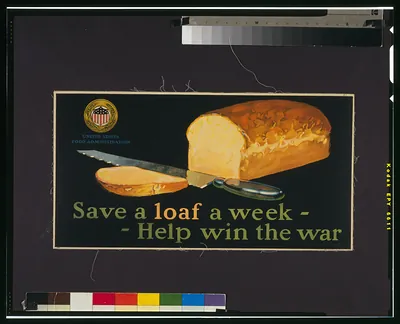
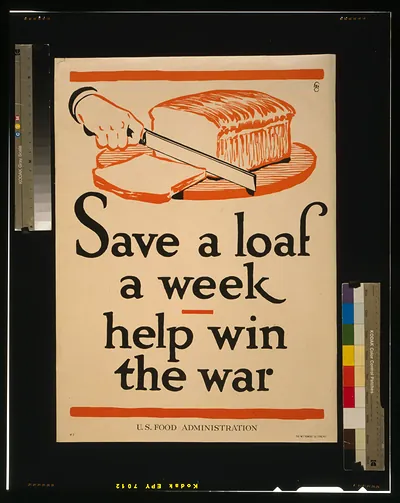
Save a loaf a week help win the war – Antique Print

(Each image is professionally and digitally cleaned of artifacts such as color bars and extra borders prior to printing.)
Description
A window into the past: Save a loaf a week help win the war, preserved in this historic image. Drawn from the Snapshots of the Past archive, it is an authentic piece of documented history.
Framed, it is ready for the wall; unframed, it is ready for the frame you choose. A fine choice for anyone who loves history, and a gift that gets noticed. Free shipping in the lower 48 states. Snapshots of the Past has been bringing history to the wall since 2001, for tens of thousands of customers worldwide.
Save a loaf a week help win the war
Order a print
Thank you. Your order went through, and a receipt is on its way by email.
Secure checkout · SSL encryptedPowered by Stripe and PayPal
Free shipping in the lower 48 states. The checkout page shows the picture, size and price before you pay.
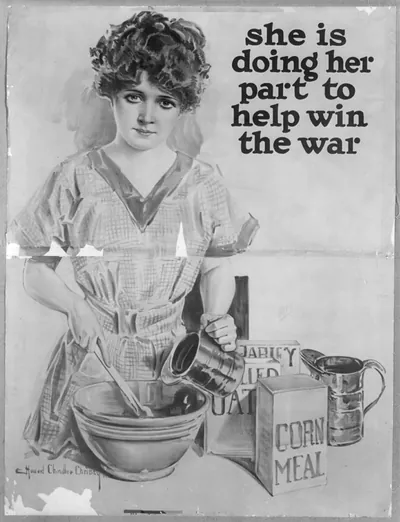
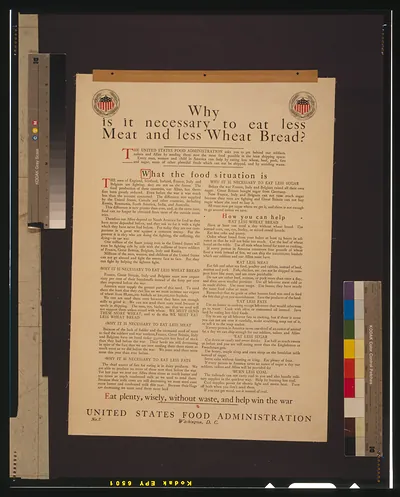
This 1917 lithograph asks for a modest sacrifice: one loaf a week saved for the war effort. It was issued by the U.S. Food Administration, the wartime agency Congress created in August 1917 under Herbert Hoover, and it is the third poster in that agency's numbered series. Printed by W. F. Powers Co. of New York, it appeared as the country entered the First World War and wheat was needed to feed American troops and Allied Europe. Households were encouraged to conserve wheat bread by using substitutes such as corn, rye and barley flours.
| Created / published | 1917 |
|---|---|
| Original scan | 1,131 × 1,536 px · prints to 4 × 5 in at 300 dpi |
| Reference | 354_Save_a_loaf_a_week_hel_1917 |
More from the World War I collection
Snapshots of the Past helps heritage brands, museums, historians and storytellers tell stories with history: historic prints, image licensing and historical storytelling drawn from more than 25 years of research and curation.