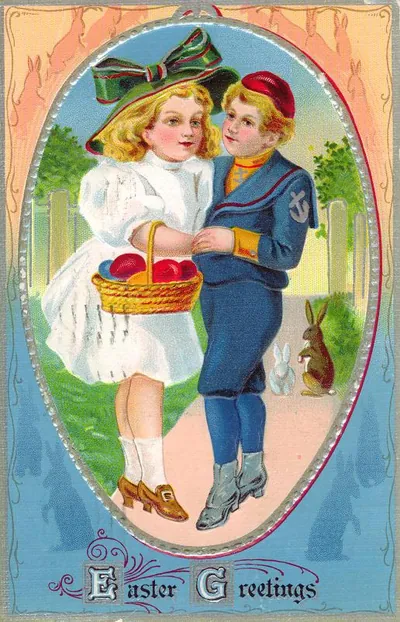
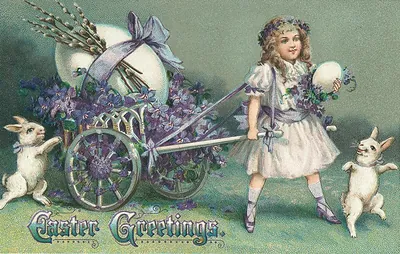
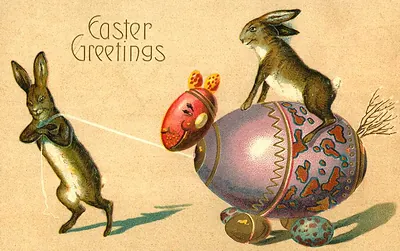
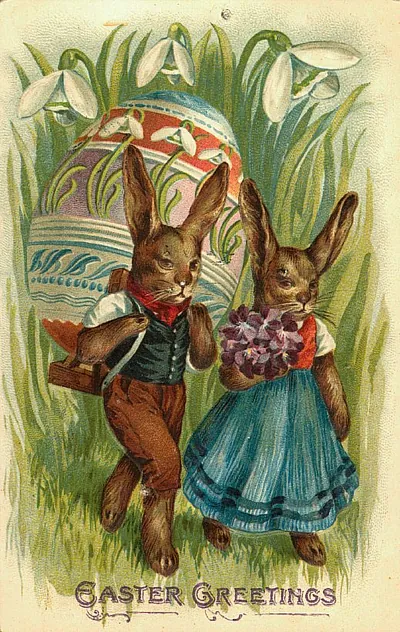
Easter Greetings postcard with rabbits and children – Historic Print

(Each image is professionally and digitally cleaned of artifacts such as color bars and extra borders prior to printing.)
Description
This vintage postcard of Easter Greetings postcard with rabbits and children brings a moment of history to your wall. Drawn from the Snapshots of the Past archive, it is an authentic piece of documented history.
The framed print arrives ready to hang; the unframed option suits custom framing. Perfect for a home, office, library or classroom wall, and a gift with a story behind it. Free shipping in the lower 48 states. Snapshots of the Past has been bringing history to the wall since 2001, for tens of thousands of customers worldwide.
Easter Greetings postcard with rabbits and children
Order a print
Thank you. Your order went through, and a receipt is on its way by email.
Secure checkout · SSL encryptedPowered by Stripe and PayPal
Free shipping in the lower 48 states. The checkout page shows the picture, size and price before you pay.
Anthropomorphic rabbits dressed as children take center stage in this Easter greetings postcard, a motif that was hugely popular in the early twentieth century. Holiday postcards like this one were produced in enormous numbers, especially in the decades before the First World War, when sending cards through the mail was a common way to mark a holiday. Rabbits and eggs became standard Easter symbols in Europe and America, partly from German folk traditions brought over by immigrants, and cards like this one helped spread that imagery. Worth noticing are the small human touches, such as the clothing and playful poses, which show how the illustrators turned a spring symbol into something cozy and familiar.
| Original scan | 599 × 962 px |
|---|---|
| Reference | Easter (67) |
More from the Easter collection
Snapshots of the Past helps heritage brands, museums, historians and storytellers tell stories with history: historic prints, image licensing and historical storytelling drawn from more than 25 years of research and curation.