Hebrew New Year greeting postcard with tablet-bearing figure – Vintage Print

(Each image is professionally and digitally cleaned of artifacts such as color bars and extra borders prior to printing.)
Description
A window into the past: Hebrew New Year greeting postcard with tablet-bearing figure, preserved in this vintage postcard. It is part of the Snapshots of the Past archive, gathered over 25 years of research.
Order it framed and ready to hang, or unframed to match a frame you already love. Perfect for a home, office, library or classroom wall, and a gift with a story behind it. Free shipping in the lower 48 states. Snapshots of the Past, founded in 2001, has served tens of thousands of customers worldwide.
Hebrew New Year greeting postcard with tablet-bearing figure
Order a print
Thank you. Your order went through, and a receipt is on its way by email.
Secure checkout · SSL encryptedPowered by Stripe and PayPal
Free shipping in the lower 48 states. The checkout page shows the picture, size and price before you pay.
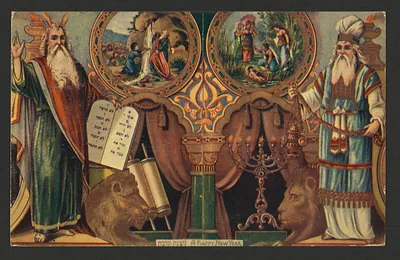
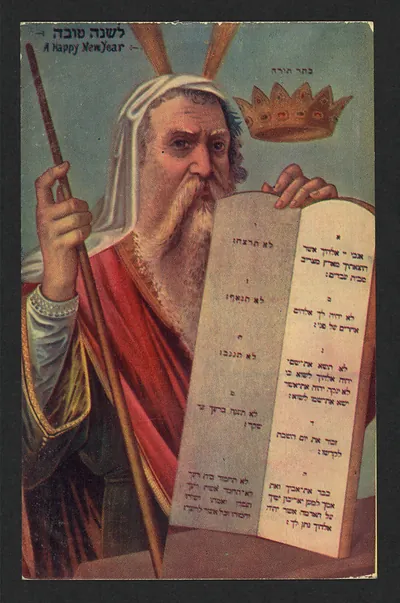
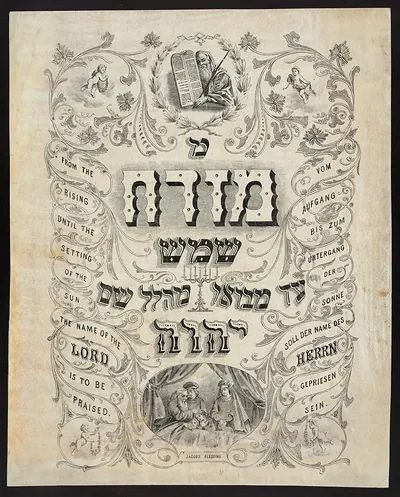
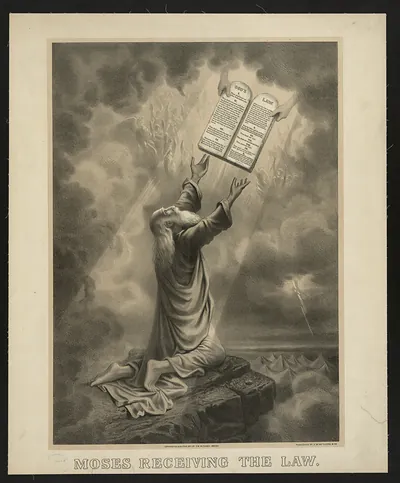
Lead with the figure on the tablets: this postcard shows a robed man holding a pair of inscribed stone tablets, a visual shorthand for the Ten Commandments, set on a card meant to carry Hebrew New Year wishes. That pairing is what sets it apart from the other pictures on this board, which share the commandments theme but are not holiday greetings. Rosh Hashanah cards of this kind were widely mailed in the early 1900s, when picture postcards were a popular and inexpensive way to send seasonal messages. Designers often drew on biblical imagery like the tablets to link the new year with covenant, law and renewal. Look closely at the lettering and border, which often mix Hebrew text with decorative English wording.
| Original scan | 3,425 × 2,272 px · prints to 11 × 8 in at 300 dpi |
|---|---|
| Reference | 15863u |
More from the Middle East & Holy Land collection
Snapshots of the Past helps heritage brands, museums, historians and storytellers tell stories with history: historic prints, image licensing and historical storytelling drawn from more than 25 years of research and curation.