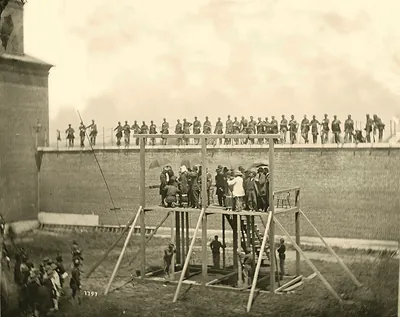
Stereo view of gallows before a brick prison wall – Historic Photograph Print

(Each image is professionally and digitally cleaned of artifacts such as color bars and extra borders prior to printing.)
Description
This rare stereograph captures Stereo view of gallows before a brick prison wall in remarkable detail. It is part of the Snapshots of the Past archive, gathered over 25 years of research.
Framed, it is ready for the wall; unframed, it is ready for the frame you choose. Perfect for a home, office, library or classroom wall, and a gift with a story behind it. Free shipping in the lower 48 states. Snapshots of the Past has been bringing history to the wall since 2001, for tens of thousands of customers worldwide.
Stereo view of gallows before a brick prison wall
Order a print
Thank you. Your order went through, and a receipt is on its way by email.
Secure checkout · SSL encryptedPowered by Stripe and PayPal
Free shipping in the lower 48 states. The checkout page shows the picture, size and price before you pay.
Erected in the yard of the Old Arsenal Penitentiary in Washington, this gallows was where four people convicted in the conspiracy to kill Abraham Lincoln were hanged on July 7, 1865. The stereo format, which pairs two slightly offset exposures that merge into a three-dimensional image through a stereoscope, was a popular parlor entertainment at the time, and views like this carried the grim event into households across the country. Mary Surratt, the first woman executed by the federal government, was among those who died that day, a fact that drew considerable public attention.
| Original scan | 4,407 × 1,576 px · prints to 15 × 5 in at 300 dpi |
|---|---|
| Reference | L-D-21 |
More from the Lincoln Memorial collection
Snapshots of the Past helps heritage brands, museums, historians and storytellers tell stories with history: historic prints, image licensing and historical storytelling drawn from more than 25 years of research and curation.