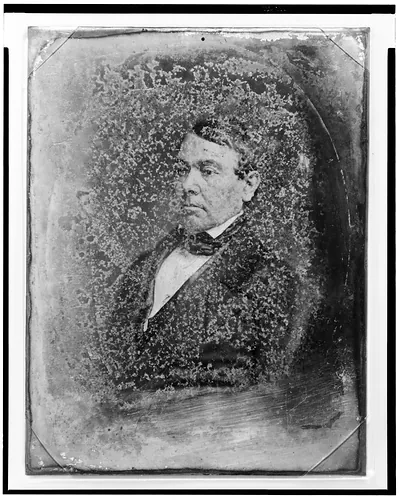
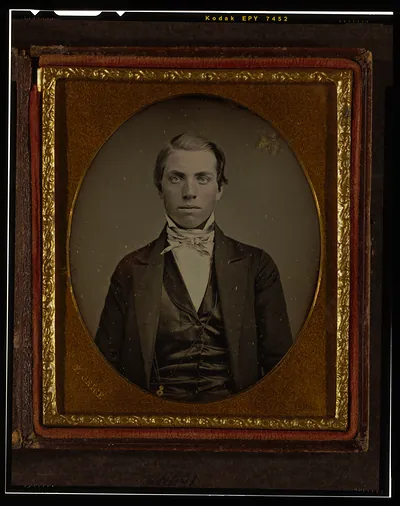
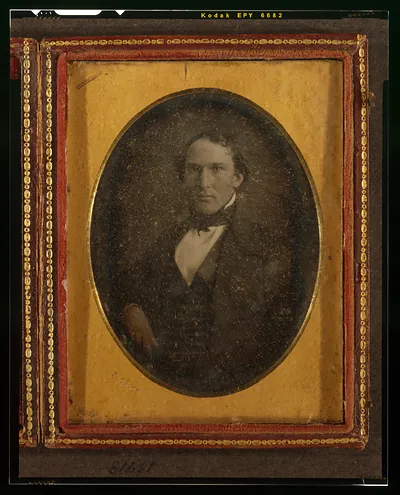
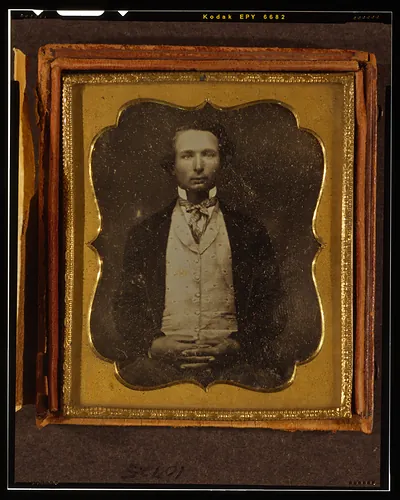
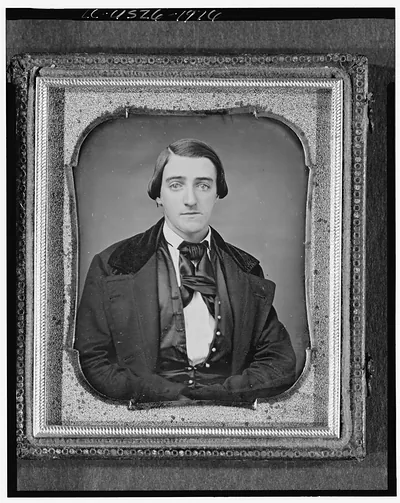
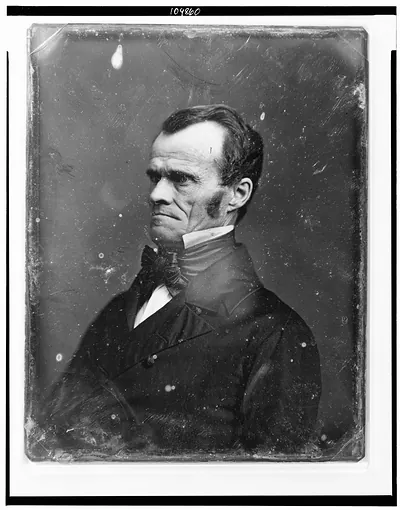
Unidentified man halfle – Vintage Photo Print

(Each image is professionally and digitally cleaned of artifacts such as color bars and extra borders prior to printing.)
Description
This rare historic photograph captures Unidentified man halfle in remarkable detail. It is part of the Snapshots of the Past archive, gathered over 25 years of research.
The framed print arrives ready to hang; the unframed option suits custom framing. Perfect for a home, office, library or classroom wall, and a gift with a story behind it. Free shipping in the lower 48 states. Since 2001, Snapshots of the Past has shipped historic prints to tens of thousands of customers around the world.
Unidentified man halfle
Order a print
Thank you. Your order went through, and a receipt is on its way by email.
Secure checkout · SSL encryptedPowered by Stripe and PayPal
Free shipping in the lower 48 states. The checkout page shows the picture, size and price before you pay.
A half-length portrait of a man who remains unidentified, the image is a reminder of how many ordinary sitters from the 1840s went unrecorded. Daguerreotypes were introduced in 1839 and quickly became the most popular form of portraiture, and by 1844 studios in American and European cities were making them for a broad middle-class clientele. Each plate is a single, reversed image fixed on polished silvered copper, so it is easily damaged and usually kept in a protective case. Exposures still took seconds to minutes, so sitters held a steady pose, and the stillness visible in faces of this period reflects that demand.
| Created / published | 1844 |
|---|---|
| Original scan | 3,258 × 4,096 px · prints to 11 × 14 in at 300 dpi |
| Reference | 412_Unidentified_man_halfle_1844 |
More from the Daguerreotypes & Early Photography collection
Snapshots of the Past helps heritage brands, museums, historians and storytellers tell stories with history: historic prints, image licensing and historical storytelling drawn from more than 25 years of research and curation.