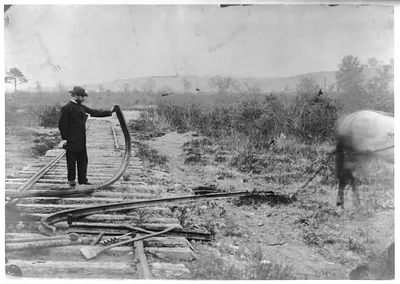
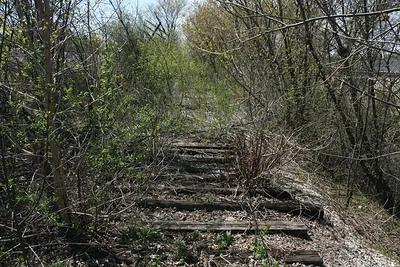
[Detail of railroad track showing wedge by which the longitudinal timber for carrying the iron rail was held in position on a crosstie] – Vintage Wall Art

(Originally scanned by the Library of Congress. Each image is professionally and digitally cleaned of artifacts such as color bars and extra borders prior to printing.)
Description
A window into the past: [Detail of railroad track showing wedge by which the longitudinal timber for carrying the iron rail was held in position on a crosstie], preserved in this historic photograph. Sourced directly from the Library of Congress, it represents an authentic piece of documented history.
Framed, it is ready for the wall; unframed, it is ready for the frame you choose. A fine choice for anyone who loves history, and a gift that gets noticed. Free shipping in the lower 48 states. Snapshots of the Past, founded in 2001, has served tens of thousands of customers worldwide.
[Detail of railroad track showing wedge by which the longitudinal timber for carrying the iron rail was held in position on a crosstie]
Order a print
Thank you. Your order went through, and a receipt is on its way by email.
Secure checkout · SSL encryptedPowered by Stripe and PayPal
Free shipping in the lower 48 states. The checkout page shows the picture, size and price before you pay.
Rather than a full section of track, this photograph isolates the wooden wedge that once held a longitudinal timber, or stringer, in place on a crosstie, the part that supported the iron rail. The picture was taken at Warrenville, South Carolina, in 1944 by Camera-Graphs of Augusta, Georgia, and its subject headings tie it to archaeology as well as railroading. Early American lines often laid iron strap rails on timber stringers like these before heavier T-rails became standard, so the detail records a construction method that had largely disappeared by the mid-twentieth century.
| Created / published | 1944 |
|---|---|
| Medium | 1 photographic print. |
| Genre | Photographic prints 1940-1950. |
| Notes | Photo by Camera-Graphs, Augusta, Ga. |
| Subjects | Railroad tracks--South Carolina--Warrenville--1940-1950. Archaeology--South Carolina--Warrenville--1940-1950. |
| Source | Library of Congress, Prints and Photographs Division |
| Original scan | 1,153 × 1,536 px · prints to 4 × 5 in at 300 dpi |
| Reference | AMZ-SOTP-HPA-165929 |
More from the Railroads & Depots collection
Snapshots of the Past helps heritage brands, museums, historians and storytellers tell stories with history: historic prints, image licensing and historical storytelling drawn from more than 25 years of research and curation.