Cooking classes · Legal Sea Foods, Harvard Square, Cambridge, MA
Oyster Tasting Class
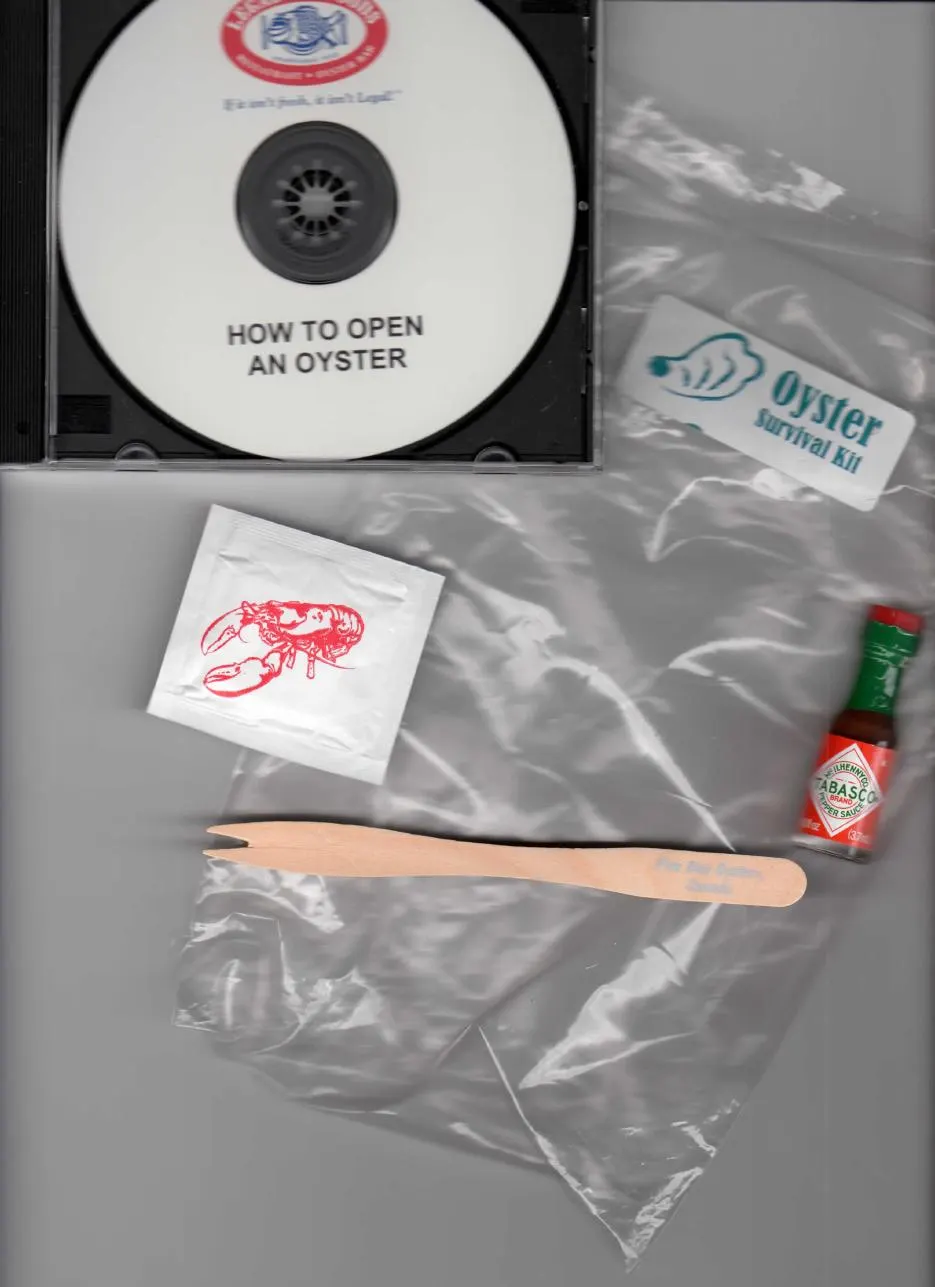
An oyster tasting class at Legal Sea Foods in Harvard Square. Students tasted 4 raw oysters from different waters side by side, each matched with a white wine, and learned how to open oysters with the help of a take-home DVD. Everyone left with a small oyster survival kit.
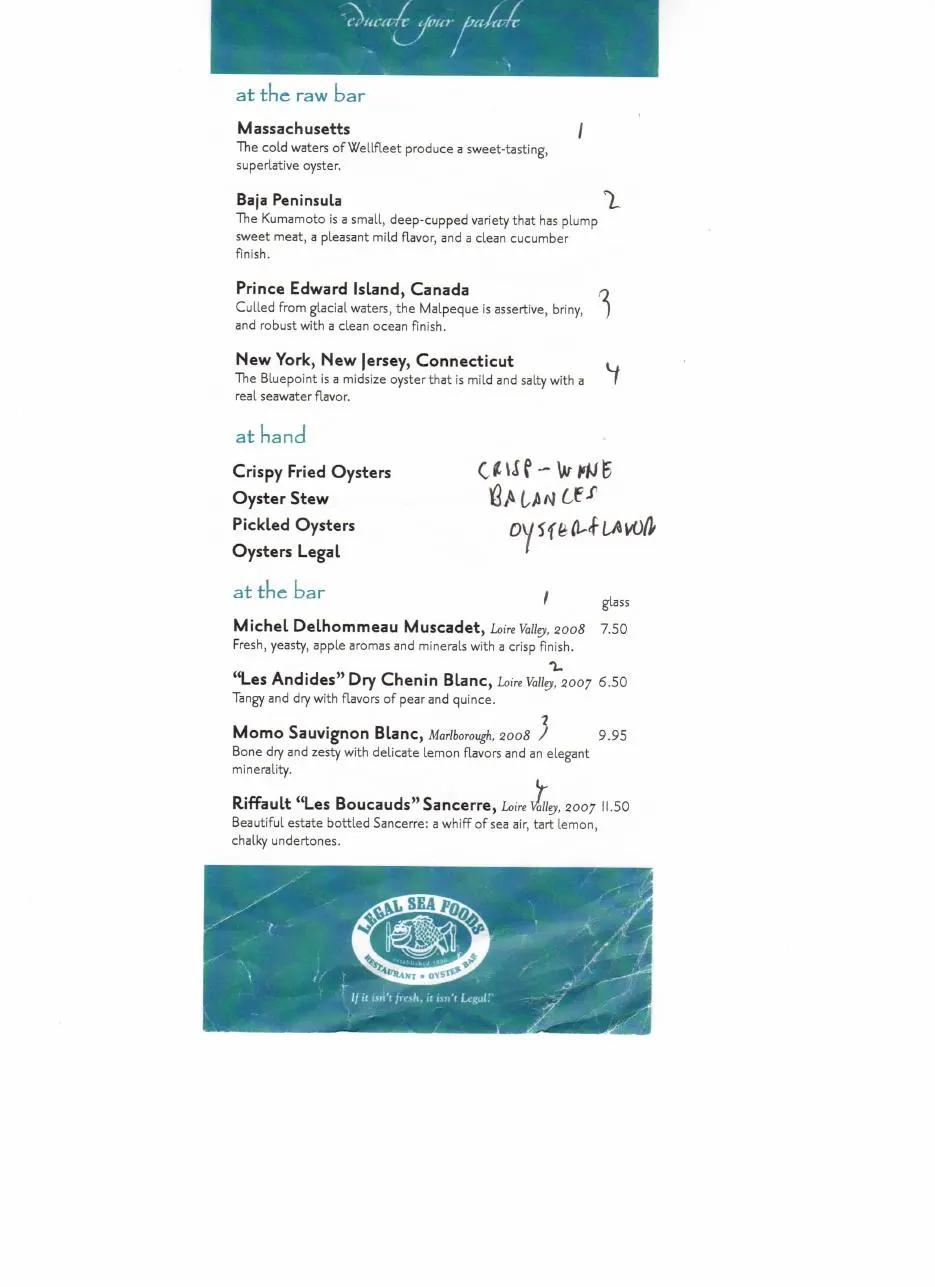
From the classThe class kit and the tasting menu, with my notes.
My notes from classAs I wrote them
- p. 21, 2, 3, 4 (numbers beside each oyster and each wine, pairing them in tasting order)
- p. 2CRISP — WINE BALANCES OYSTER FLAVOR
What we learned
Raw bar tasting order
- 1. Wellfleet (Massachusetts): sweet and top quality, from cold water.
- 2. Kumamoto (Baja Peninsula): small and deep-cupped, plump sweet meat, mild, clean cucumber finish.
- 3. Malpeque (Prince Edward Island, Canada): assertive, briny and robust, clean ocean finish.
- 4. Bluepoint (New York, New Jersey, Connecticut): midsize, mild and salty, real seawater flavor.
Cooked oyster dishes
- Crispy Fried Oysters
- Oyster Stew
- Pickled Oysters
- Oysters Legal
Wine pairings, by the glass (numbered 1-4 to match the oysters)
- 1. Michel Delhommeau Muscadet, Loire Valley, 2008 ($7.50): fresh, yeasty, apple and mineral, crisp finish.
- 2. "Les Andides" Dry Chenin Blanc, Loire Valley, 2007 ($6.50): tangy and dry, pear and quince.
- 3. Momo Sauvignon Blanc, Marlborough, 2008 ($9.95): bone dry and zesty, delicate lemon, mineral.
- 4. Riffault "Les Boucauds" Sancerre, Loire Valley, 2007 ($11.50): sea air, tart lemon, chalky.
- His note: a crisp wine balances the oyster flavor.
Class kit
- "How to Open an Oyster" DVD from Legal Sea Foods.
- "Oyster Survival Kit" bag: a wet-nap towelette, a mini bottle of Tabasco and a wooden oyster fork.