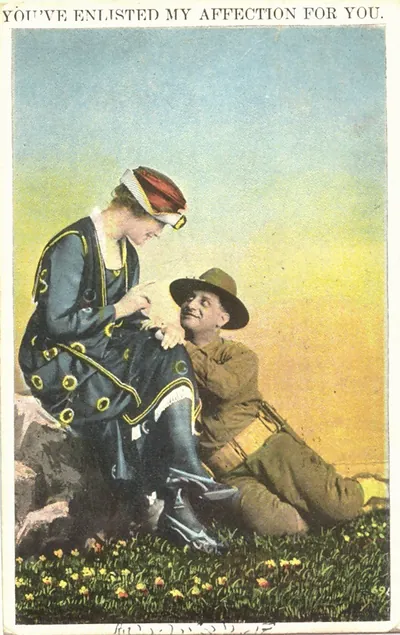
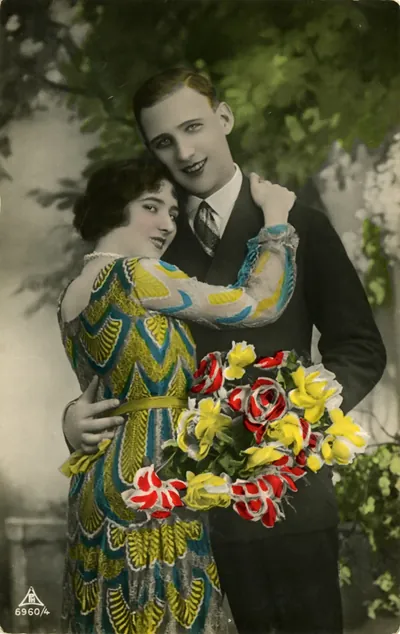
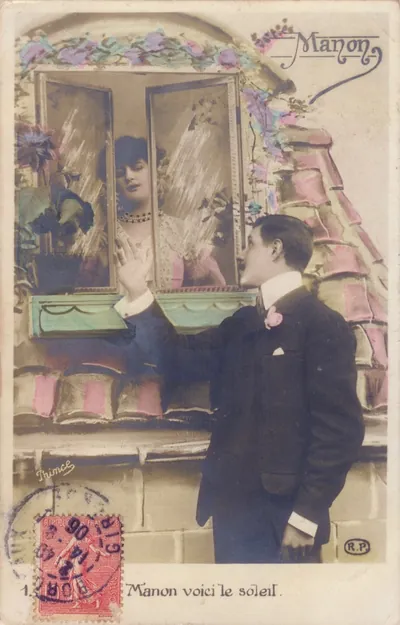
Postcard reading "A Token of Affection" with woman and lily of the valley – Historic Print

(Each image is professionally and digitally cleaned of artifacts such as color bars and extra borders prior to printing.)
Description
Postcard reading "A Token of Affection" with woman and lily of the valley comes to life in this vintage postcard, reproduced from the original with every detail intact. It comes from the Snapshots of the Past collection, curated over 25 years for its historical value.
Choose the framed print, ready to hang the day it arrives, or the unframed print for a frame of your own. A conversation-starting piece for home, office, or as a meaningful gift. Free shipping in the lower 48 states. Snapshots of the Past has been bringing history to the wall since 2001, for tens of thousands of customers worldwide.
Postcard reading "A Token of Affection" with woman and lily of the valley
Order a print
Thank you. Your order went through, and a receipt is on its way by email.
Secure checkout · SSL encryptedPowered by Stripe and PayPal
Free shipping in the lower 48 states. The checkout page shows the picture, size and price before you pay.
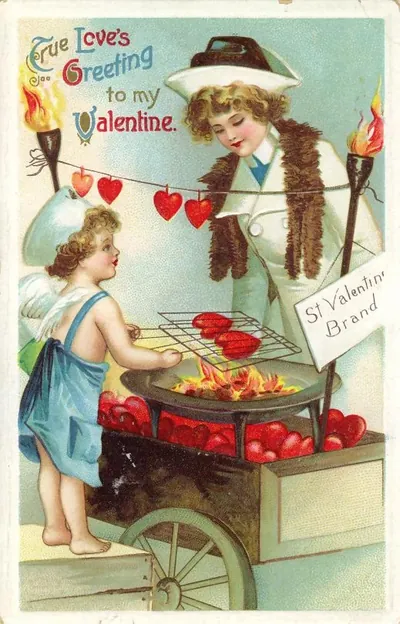
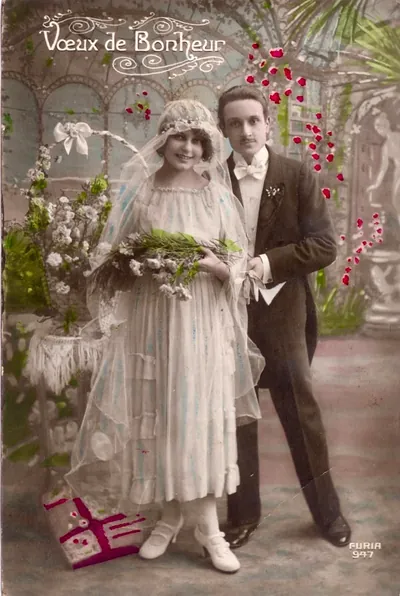
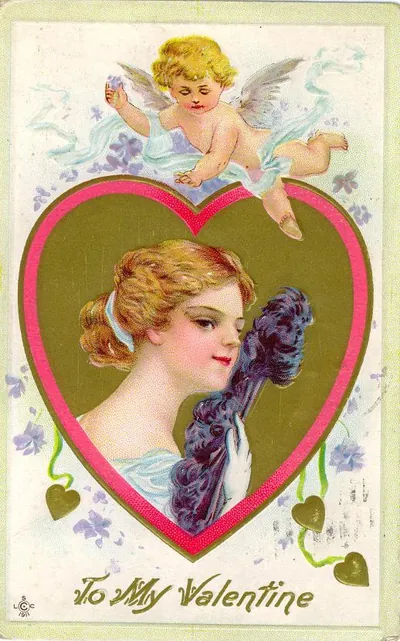
Rather than a city view or a portrait, this card pairs a woman with a sprig of lily of the valley beneath the printed words "A Token of Affection." Lily of the valley was a favorite flower for sentimental greetings in the late 1800s and early 1900s, when a small floral emblem could carry a message the sender did not need to write out. Postcards of this kind were often mass-produced in color and mailed between sweethearts, friends, and relatives, especially around Valentine's Day. Its place on a Cupid-themed board suggests the card belongs to that courting tradition, where affection was expressed through printed verse, flowers, and romantic imagery.
| Original scan | 828 × 524 px |
|---|---|
| Reference | Img82 |
More from the Weddings collection
Snapshots of the Past helps heritage brands, museums, historians and storytellers tell stories with history: historic prints, image licensing and historical storytelling drawn from more than 25 years of research and curation.