Holidays
1 historic picture in the Holidays collection, part of Occasions. Each one can be ordered as a print or licensed, and the collection is a starting point for telling stories about the past.
Open the interactive boardMany of the holidays Americans think of as old took their modern shape fairly late. Thanksgiving was celebrated in different states on different days until 1863, when Abraham Lincoln proclaimed a national day in the middle of the Civil War. The push for it came largely from Sarah Josepha Hale, a magazine editor who had written letters to presidents for years. Christmas did not become a federal holiday until 1870.
Christmas changed the most. In the early 1800s it was a modest, mostly religious day in much of the country, and some Protestant communities in New England barely observed it. Over the century it became a family holiday centered on children, gifts and the home. The Christmas tree, brought over by German immigrants, became common. The cartoonist Thomas Nast drew Santa Claus for Harper's Weekly for more than 20 years, starting during the Civil War, and his jolly, bearded, fur-trimmed figure helped fix the way Americans picture Santa.
The Fourth of July was the big summer holiday from the start, with parades, speeches, picnics and fireworks. Halloween came over largely with Irish and Scottish immigrants and was mostly a night of pranks before it became a children's holiday of costumes and candy in the 1900s. Valentine's Day had printed cards from the mid-1800s, many of them elaborate lace-paper creations.
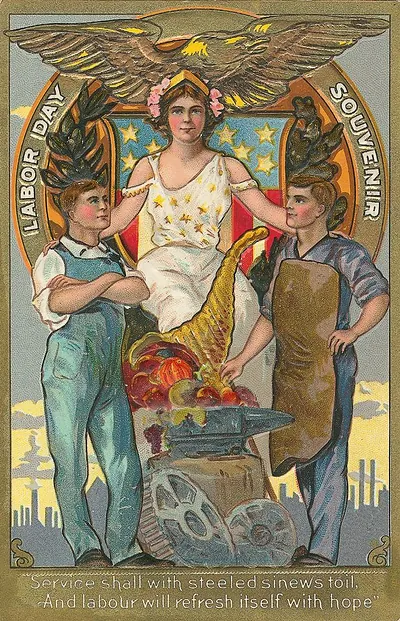
The pictures in this board come from a few sources. Studio photographs and news pictures show families and crowds celebrating. Prints and magazine illustrations show how artists imagined the holidays. And the postcard craze of the early 1900s turned out millions of holiday greeting cards, often printed in Germany in rich color with gold and embossed details. For a few years before World War I, Americans mailed these cards by the hundreds of millions.
In the old holiday postcards, look at the small print on the back or along the bottom edge. Publishers often printed their name and where the card was made. Many of the most beautiful ones say Germany, and that trade largely ended when World War I began.